Inhaltsverzeichnis


Optimize Your Christmas Bonus ▶️ Strengthen Employee Retention ✓ Reward Annual Performance ✓ Utilize Tax Benefits ✓ Show Appreciation Here!
STEUERFREIER SACHBEZUG – HERO BASE
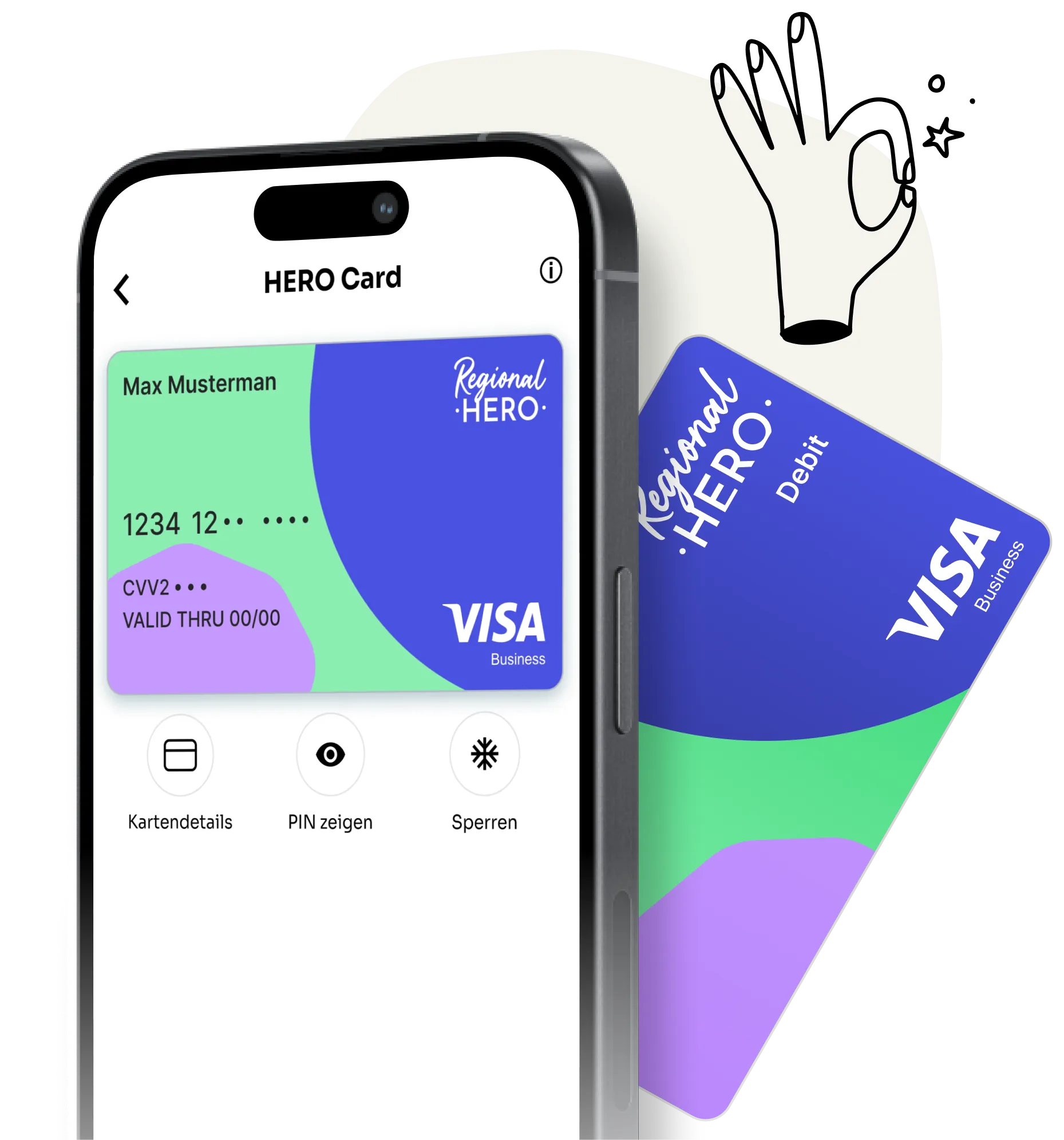
Mit HERO Base erhält dein Team 50 € steuerfrei pro Monat plus Zuschüsse für Mobilität, Gesundheit und Internet. Digital, regional und in 48 Stunden einsatzbereit.
HERO Base entdeckenChristmas bonuses are an important HR tool with far-reaching implications for companies and employees. Learn how you, as an employer, can optimally structure this special payment to strengthen employee loyalty, leverage tax benefits, and improve your position in the competition for skilled workers.
Christmas bonuses, also known as annual special payments, are more than just a financial handout at the end of the year. They represent a strategic tool for companies to express appreciation, strengthen employee loyalty, and reward annual performance. A well-thought-out structure for this special payment can boost motivation and sustainably foster workforce loyalty. Because the payment is directly linked to the recognition of performance and company loyalty, employees feel more connected to the company. This leads to lower turnover and strengthens the employer brand. However, the positive effect only unfolds if the legal and tax frameworks are correctly implemented. The decision for or against such a payment and its design thus has a direct impact on corporate culture and employee satisfaction.
A legal claim to Christmas bonuses is not enshrined in law but arises from other regulations. Primarily, the claim is based on a collective bargaining agreement, a works agreement, or the individual employment contract. If such a written agreement exists, the payment is mandatory for the employer, and the employee's claim is enforceable. Collective bargaining coverage is the strongest factor for a claim. According to a study by the Economic and Social Research Institute (WSI), 77% of employees in companies covered by collective agreements receive Christmas bonuses, while in companies without a collective agreement, it is only 41% [Hans-Böckler-Stiftung].
Another legal basis can be the so-called "customary practice" or "company practice." If an employer pays Christmas bonuses three times in a row without reservation, in the same amount or according to the same calculation method, a legal claim arises for the future. To prevent this, the payment must be explicitly declared as a voluntary benefit, for which no legal claim arises for the future, even if granted repeatedly. This "voluntary reservation" must be clearly and unambiguously formulated in the employment contract or in an accompanying letter to the payment. If this reservation is missing, the voluntary benefit can become mandatory, which restricts the company's financial flexibility.
The basis of the claim also determines the nature of the payment. Is it purely a reward for company loyalty (cut-off date principle) or does it have a mixed character that also rewards work performance? This distinction is particularly relevant in cases of termination. The purpose of the payment, whether as a pure 13th month salary (remuneration character) or as a loyalty bonus, should therefore be clearly defined to avoid legal uncertainties [Wiwi-Treff].
The calculation of the Christmas bonus amount is not uniformly regulated and depends on the respective basis of claim. Common methods include a fixed lump sum, a percentage of the monthly salary, or a staggered payment linked to company seniority. According to data from the Federal Statistical Office, the average Christmas bonus for employees covered by collective agreements in 2024 was 2,987 euros gross [Federal Statistical Office]. This represents an increase of 6.3% compared to the previous year and illustrates that collective agreements often provide for more generous provisions.
Industry-specific differences are significant. "If-then" scenarios clearly demonstrate this: If an employee works in the energy supply sector, the collectively agreed Christmas bonus can exceed 5,400 euros. If, however, they work in the hospitality industry, the average is below 1,000 euros. This discrepancy reflects the economic performance and collective bargaining tradition of the respective industries. The following table provides an overview of collectively agreed Christmas bonus entitlements by selected industries for 2024.
Collectively Agreed Christmas Bonuses 2024 by Industry
In addition to the industry, the length of company seniority is often a decisive factor. Many collective bargaining agreements and works agreements provide for staggered payments. For example, an employee might receive 25% of the Christmas bonus after six months of service, 50% after one year, and the full amount after three years. Such regulations are intended to foster loyalty and reduce turnover during the initial phase.
A Christmas bonus is a one-time payment and is treated as "other income" for tax and social security purposes. This means it is not taxed like regular monthly salary, leading to a higher tax burden in the month of payment. Because income tax on other income is calculated according to an annual tax table, a higher tax rate often applies than for ongoing wages. The employer is obliged to calculate the estimated annual income tax with and without the other income; the difference results in the income tax due on the Christmas bonus.
Social security contributions (health, long-term care, pension, and unemployment insurance) are fully applied to the Christmas bonus, as long as the respective contribution assessment ceiling is not exceeded. If the total annual income, including the Christmas bonus, falls below this limit, the special payment is fully subject to contributions. If the current salary already exceeds the limit, no additional social security contributions are levied on the Christmas bonus. For most employees, however, the payout results in social security deductions.
Due to the tax treatment, the net payout of the Christmas bonus can be disappointingly low for employees. An alternative is to convert it into tax-privileged benefits in kind. For example, companies can provide benefit cards up to a tax-free limit of 50 euros per month tax and social security-free. These amounts can be saved and used for a larger purchase at the end of the year. This maximizes the net benefit for the employee and can be an attractive alternative to a pure cash payment [Personio HR-Lexikon].
The entitlement to a Christmas bonus upon termination of employment depends on the purpose of the payment. If it is purely remuneration for work performed (wage character), a pro-rata entitlement (pro rata temporis) exists even if employment is terminated before the payment due date. If the Christmas bonus is designed as a 13th month's salary, an employee leaving the company on June 30th typically receives 6/12 of the full annual special payment.
If, however, the Christmas bonus is intended purely as a loyalty bonus, the entitlement can be tied to the existence of the employment relationship on a specific date through so-called cut-off clauses. However, a clause that ties the entitlement to a cut-off date after the payment date (e.g., payment in November, cut-off date March 31st of the following year) is only effective under certain conditions. The Federal Labor Court has ruled that such binding clauses are often ineffective for payments with a wage character [Wiwi-Treff]. The more the payment rewards work performed, the more likely a pro-rata entitlement is upon leaving.
Repayment clauses that stipulate a refund of the Christmas bonus if employment is terminated shortly after payment are also legally complex. Their validity depends on the amount of the special payment. For amounts under 100 euros, they are usually inadmissible. If the Christmas bonus exceeds one month's salary, a tie-in until June 30th of the following year may be permissible. In case of illness, the entitlement to a Christmas bonus generally remains as long as the employment relationship continues, as it is usually not a direct compensation for day-to-day work. Reductions are only possible if explicitly and permissibly regulated in the collective bargaining agreement or employment contract.
Instead of a fully taxable one-time payment, companies can use alternative, often tax-privileged models to reward employees. These alternatives can increase the net benefit for the workforce while simultaneously reducing ancillary wage costs for the company. Because these benefits often provide a direct everyday advantage, their perceived value can exceed that of a pure cash payment. A popular model is the aforementioned benefit card. Companies can load up to 50 euros tax and social security-free onto such a card each month.
Further options for net wage optimization as an alternative or supplement to the Christmas bonus include:
The strategic advantage of these models lies in their flexibility and their stronger perception as genuine added value. If a company, instead of a gross Christmas bonus of 1,000 Euros (of which often only around 500-600 Euros net reach the employee), puts together a year-round package of non-cash benefits and subsidies, the financial and emotional benefit for employees can be higher. While this requires greater administrative effort in the HR department, it positions the company as a modern and caring employer. The decision should be made based on company goals and employee structure.
Yes, part-time employees are entitled to a pro-rata Christmas bonus, provided a corresponding regulation exists within the company. According to the principle of equal treatment, they must not be disadvantaged. The amount of the payment is usually calculated proportionally to their contractually agreed working hours compared to a full-time employee.
Repayment can only be demanded if an effective repayment clause has been agreed upon in the employment or collective bargaining agreement. The admissibility depends on the amount of the Christmas bonus and the purpose of the payment. For pure loyalty bonuses, such clauses are more likely to be effective than for payments considered remuneration.
During parental leave, the employment relationship is suspended, which is why, as a rule, no entitlement to a Christmas bonus arises for this period if it is paid as remuneration for work. If the payment is purely a reward for company loyalty, an entitlement may remain or be proportionally reduced, depending on the contract design.
Although the terms are often used synonymously, there is a legal distinction. The 13th month salary is purely remunerative and is considered compensation for work performed. A Christmas bonus, however, can also or exclusively be paid as a premium for past or future company loyalty, which affects its legal treatment.
Yes, statistically there are still differences. In the former West German states, analyses show that approximately 58 % of employees receive Christmas bonuses, while in the new federal states, it's only about 39 % [arbeitsvertrag.org]. This is partly due to the lower collective bargaining coverage in Eastern Germany.
Everything you want to know — simply explained.
Everything you want to know — simply explained.
What is the benefit card?
The HERO Card is a digital Mastercard debit card that allows companies to offer tax-free benefits easily and flexibly. Employees thus receive tax-free subsidies for benefits in kind, mobility, food and health. Everything bundled on one card, individually configurable and implemented in a legally secure manner.
Employees simply pay on a daily basis. Locally in your favorite café or nationwide in supermarkets, pharmacies or public transport.
How does that work for companies?
You control everything centrally in the HR portal.
Activate benefits in five minutes. The HERO Card automatically loads the monthly budget. Digital, secure and tax-compliant.
What are the concrete benefits of this for my team?
Up to 50 euros in kind per month
Meal allowance of up to 7.50 euros per working day
Mobility allowance of up to 58 euros per month
Up to 500 euros per year for health and wellbeing
All tax-free. It's all digital. It's all on one card.
How does HR keep track?
All benefits at a glance. No paperwork.
In the HR portal, you control budgets, see workload and manage everything centrally.
Sign in. Adjust. It's done.
This saves you up to 80 percent of administrative time.
Is that really tax-free?
Yes, all benefits are tax-free for employees and are completely legally compliant. Employers must tax some benefits as a lump sum.
The HERO Card uses legally enshrined allowances. Each category is correctly separated for tax purposes and can be managed automatically.
How much does the HERO Card cost?
As part of the employee license, the card costs 1 euro per employee per month plus charges for charging benefits.
For 50 employees with HERO Base, for example, this equates to around 140 euros per month — less than a joint team meal, but with a long-term effect.
How quickly is the HERO Card ready for use?
Ready to go in just a few days.
Setup, onboarding and go-live take a maximum of one week.
No technical hurdles. Without complexity.