Inhaltsverzeichnis


Implement tax-free employer benefits ▶️ Optimize net pay ✓ Strengthen employee retention ✓ Boost attractiveness ✓ Design your benefits here!
STEUERFREIER SACHBEZUG – HERO BASE
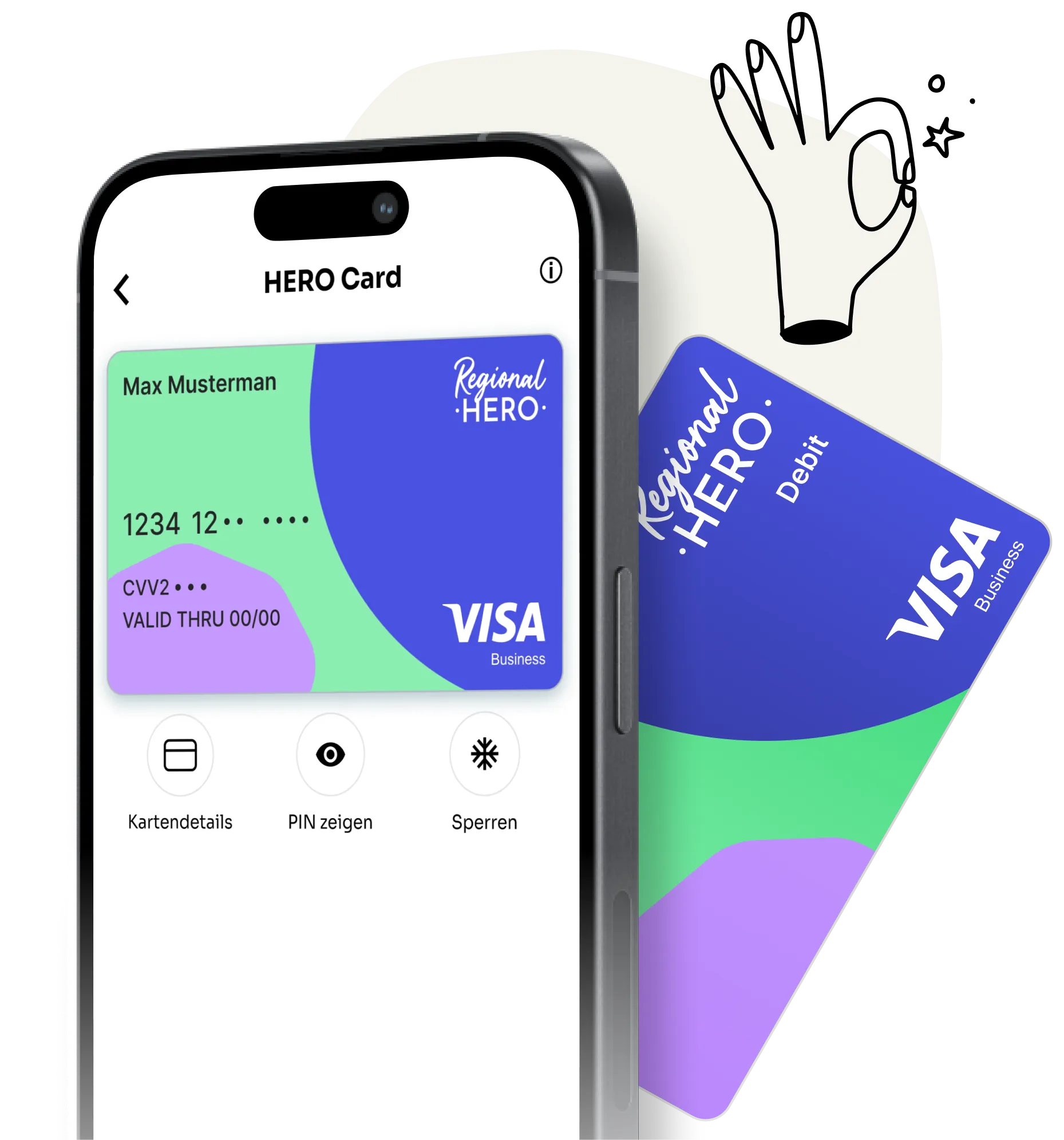
Mit HERO Base erhält dein Team 50 € steuerfrei pro Monat plus Zuschüsse für Mobilität, Gesundheit und Internet. Digital, regional und in 48 Stunden einsatzbereit.
HERO Base entdeckenIn an ever-changing work environment, tax-free employer benefits are an attractive solution to motivate employees, strengthen their loyalty to the company, and simultaneously promote the local economy sustainably. This tool offers a beneficial combination of financial incentives and social responsibility. In this guide, you will learn about the legal foundations, how employee motivation and retention are positively influenced, and what impact your commitment can have on the local economy. You will gain knowledge about various application possibilities and successful case studies to effectively achieve your company's objectives. Additionally, we offer helpful tips for practical implementation. Get inspired and discover how you can most effectively utilize tax-free employer benefits for your company.
Tax-free employer benefits represent a strategic alternative to traditional salary increases. They enable companies to specifically increase their employees' net income without incurring income tax or social security contributions. Because these benefits are granted in addition to the already owed wages, a direct financial advantage arises for the workforce. This not only leads to higher purchasing power and employee satisfaction but also simultaneously reduces ancillary wage costs for the employer. A well-conceived benefits program can significantly boost employer attractiveness and is an effective tool for attracting and retaining skilled workers in a competitive job market [navit.com]. Correct implementation requires precise knowledge of the legal framework, especially the respective exemption limits and non-cash benefit values.
The legal basis for tax-free benefits is primarily found in the Income Tax Act (EStG) and specific regulations of the Social Code (SGB). The central principle is the so-called additionality requirement. This means that the benefit must not replace a previous salary component or be granted as part of a salary conversion. If this condition is met, companies can utilize a variety of advantages. Since gross wages do not increase, the social security contributions based on them remain constant for employers and employees. This makes the benefits a cost-efficient tool to express financial recognition and foster team motivation. The variety of possible benefits allows for the creation of a customized benefits package tailored to the needs of the workforce.
Tax-free employer benefits are earmarked benefits that a company grants to its employees in addition to their regular salary. Up to certain statutory exemption limits, they are subject neither to income tax nor social security contributions. As a result, the full value of the benefit reaches employees net, effectively increasing their purchasing power.
The operating principle is based on specific sections of the Income Tax Act (EStG) and the Social Code (SGB). For example, Section 8 (2) EStG regulates the valuation of non-cash benefits (Sachbezüge). As long as the value of these non-cash benefits does not exceed a monthly exemption limit of 50 Euros , they remain completely exempt from contributions [Guud Benefits]. If this limit is exceeded by even one cent, the entire amount of the non-cash benefit is subject to tax and social security contributions. This "all-or-nothing principle" requires careful administration and documentation in payroll accounting.
Another central criterion is that the benefits must be provided "in addition to the already owed wages." A salary conversion, where a portion of the gross salary is converted into a tax-free benefit, is legally prohibited. Therefore, if a company decides to introduce such benefits, this must be documented through an addendum to the employment contract or a works agreement. This creates legal clarity and ensures that the benefits are recognized during a tax audit by the tax authorities. The correct application of these rules makes it possible to optimize wage costs while tangibly improving employee compensation.
The most attractive tax-free benefits are those that offer high practical value for employees and are easy for the company to administer. These include, in particular, non-cash benefits up to 50 Euros monthly, health promotion benefits, commuter benefits such as the Deutschlandticket, and childcare allowances.
These benefits cover central aspects of employees' daily lives and lead to direct financial relief in everyday life. A mobility benefit in the form of the Deutschlandticket, for example, significantly reduces monthly commuting costs and simultaneously promotes environmentally friendly transportation [Ecovis Unternehmensberatung]. Health promotion benefits, which can be tax-free up to 600 Euros per year per employee, enable access to qualified prevention courses such as yoga or stress management, thus actively contributing to well-being. The legal basis for this is Section 20 SGB V.
The following table provides an overview of common tax-free employer benefits and their tax treatment:
The selection of appropriate benefits should be strategic. An analysis of employee structure and needs is the basis for this. While younger employees might benefit more from a mobility allowance, employees with families may value childcare benefits more highly. A diversified offering increases perceived appreciation and thus loyalty to the company [Circula Blog].
The correct implementation of tax-free benefits requires a structured process that begins with a needs analysis and concludes with meticulous documentation in payroll accounting. Compliance with legal requirements, clear communication, and the formal embedding of benefits in contractual agreements are crucial.
A proven approach can be outlined in several steps:
The quantifiable benefit of tax-free allowances is significant for both sides: Employees receive a higher net income, while employers reduce their ancillary wage costs and increase their attractiveness. A classic salary increase is far less efficient due to taxes and social security contributions than a targeted, tax-exempt benefit.
The difference becomes clear in a direct comparison. If a company grants an employee a salary increase of 100 Euros gross, after deduction of income tax and social security contributions (on average approx. 40-50%), often only around 50-60 Euros remain. At the same time, the company pays an additional approx. 20-25 Euros in ancillary wage costs. The total cost for the company is therefore around 125 Euros for a net improvement of 50-60 Euros for the employee.
If, instead, a tax-free non-cash benefit worth 50 Euros granted, the financial outlay for the company is exactly 50 Euros. In return, the employee receives a non-cash benefit of 50 Euros net. Since no contributions are incurred here, the efficiency of the measure is significantly higher. A study by the German Institute for Economic Research (DIW Berlin) confirms that such benefits represent an attractive alternative to a mere salary increase and are advantageous under social security law [Müller, Becker].
This direct comparison shows that tax-free employer contributions are a lever to achieve a greater impact on the workforce with less financial outlay. They not only improve disposable income but are often perceived as a special form of appreciation, which sustainably strengthens employee loyalty and motivation [Max Planck Institute for Tax Law and Public Finance].
For 2025, many proven allowances for tax-free employer contributions remain in place, providing companies with planning certainty. The monthly non-cash benefit exemption limit continues to be 50 Euros. In addition, employers can provide their employees with tax-free gifts worth 60 Euros for personal occasions such as birthdays, up to three times a year.
The relevant values for 2025 are crucial for HR planning. Strict adherence is mandatory to ensure tax and contribution exemption. An overview of the most important exemption limits and flat rates for 2025:
Companies should continuously monitor legislative developments, as allowances or conditions may change. In particular, the digitalization of benefits, such as digital meal vouchers, requires a thorough review of legal compliance. Because the correct application of these values directly impacts wage costs and employee satisfaction, a proactive and informed approach to benefits for 2025 is essential [Finom Deutschland].
It is strongly recommended to formally record the granting of tax-free allowances in writing. This can be done through an addendum to the employment contract or a general company agreement. A written regulation creates legal clarity for both parties and serves as important proof during audits by the tax office or social security.
If the monthly tax-free limit for non-cash benefits of 50 Euros is exceeded by even one cent, the entire amount for that month loses its tax-exempt status. The entire benefit then becomes subject to tax and social security contributions. It is a tax-free limit, not a tax-free allowance.
Yes, marginally employed individuals (mini-jobbers) can also receive tax-free employer allowances. Since these benefits are granted in addition to the already owed wages, they do not affect the marginal employment limit. This allows a mini-jobber's earnings to be enhanced beyond the regular limit.
Vouchers are only considered a tax-free non-cash benefit if they exclusively entitle the holder to goods or services and meet the criteria of the Payment Services Supervision Act (ZAG). In particular, they must not have a cash-out function and must be limited to a specific network of acceptance points (e.g., gift cards for a retail chain or a shopping center).
Everything you want to know — simply explained.
Everything you want to know — simply explained.
What is the benefit card?
The HERO Card is a digital Mastercard debit card that allows companies to offer tax-free benefits easily and flexibly. Employees thus receive tax-free subsidies for benefits in kind, mobility, food and health. Everything bundled on one card, individually configurable and implemented in a legally secure manner.
Employees simply pay on a daily basis. Locally in your favorite café or nationwide in supermarkets, pharmacies or public transport.
How does that work for companies?
You control everything centrally in the HR portal.
Activate benefits in five minutes. The HERO Card automatically loads the monthly budget. Digital, secure and tax-compliant.
What are the concrete benefits of this for my team?
Up to 50 euros in kind per month
Meal allowance of up to 7.50 euros per working day
Mobility allowance of up to 58 euros per month
Up to 500 euros per year for health and wellbeing
All tax-free. It's all digital. It's all on one card.
How does HR keep track?
All benefits at a glance. No paperwork.
In the HR portal, you control budgets, see workload and manage everything centrally.
Sign in. Adjust. It's done.
This saves you up to 80 percent of administrative time.
Is that really tax-free?
Yes, all benefits are tax-free for employees and are completely legally compliant. Employers must tax some benefits as a lump sum.
The HERO Card uses legally enshrined allowances. Each category is correctly separated for tax purposes and can be managed automatically.
How much does the HERO Card cost?
As part of the employee license, the card costs 1 euro per employee per month plus charges for charging benefits.
For 50 employees with HERO Base, for example, this equates to around 140 euros per month — less than a joint team meal, but with a long-term effect.
How quickly is the HERO Card ready for use?
Ready to go in just a few days.
Setup, onboarding and go-live take a maximum of one week.
No technical hurdles. Without complexity.