Inhaltsverzeichnis


Mastering Professional Salary Negotiations ▶️ Ensure employee satisfaction ✓ Reward performance ✓ Foster transparency ✓ Negotiate fairly now!
STEUERFREIER SACHBEZUG – HERO BASE
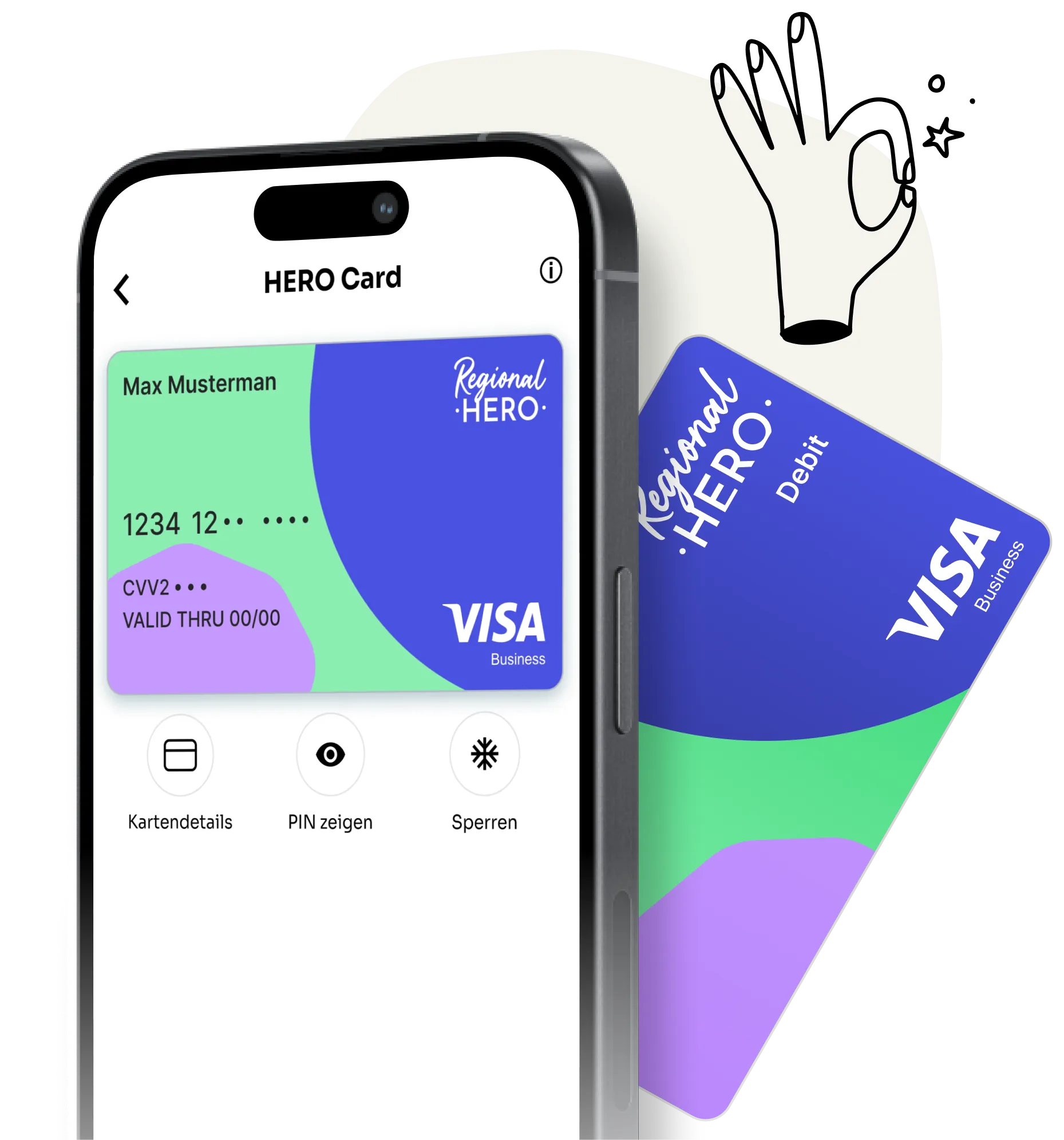
Mit HERO Base erhält dein Team 50 € steuerfrei pro Monat plus Zuschüsse für Mobilität, Gesundheit und Internet. Digital, regional und in 48 Stunden einsatzbereit.
HERO Base entdeckenA salary negotiation is a crucial moment in every employee's professional life. It is not only an opportunity to increase one's income but also plays a key role in strengthening employee loyalty and demonstrating the company's appreciation for its employees. The salary negotiation process is often complex, involving both strategic and psychological aspects. A successful negotiation requires preparation, tactics, and an awareness of the impact of emotions. It's not just about the specific amount, but also about the signal it sends for future collaboration. At the same time, there are specific challenges to overcome and effective solutions that can lead to successful outcomes. This guide will introduce you to various aspects of salary negotiations and provide helpful tips for conducting successful salary negotiations within your company.
For companies, a strategically planned salary negotiation is a central tool for employee retention and enhancing employer attractiveness. By establishing transparent, data-driven, and fair processes, not only is employee satisfaction ensured, but the company's position in the competition for skilled workers is also strengthened. A professional approach based on objective criteria such as performance and market value builds trust and fosters a performance-oriented corporate culture. A structured negotiation framework also reduces the risk of unequal treatment and strengthens internal pay equity, which positively impacts the working atmosphere and productivity in the long run. For 2025, 75% of companies in Germany plan salary increases, underscoring the strategic importance of this topic [Robert Walters Germany].
The foundation for any fair negotiation is a solid data basis. Companies should not rely solely on the negotiation skills of individual employees or managers. Instead, it is crucial to develop a company-wide compensation strategy that defines clear guidelines and salary bands for various positions and experience levels. Ideally, these bands are based on thorough market analysis and consider industry- and region-specific salary levels. With such a structure in place, salary decisions can be objectively justified and communicated transparently. This prevents arbitrary decisions and helps employees feel fairly treated, which is a crucial factor for long-term motivation.
A structured and fair salary negotiation is crucial because compensation is one of the most important factors for employee satisfaction and retention. Studies show that perceived fair pay directly strengthens emotional attachment to the company and reduces turnover rates, which in turn saves significant costs.
Perceived fairness in the salary process signals appreciation to employees for their work. When salary adjustments are made transparently and based on clear criteria, employees feel respected and taken seriously. This leads to higher morale and stronger commitment. Conversely, perceived unfair pay can quickly lead to demotivation, quiet quitting, and ultimately, employees leaving the company. An analysis shows that salary is a main reason for 43% of respondents to stay in their job, while for 45% it is a motivation for career change [YER – AVANTGARDE Experts, 2024].
A structured negotiation process also helps companies retain top talent. Since a job change in Germany can lead to, on average, approximately 30% higher salaries lead, employers must offer competitive and performance-based compensation packages to prevent poaching [McKinsey & Company Germany, 2022]. If employees know that their performance is regularly evaluated and rewarded, the likelihood of them actively seeking new opportunities decreases. A proactive and fair salary dialogue is therefore a direct investment in human capital and the future viability of the company.
Dissatisfaction with salary is widespread in Germany. Only about a third of employed individuals state that they are satisfied with their compensation [Stepstone GmbH, 2024]. This widespread feeling of being underpaid poses a significant risk for companies. A transparent process that explains how salaries are determined and what development opportunities exist can counteract this dissatisfaction. If-then scenarios, such as "If you take on these additional responsibilities, then an adjustment within salary band X is possible," create clear perspectives and motivate employees to develop further.
For a successful and fair salary discussion, HR managers must make data-driven and strategic preparations. This includes analyzing market data, defining internal salary structures, and creating clear performance evaluations. Only then can a consistent, objective, and transparent negotiation basis be established.
Careful preparation is key to professionalism and fairness. The process can be divided into several steps:
To standardize the process and make it transparent for all involved, it is advisable to create a guideline for salary negotiations. This should clearly define the criteria, procedure, and responsibilities. Such a policy demonstrates a commitment to fairness and equal treatment. Since many employees find the topic of salary uncomfortable – around 40% of Germans have never negotiated their salary – a proactively offered, structured process can lower the barrier [Business Insider Deutschland].
Checklist for HR Managers
A salary negotiation is conducted objectively and transparently by basing it on verifiable facts such as performance data, market values, and internal salary structures. Transparency is created when the criteria for salary decisions are openly communicated and the company's arguments are clearly and understandably justified, which strengthens trust.
The key to an objective negotiation lies in steering the discussion from subjective opinions to concrete, measurable results. Instead of vague statements like "I feel I'm worth more," the conversation should be based on KPIs, project successes, and the assumption of responsibility. The manager should structure the discussion with a clear agenda and listen to the employee's perspective as well as present the company's position based on facts. The basis is the annual gross salary, as this is the only comparable metric [Randstad Deutschland GmbH & Co. KG].
A central aspect of fairness is the avoidance of gender-specific differences in negotiation outcomes. Studies show that men tend to achieve higher salary increases. For example, men achieve an average increase of 11.7%, while women achieve 9.4% [Gesellschaft für Freiheitsrechte, 2021]. Companies have the responsibility, through standardized processes and trained managers, to ensure that the negotiation outcome depends solely on performance and role, not on gender or negotiation skill. The active application of salary bands is an effective tool here.
If financial resources for a salary increase are limited, transparent communication becomes more important. In this case, it is important to openly disclose the reasons and simultaneously offer alternative forms of recognition and development. Such alternatives can include:
Salary bands and performance matrices are strategic tools that ensure fair, transparent, and consistent compensation within a company. Salary bands define a salary range for each position, while performance matrices objectively link individual performance to positioning within that range, thereby preventing arbitrariness.
Salary bands are defined salary ranges for a group of similar positions. They are created based on external market data and internal job evaluations. By setting a minimum and maximum value for each role, salary bands establish a clear framework for compensation decisions. This assists both in hiring new employees and in internal salary adjustments. When a company uses salary bands, it can transparently show applicants and employees what salary progression is possible within their current role. This manages expectations and promotes internal pay equity.
A performance matrix directly links objective performance evaluation with salary progression. In such a matrix, individual performance (e.g., "exceeds expectations," "meets expectations") is combined with the current position within the salary band (e.g., "lower range," "middle range"). This results in a clear recommendation for a salary adjustment. For example, **if** an employee consistently exceeds expectations and is still in the lower third of the salary band, **then** the matrix suggests a significant increase. This makes salary decisions transparent and performance-based.
Comparison: Compensation with vs. without Salary Bands
The use of these instruments also helps companies meet legal requirements, such as the German Pay Transparency Act (Entgelttransparenzgesetz). They provide proof that the compensation structure is based on non-discriminatory criteria. In a labor market increasingly characterized by a shortage of skilled workers, such fair and transparent systems are a crucial component for a strong employer brand. Forecasts indicate accelerated salary development, making strategic HR budgets for adjustments essential [Kienbaum Consultants International GmbH, 2025].
Companies should respond to unrealistic salary expectations professionally, data-driven, and respectfully. Instead of a direct rejection, it is strategically wiser to transparently explain their position based on market data and internal salary structures, and to jointly seek alternative solutions or development prospects.
If an employee makes a salary demand that significantly exceeds the company's internal and market-standard frameworks, a structured response is required. First, the demand should not be seen as an affront, but as an invitation to a conversation. It is important to listen to and understand the employee's reasoning. In the second step, the company should transparently present its own position. This includes disclosing the relevant salary band for the position and comparing it with external benchmarks. This elevates the discussion to an objective level.
The if-then logic helps with the argumentation here: **If** the demand 30% exceeds the maximum of the defined salary band, **then** it would need to be justified by exceptional, demonstrable achievements or qualifications that go far beyond the requirements of the current role. If this is not the case, the demand cannot be met without jeopardizing the internal salary structure and fairness. A successful negotiation rate of 39% in Germany shows that employees often enter discussions with certain expectations but are also receptive to objective arguments [Handelsblatt].
If an agreement on the requested amount is not possible, it is crucial not to end the conversation with a simple rejection. Instead, alternatives should be proactively offered to express appreciation for the employee. Possible offers include:
Such an approach demonstrates the company's interest in a long-term collaboration and acknowledges the employee's performance, even if the salary request is not feasible at the moment. The conversation should always end with a clear outlook and a positive note to avoid damaging motivation and the relationship.
A realistic salary increase for the same position is typically between 3% and 5%. For a promotion or taking on significantly expanded responsibilities, 10% to 15% or more may be appropriate. The amount heavily depends on individual performance, the industry, and the company's economic situation.
The best time for a salary negotiation is when you have demonstrably delivered added value, for example, after successfully completing an important project, taking on new responsibilities, or during the annual performance review. A good time is also 18 to 24 months after your last salary increase.
Inflation is a relevant argument in salary negotiations because it erodes the purchasing power of your current salary. Companies are increasingly considering the inflation rate in their budget planning. However, an increase that merely offsets inflation does not represent a real salary increase; it only maintains the status quo.
The most convincing arguments are fact-based ones that demonstrate your added value to the company. These include quantifiable achievements (e.g., increased revenue, cost savings), completed projects, expanded responsibilities, newly acquired qualifications, and positive performance reviews. Comparisons with market-standard salaries further strengthen your position.
Everything you want to know — simply explained.
Everything you want to know — simply explained.
What is the benefit card?
The HERO Card is a digital Mastercard debit card that allows companies to offer tax-free benefits easily and flexibly. Employees thus receive tax-free subsidies for benefits in kind, mobility, food and health. Everything bundled on one card, individually configurable and implemented in a legally secure manner.
Employees simply pay on a daily basis. Locally in your favorite café or nationwide in supermarkets, pharmacies or public transport.
How does that work for companies?
You control everything centrally in the HR portal.
Activate benefits in five minutes. The HERO Card automatically loads the monthly budget. Digital, secure and tax-compliant.
What are the concrete benefits of this for my team?
Up to 50 euros in kind per month
Meal allowance of up to 7.50 euros per working day
Mobility allowance of up to 58 euros per month
Up to 500 euros per year for health and wellbeing
All tax-free. It's all digital. It's all on one card.
How does HR keep track?
All benefits at a glance. No paperwork.
In the HR portal, you control budgets, see workload and manage everything centrally.
Sign in. Adjust. It's done.
This saves you up to 80 percent of administrative time.
Is that really tax-free?
Yes, all benefits are tax-free for employees and are completely legally compliant. Employers must tax some benefits as a lump sum.
The HERO Card uses legally enshrined allowances. Each category is correctly separated for tax purposes and can be managed automatically.
How much does the HERO Card cost?
As part of the employee license, the card costs 1 euro per employee per month plus charges for charging benefits.
For 50 employees with HERO Base, for example, this equates to around 140 euros per month — less than a joint team meal, but with a long-term effect.
How quickly is the HERO Card ready for use?
Ready to go in just a few days.
Setup, onboarding and go-live take a maximum of one week.
No technical hurdles. Without complexity.