Inhaltsverzeichnis


Understanding Company Practice: Ensure Legal Certainty ✓ Clarify Entitlements ✓ Avoid Disputes ✓ Learn more here!
STEUERFREIER SACHBEZUG – HERO BASE
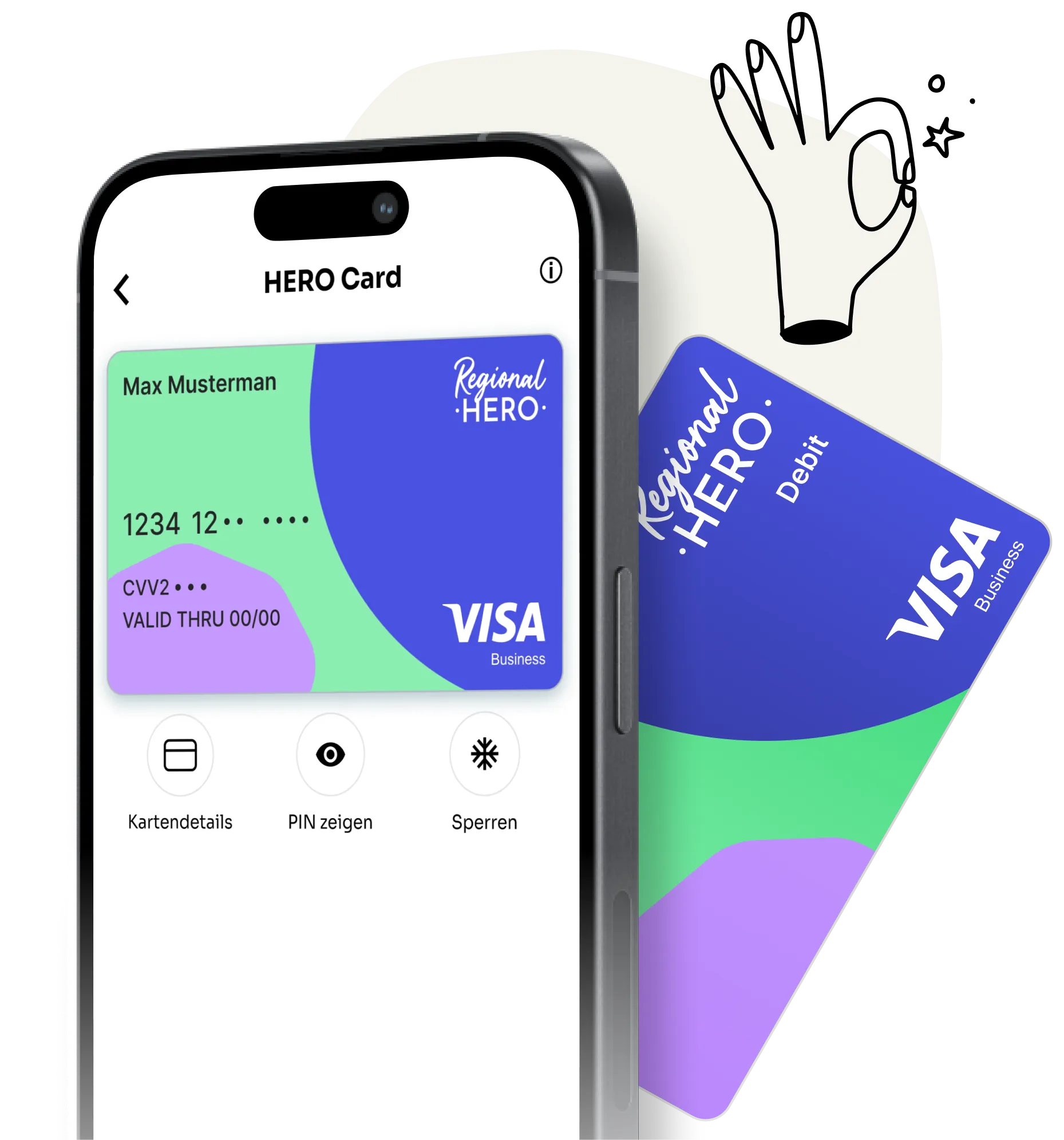
Mit HERO Base erhält dein Team 50 € steuerfrei pro Monat plus Zuschüsse für Mobilität, Gesundheit und Internet. Digital, regional und in 48 Stunden einsatzbereit.
HERO Base entdeckenIn an ever-changing, fast-paced world, it is more important than ever for companies to retain and motivate employees long-term. This is precisely where "betriebliche Übungen" (company practices) can play a key role. As partly formal, partly informal commitments and habits that regulate certain aspects of the employment relationship, they have a significant impact on the working atmosphere and employee satisfaction. But what exactly are company practices and how can they be implemented efficiently? What legal aspects need to be considered? And what risks could arise from their application? In this informative guide, we want to delve deeply into these questions and provide you with valuable knowledge regarding company practices. Whether you want to strengthen your company or retain good employees in your team long-term, the responsible use of company practices can make a valuable contribution.
A customary company practice refers to the repeated, uniform, and unreserved conduct of an employer, from which employees can infer a permanent granting of a specific benefit. This creates a binding legal claim that acts like a component of the employment contract, even without an explicit written agreement.
A customary company practice arises from the regular and uniform repetition of certain employer behaviors, from which employees may infer that a benefit is intended to be granted to them permanently. The decisive factors are duration, regularity, and the absence of an explicit reservation, which together create a basis of trust.
For its establishment, the frequency of the benefit's granting is particularly relevant. In jurisprudence, especially concerning annually recurring special payments such as Christmas or holiday bonuses, a rule of thumb has been established: A three-time, consecutive, and unreserved granting is usually sufficient to establish a legal claim for the future. Since the employer's will for a permanent commitment is derived from the repetition, this temporal aspect is a central criterion for the courts. [Federal Labour Court]
Another essential characteristic is the uniformity of the benefit. The employer must grant the advantage according to a recognizable pattern or a consistent rule. This can affect all employees of the company or a clearly definable group, such as all employees of a specific department or all commercial employees. If, however, benefits are distributed arbitrarily and without a recognizable system to individual persons, no collective customary company practice arises. [FactorialHR Editorial Team]
The most decisive criterion, however, is the absence of a reservation. If the employer does not unequivocally clarify when granting the benefit that it is a voluntary, one-time, and non-binding allowance for the future, employees are entitled to expect its continuation. This basis of trust created by the employer's conduct is the legal foundation for why a voluntary practice becomes an enforceable claim. [Gabler Business Dictionary]
In principle, all benefits and advantages not already regulated by law, collective bargaining agreement, works agreement, or individual employment contract can become the subject of a customary company practice. This primarily concerns voluntary special payments, but can also extend to in-kind benefits or established procedures.
Through repeated granting, these benefits become an implicit part of individual employment contracts. The legal basis for this is derived from a combination of contract theory and liability based on trust, with practice applying a hybrid form of both approaches. [Haufe Editorial Team] Typical examples of benefits that can become a fixed entitlement through customary company practice include:
Even the way a specific benefit is calculated can become a customary practice. For example, if a company uses the same formula to calculate a bonus for years, employees can trust that this method will continue to be applied. A sudden, unilateral change to the calculation basis to the detriment of employees is then no longer permissible without further ado.
An employer can most effectively prevent the establishment of a customary practice by clearly and transparently stating that the benefit is voluntary. This must be unequivocally communicated each time the benefit is granted to rule out the impression of a permanent obligation from the outset and to break the basis of trust.
Because customary practice is based on employees' trust in the consistency of employer behavior, this trust must be actively prevented. The reservation must clearly state that the benefit is voluntary and that even repeated payments do not establish a legal claim for the future. A general clause in the employment contract alone is often insufficient if subsequent practice, such as payment without renewed notice on the payslip, contradicts this reservation. Labor courts strictly scrutinize such clauses. [Dr. Julia Schirmeister]
An effective wording could be: "This Christmas bonus is granted as a voluntary benefit, for which no legal claim arises for the future, even with repeated payments." This notice should ideally be provided directly in connection with the granting of the benefit, for example, in an accompanying letter or on the payment slip. This renews the employer's declaration of intent not to be bound each time and prevents the creation of a claim.
An established customary practice is an integral part of the contract and cannot be unilaterally revoked or cancelled by the employer. Termination is legally secure only through an amicable agreement with the affected employees (amendment agreement) or a formal notice of change, which is subject to high legal hurdles.
Since customary practice supplements individual employment contracts, changing it requires the same legal steps as a contract amendment. The simplest method is the amendment agreement, where employer and employees jointly agree to waive the benefit in the future. However, this requires the consent of each individual employee, which is often difficult to achieve in practice. The second option is the notice of change. In this case, the employer terminates the existing employment relationship and simultaneously offers its continuation under altered conditions, i.e., without the previous benefit. This termination must be socially justified, which represents a significant legal hurdle.
The so-called "counter-customary practice," where an employer ceases to provide a benefit for three years and hopes for employees' silence to be interpreted as consent, is viewed extremely critically by case law and offers no legal certainty. [Charlotte Jaekel] However, an existing customary practice can be superseded by a new works agreement, provided it offers an equivalent or better arrangement (principle of favorability). A deterioration through a works agreement is only permissible under strict conditions. [Anonym, Universität Hamburg]
A customary practice arises implicitly through repeated actions of the employer. In contrast, a works agreement is a formal, written agreement between the employer and the works council, while a contractual promise is an explicit, individual agreement between the employer and an individual employee.
These three instruments for regulating working conditions differ fundamentally in their origin, form, and scope. While customary practice is based on implied conduct and arises informally, the other two instruments require an active and formalized act of will. The following table illustrates the key differences:
This distinction is crucial for correctly assessing the legal nature of a claim. For example, a works agreement can replace a customary practice, but an individual contractual promise generally cannot (principle of favorability). Understanding these differences is essential for the legally sound design of compensation and benefit systems within a company.
No, generally not. Regularity and uniformity are crucial for an established company practice to arise. If benefits are granted in varying amounts, at changing times, or based on arbitrary criteria, the impression of a permanent, rule-based obligation on the employer, necessary for establishing a claim, is absent.
Yes, an established company practice generally applies to newly joining employees. They automatically become part of the existing company regulations, unless an explicit and effective different arrangement is made for the new employee in their employment contract.
No, a mere error or a calculation mistake by the employer does not establish a company practice. According to the Federal Labour Court, a claim only arises if the employer demonstrably intends to provide a benefit beyond their existing legal obligation. An unintended error does not create a basis for legitimate expectation. [Verkehrsrundschau]
In the event of a business transfer under § 613a BGB, the new owner assumes the rights and obligations arising from the existing employment relationships. This includes claims based on established company practice. The acquirer is therefore bound by the company practices created by the seller and must continue them.
No, an employer cannot unilaterally revoke a commitment for an above-tariff allowance that has been established through company practice. It has become part of the employment contract. A reduction or cancellation is only possible with the employee's consent or through a legally permissible notice of change to terms of employment. [Anonym, Technische Universität München]
Everything you want to know — simply explained.
Everything you want to know — simply explained.
What is the benefit card?
The HERO Card is a digital Mastercard debit card that allows companies to offer tax-free benefits easily and flexibly. Employees thus receive tax-free subsidies for benefits in kind, mobility, food and health. Everything bundled on one card, individually configurable and implemented in a legally secure manner.
Employees simply pay on a daily basis. Locally in your favorite café or nationwide in supermarkets, pharmacies or public transport.
How does that work for companies?
You control everything centrally in the HR portal.
Activate benefits in five minutes. The HERO Card automatically loads the monthly budget. Digital, secure and tax-compliant.
What are the concrete benefits of this for my team?
Up to 50 euros in kind per month
Meal allowance of up to 7.50 euros per working day
Mobility allowance of up to 58 euros per month
Up to 500 euros per year for health and wellbeing
All tax-free. It's all digital. It's all on one card.
How does HR keep track?
All benefits at a glance. No paperwork.
In the HR portal, you control budgets, see workload and manage everything centrally.
Sign in. Adjust. It's done.
This saves you up to 80 percent of administrative time.
Is that really tax-free?
Yes, all benefits are tax-free for employees and are completely legally compliant. Employers must tax some benefits as a lump sum.
The HERO Card uses legally enshrined allowances. Each category is correctly separated for tax purposes and can be managed automatically.
How much does the HERO Card cost?
As part of the employee license, the card costs 1 euro per employee per month plus charges for charging benefits.
For 50 employees with HERO Base, for example, this equates to around 140 euros per month — less than a joint team meal, but with a long-term effect.
How quickly is the HERO Card ready for use?
Ready to go in just a few days.
Setup, onboarding and go-live take a maximum of one week.
No technical hurdles. Without complexity.