Inhaltsverzeichnis


Develop Employee Incentive Systems ▶️ Reward Performance ✓ Foster Engagement ✓ Strengthen Employee Retention ✓ Motivate Your Team!
STEUERFREIER SACHBEZUG – HERO BASE
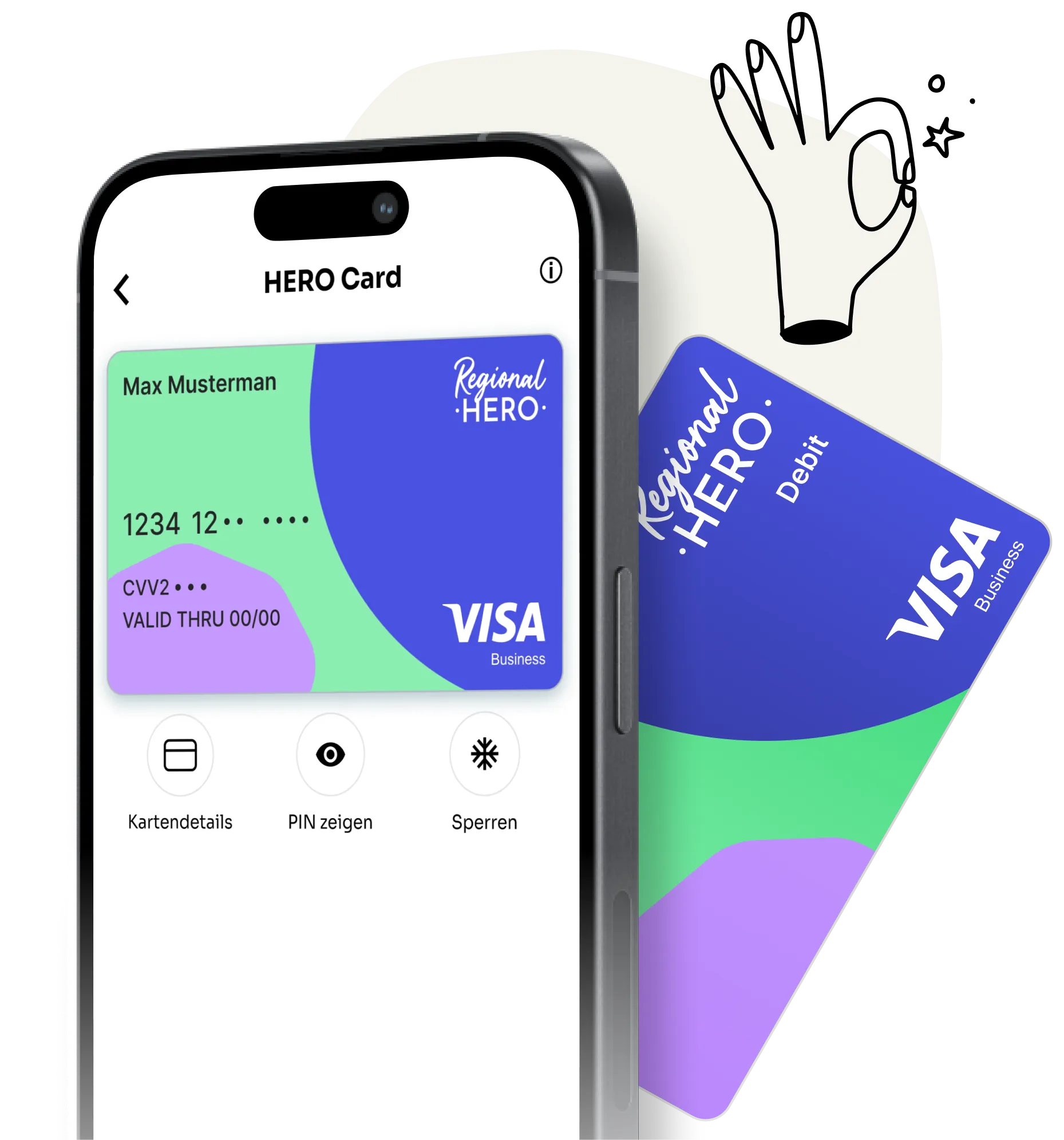
Mit HERO Base erhält dein Team 50 € steuerfrei pro Monat plus Zuschüsse für Mobilität, Gesundheit und Internet. Digital, regional und in 48 Stunden einsatzbereit.
HERO Base entdeckenIn today's dynamic work environment, effective employee incentive systems have become indispensable. They form the foundation for motivation, performance enhancement, and long-term employee retention. But what makes an effective incentive system? How can you leverage innovative concepts and digital solutions to inspire your employees while boosting business success? This guide will lead you through the world of modern incentive systems – from strategic planning and legal and tax aspects to cutting-edge technologies. You'll learn how to develop a tailored system that considers both the individual needs of your employees and your company's goals. Dive into proven practices and forward-thinking trends that will elevate your incentive system to a new level.
Developing effective incentive systems requires a strategic approach that goes beyond mere salary bonuses. Crucial is a well-considered combination of tangible and intangible incentives, tailored to company goals and the specific needs of employees, to foster motivation, performance, and long-term retention.
Generally, a distinction is made between tangible and intangible incentives, which promote either extrinsic (external) or intrinsic (arising from the activity itself) motivation. A balanced mix of these systems is crucial to specifically address different employee groups and to embed a sustainable commitment to high performance within the company.
Tangible incentives are financial or in-kind benefits directly linked to work performance or the achievement of specific goals. These include bonuses, commissions, profit-sharing, or high-value in-kind rewards such as company cars or the latest technology. This form of incentivization primarily targets extrinsic motivation. Because there is a clear link between performance and reward, such systems can temporarily boost productivity, especially in sales- or project-oriented activities. The University of Applied Sciences for Medium-Sized Businesses (FHM) notes that performance-related financial incentives are a common way to motivate and retain employees. [Mario Motzkuhn, Fachhochschule des Mittelstands (FHM)]
Intangible incentives, on the other hand, aim to satisfy psychological needs and strengthen intrinsic motivation. These include flexible working hours, opportunities for further training, increased responsibility, a positive work environment, and, above all, public recognition of achievements. According to a study by the Institute for Applied Ergonomics (ifaa), supplementary offerings such as corporate health promotion and flexible work arrangements are essential for long-term retention, especially for skilled workers and managers. [Institut für angewandte Arbeitswissenschaft e.V. (ifaa)] These incentives foster identification with the company and personal development, which can have a more sustainable impact than purely monetary rewards.
The distinction between extrinsic and intrinsic motivation is fundamental for designing incentive systems. Extrinsic incentives, such as money, often have a quick effect, but their motivating power can diminish once the reward becomes routine. Intrinsic motivation, which arises from the enjoyment of the task itself, a sense of purpose, or the desire for personal growth, is, however, a stronger and more enduring drive. According to analyses by business-wissen.de, sustainable motivation is only achieved through a skillful combination of extrinsic and intrinsic factors. [business-wissen.de]
Comparison: Monetary vs. Intangible Incentives
Financial incentives can effectively boost employee motivation, but their effectiveness heavily depends on their design. They work best when perceived as fair and transparent and are tailored to individual employees. However, a purely monetary focus carries the risk of achieving only short-term effects.
Monetary incentive systems are most effective when they are perceived as fair. An analysis by mit-unternehmer.com shows that money is a successful motivational factor when compensation is fair, equitable, and individually structured. Such a system can strengthen not only the performance of individual employees but also team orientation and commitment to the company. When employees feel that their extra effort is directly and transparently rewarded, their willingness to go above and beyond increases. [mit-unternehmer.com]
Directly linking financial bonuses to performance is a widespread practice in companies. This is because the connection between additional performance and financial reward is easily understood by employees. If the goal is to achieve specific, measurable results, such as increased sales or production targets, then performance-based compensation models can be an effective tool. They send a clear signal about which behaviors and results are particularly valued by the company.
The effectiveness of incentives is also influenced by the general motivational state of the workforce. A global study, whose results were summarized by the Perwiss platform, revealed that approximately 67 % of German employees exhibit a high to moderate basic motivation. The study identified 22 von 26 different incentive factors that have a significant impact on attracting, retaining, and engaging employees. From this, it can be concluded that an intelligent combination of various incentive types is necessary to fully leverage the existing motivational potential and address the diverse needs of the workforce. [Perwiss]
Intangible incentives are crucial for long-term employee retention because they address deeper psychological needs such as recognition, autonomy, and personal development. They foster an emotional connection to the company that goes beyond financial aspects and sustainably strengthens loyalty and intrinsic motivation.
Flexible work models have established themselves as one of the strongest non-monetary incentives. According to a survey of HR managers by the ifo Institute, flexible working hours were cited as the most important incentive for attracting skilled workers in the first quarter of 2025. [ifo Institut] The ability to independently shape one's working hours and location meets the desire of many employees for a better work-life balance. This leads to higher satisfaction and loyalty, as the company demonstrates trust and considers individual life circumstances.
Another key lever for employee retention is targeted training and development opportunities. Data from the ifo Institute shows that these are considered the second most important incentive, right after flexible working hours. In 2024, 31% of employees participated in at least one training measure. When companies invest in the skills of their workforce, they signal appreciation and offer a clear perspective for professional development. This not only strengthens individual skills but also their commitment to the employer. [ifo Institut]
A comprehensive range of additional benefits beyond salary is now an indispensable component of employer attractiveness. A study by ifaa highlights that measures such as corporate health management, flexible work arrangements, and training programs are essential for retaining qualified specialists and managers. [Institut für angewandte Arbeitswissenschaft e.V. (ifaa)] Since these offerings directly contribute to the well-being and personal development of employees, they create a positive work environment and a strong emotional connection to the company.
Delegating responsibility and actively involving employees in decision-making processes are also strong intrinsic motivators. A scientific paper from the University of Linz identifies employee identification with the company and the assumption of responsibility as key factors for motivation. [Universität Linz] When employees are given the opportunity to contribute their own ideas and shape their work autonomously, their sense of purpose and commitment to company goals grows.
A fair and transparent incentive system is based on clearly communicated, achievable goals and comprehensible evaluation criteria. To ensure acceptance and motivation, the rules must be understandable to all employees, and performance appraisals must be perceived as objective and fair. Regular feedback and adjustments are essential.
Developing an effective system follows a structured process that aligns corporate strategy with employee needs. Such a process can be outlined in several steps:
Especially with monetary incentives, perceived fairness is a critical success factor. The design must ensure that the distribution of bonuses or rewards is seen as fair and performance-based. This includes individual tailoring that considers what truly motivates each employee. [mit-unternehmer.com] A blanket system that makes no distinctions often misses its mark.
Poorly designed incentive systems pose significant risks, including fostering unhealthy internal competition, demotivation due to unattainable goals, and even negative health consequences for employees. These risks can be minimized through careful, employee-centric design and the combination of different incentive types.
A significant risk lies in the potential health impacts of purely performance-based compensation. Research findings from a field experiment by Ruhr University Bochum show that such variable compensation systems can lead to increased stress and more sick days. [Ruhr-Universität Bochum] Because the constant pressure to achieve quantitative goals increases psychological strain, this can impair employees' health and well-being. To avoid this, it is recommended to adapt such systems individually to employee groups and mitigate them with accompanying measures such as team building and stress prevention programs.
Another psychological risk is the so-called crowding-out effect. If external rewards like money are too prominent, they can crowd out intrinsic motivation – that is, the joy in the activity itself. Employees then no longer work because they find a task meaningful or interesting, but only for the reward. If this is removed, motivation can drop significantly. Analyses from business-wissen.de warn that an excessive focus on extrinsic incentives leads to a dependence on external validation. [business-wissen.de] To avoid this, it is crucial to always combine material incentives with intangible forms of recognition such as praise, responsibility, and development opportunities.
Additionally, poorly designed incentives can lead to undesirable behavior. For example, if only quantity (e.g., number of sales closures) is rewarded, the quality of work can suffer. This can negatively impact customer satisfaction and long-term business success. To prevent such perverse incentives, the goals of an incentive system should always be multidimensional and consider both quantitative and qualitative aspects. Furthermore, incorporating team goals instead of purely individual goals can reduce internal competition and foster collaboration.
Incentives are performance-dependent, variable rewards granted for achieving specific goals, such as a bonus. Benefits, on the other hand, are fixed additional services or perks that all or specific employee groups are entitled to, regardless of their individual performance, such as an occupational pension scheme or a public transport pass.
Success is measured using predefined key performance indicators (KPIs). These include hard facts such as productivity increases, sales growth, or turnover rates, but also soft factors like employee satisfaction, which is determined through surveys. A direct comparison of the KPIs before and after the system's implementation shows its effectiveness.
Yes, if they are poorly designed. Possible negative effects include unhealthy competition among colleagues, a focus on easily measurable tasks rather than important ones, or demotivation if goals are perceived as unattainable. Incorrect incentives can even lead to health-related stress. [Ruhr-Universität Bochum]
Yes, incentive systems are beneficial for companies of all sizes, but they must be adapted to the specific circumstances. While large corporations often use complex, data-driven systems, simpler but equally effective incentives such as flexible working hours, further training, or direct recognition can also be successful in small and medium-sized enterprises (SMEs).
Everything you want to know — simply explained.
Everything you want to know — simply explained.
What is the benefit card?
The HERO Card is a digital Mastercard debit card that allows companies to offer tax-free benefits easily and flexibly. Employees thus receive tax-free subsidies for benefits in kind, mobility, food and health. Everything bundled on one card, individually configurable and implemented in a legally secure manner.
Employees simply pay on a daily basis. Locally in your favorite café or nationwide in supermarkets, pharmacies or public transport.
How does that work for companies?
You control everything centrally in the HR portal.
Activate benefits in five minutes. The HERO Card automatically loads the monthly budget. Digital, secure and tax-compliant.
What are the concrete benefits of this for my team?
Up to 50 euros in kind per month
Meal allowance of up to 7.50 euros per working day
Mobility allowance of up to 58 euros per month
Up to 500 euros per year for health and wellbeing
All tax-free. It's all digital. It's all on one card.
How does HR keep track?
All benefits at a glance. No paperwork.
In the HR portal, you control budgets, see workload and manage everything centrally.
Sign in. Adjust. It's done.
This saves you up to 80 percent of administrative time.
Is that really tax-free?
Yes, all benefits are tax-free for employees and are completely legally compliant. Employers must tax some benefits as a lump sum.
The HERO Card uses legally enshrined allowances. Each category is correctly separated for tax purposes and can be managed automatically.
How much does the HERO Card cost?
As part of the employee license, the card costs 1 euro per employee per month plus charges for charging benefits.
For 50 employees with HERO Base, for example, this equates to around 140 euros per month — less than a joint team meal, but with a long-term effect.
How quickly is the HERO Card ready for use?
Ready to go in just a few days.
Setup, onboarding and go-live take a maximum of one week.
No technical hurdles. Without complexity.