Inhaltsverzeichnis


Grant Inflation Compensation ▶️ Offset Real Wage Losses ✓ Ensure Employee Satisfaction ✓ Strengthen Retention ✓ Show Appreciation Now!
STEUERFREIER SACHBEZUG – HERO BASE
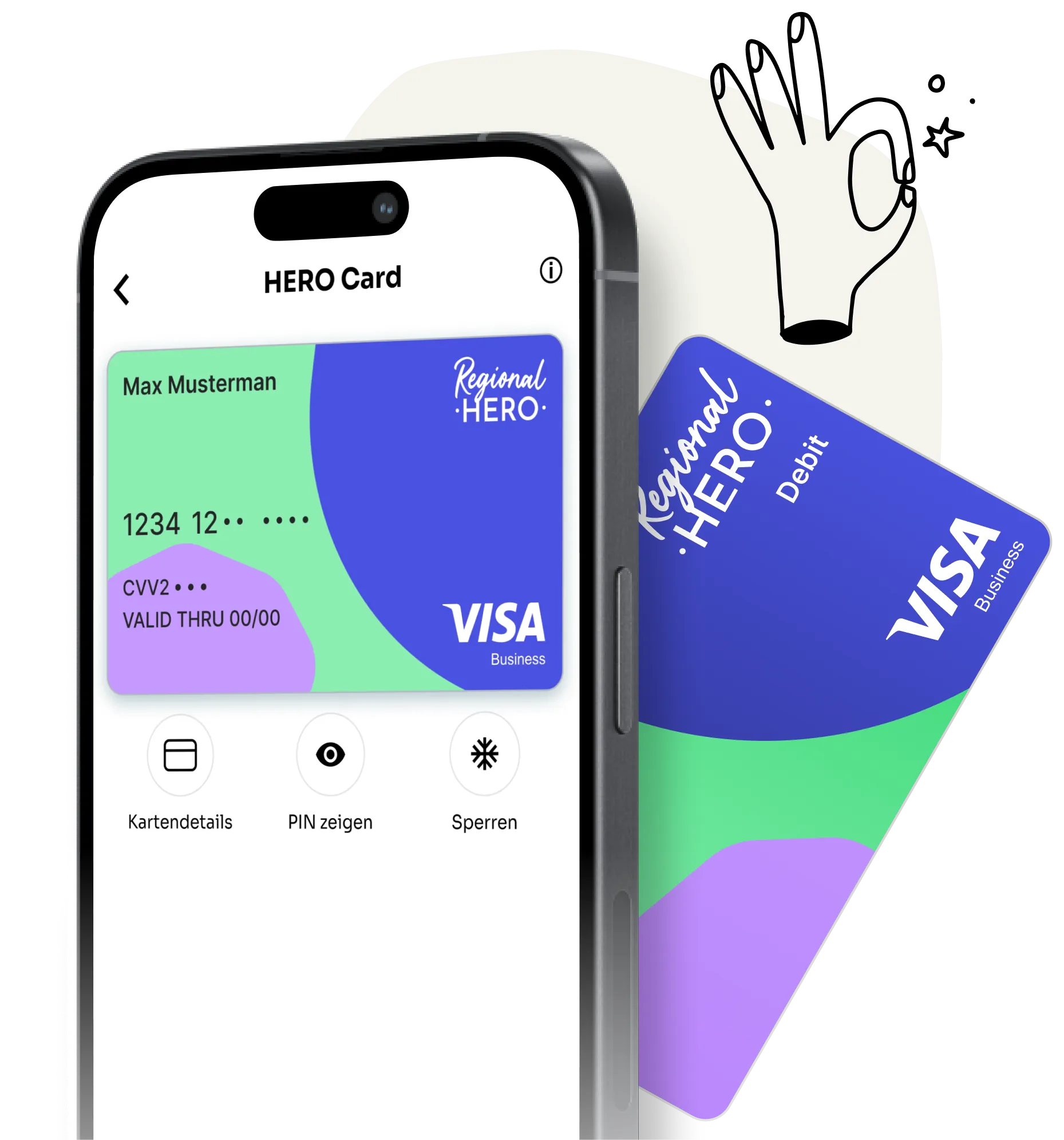
Mit HERO Base erhält dein Team 50 € steuerfrei pro Monat plus Zuschüsse für Mobilität, Gesundheit und Internet. Digital, regional und in 48 Stunden einsatzbereit.
HERO Base entdeckenMaster the art of inflation compensation to not only protect your company from the uncertainties of inflation through proactive measures and strategic planning, but also to guide it onto a path of growth and innovation. Inflation can be an opportunity for sustainable success if it is offset by increased efficiency, flexible pricing, and forward-looking budget planning.
Inflation compensation allows companies to specifically offset the real wage losses incurred by their employees due to price increases. By providing benefits such as the tax-free inflation compensation bonus, employers can alleviate the financial burden on their workforce, increase employee satisfaction, and strengthen their commitment to the company.
The inflation compensation bonus is a voluntary, tax- and social security-exempt special payment from employers to their employees, up to 3,000 Euros. This measure was introduced by the German government as part of the third relief package to mitigate the effects of high inflation. The regulation applies to payments made between October 26, 2022, and December 31, 2024.
The primary purpose of this bonus is to provide direct and unbureaucratic compensation for the increased cost of living. Because the payment reaches employees without deductions, it has an immediate financial impact. For companies, it represents an effective way to support their workforce's purchasing power without permanently increasing ancillary wage costs. NWB Verlag for Tax Law and Auditing states that this bonus, alongside the adjustment of the income tax schedule, represents a central pillar of statutory inflation compensation. [NWB Verlag]
The bonus must be granted in addition to the regular salary already owed. Converting existing salary components is not permitted. Companies have the flexibility to pay out the total amount of 3,000 Euros as a one-time payment or in several installments over the entire eligibility period. This flexibility allows the support to be adapted to the company's economic situation and the needs of the workforce.
Inflation compensation is crucial because the subjectively perceived inflation often far exceeds the officially measured inflation rate, leading to significant financial and psychological pressure on employees. This effect intensifies the feeling of lost purchasing power and increases concerns about personal economic stability.
A study by IU International University of Applied Sciences found that perceived inflation in September 2022 was 34.2% , while the actual rate was 7.9%. [Prof. Dr. Johannes Treu] This discrepancy arises because people place greater weight on price increases for frequently purchased goods such as food and energy. Even if the official inflation rate decreases, the perceived burden remains high. A survey by the German Economic Institute (IW Köln) showed that respondents themselves estimated inflation to be an average of 15.3% in 2024, underscoring the ongoing public concern. [Matthias Diermeier, Judith Niehues]
If wages are not adjusted to this perceived inflation, a significant real wage loss occurs, which limits the quality of life. Certain population groups are disproportionately affected. An analysis by the German Centre for Higher Education Research and Science Studies (DZHW) shows that students suffer particularly, as expenses for rent including utilities and food constitute a large proportion of their budget. [Dr. D. H. Meier, S. L. Thomsen, M. Kroher] These findings are transferable to lower-income employees, for whom fixed costs also consume a large part of their salary. Financial compensation from the employer is therefore perceived not only as material aid but also as an important gesture of appreciation and care.
Companies that provide inflation compensation benefit from increased employee motivation, stronger loyalty, and an improved position in the competition for skilled workers. The payment signals appreciation and social responsibility, which positively impacts corporate culture and employer branding and can reduce employee turnover.
A survey by the ifo Institute impressively confirms this correlation: Of the companies surveyed, 72% stated that they paid the inflation compensation bonus primarily to increase employee motivation. [Daria Schaller, ifo Institute] Since the bonus is a voluntary benefit, the workforce perceives it as a clear sign of recognition for their work during economically challenging times. This leads to higher job satisfaction and loyalty. When employees feel that their employer takes their financial concerns seriously and actively supports them, their willingness to change jobs decreases.
Furthermore, the widespread use of the bonus has set a new standard in the labor market. According to an ifo study, almost three-quarters of German companies have already provided this benefit. Companies that do not offer this compensation risk being perceived as less attractive in the 'war for talent'. Moreover, supporting the purchasing power of their own workforce contributes to stabilizing overall economic consumption. According to an analysis by the Institute for Macroeconomics and Economic Research (IMK), the bonuses have provided relief to approximately nationwide 26 million employees eased the burden on and boosted consumption, which in turn helped prevent a recession. [Dr. Jan Behringer, Prof. Dr. Sebastian Dullien] Thus, companies are not only investing in their employees but also in the stability of their own economic environment.
Correct implementation of the inflation compensation bonus requires adherence to three key criteria: The payment must be voluntary and in addition to the regular salary, the principle of equal treatment must be observed, and the payment must be clearly declared as inflation compensation. Careful documentation in the payroll is essential.
The first step is to ensure that the bonus is a genuine additional benefit. It must not replace contractually agreed wage or salary components, such as holiday or Christmas bonuses. If this is the case, the tax and social security exemption will be forfeited. Secondly, the principle of equal treatment under labor law must be observed. If a company grants the bonus, it must not arbitrarily exclude individual employees or groups from it. Differentiation is only permissible if there are objective reasons, for example, a distinction based on scope of employment (full-time/part-time) or a staggered payment based on length of service. A blanket distribution to all employees is the most legally secure approach.
Finally, transparent communication and documentation are crucial. The payroll statement and an accompanying letter should clearly indicate that it is an "inflation compensation bonus according to § 3 No. 11c EStG". This provides clarity for employees and serves as proof in the event of an audit by the tax authorities or social security institutions. Adherence to these steps ensures that the bonus can achieve its full effect and legal risks for the company are minimized.
Beyond the one-off inflation compensation bonus, sustainable salary increases are the most important long-term strategy to permanently secure employees' purchasing power. Additionally, tax-optimized non-cash benefits and flexible benefits can help increase net income and reduce the financial burden on the workforce.
The inflation compensation bonus is an effective short-term instrument, but its effect will cease after the regulation expires at the end of 2024. To permanently offset real wage losses, structural adjustments to salary structures are indispensable. These create a reliable and future-proof basis for employees' financial planning. The disadvantage for companies is the permanently higher wage and ancillary wage costs. A comparison illustrates the different effects.
A smart long-term strategy combines both approaches. While the bonus bridges acute financial bottlenecks, moderate but regular salary adjustments ensure sustainable purchasing power. A study by the Institute for the Future of Labor (IZA) emphasizes the importance of designing such measures to be socially equitable, specifically to relieve low-income households. [Werner Eichhorst, Ulf Rinne, Matthias Stadler] Additionally, tax-privileged non-cash benefits such as a mobility budget, meal allowances, or health services can further increase employees' disposable net income without directly raising gross salaries. This combination of short-term aid, long-term wage development, and smart additional benefits represents the most comprehensive answer to the challenges of inflation.
No, the payment of the inflation compensation bonus is a purely voluntary benefit from the employer. Employees have no legal right to receive this bonus. However, an obligation may arise from a collective bargaining agreement, a works agreement, or the principle of equal treatment under labor law if other comparable employees receive the payment.
Yes, marginal employees (mini-jobbers), part-time employees, and apprentices can also receive the inflation compensation bonus in full, up to 3,000 Euros, tax- and social security-free. A reduction proportional to working hours is permissible if objectively justified, but not strictly necessary.
If the bonus is not paid in addition to the already owed wages or if other formal criteria are not met, it loses its tax and social security exemption. In this case, both the employer and the employee must subsequently pay the respective social security contributions and wage taxes.
The tax- and social security-free inflation compensation bonus can be paid during the eligibility period from October 26, 2022 to December 31, 2024 be granted. All payments must have been received in the employee's account by this deadline to qualify for tax exemption.
Yes, the inflation compensation bonus does not necessarily have to be a monetary payment. It can also be granted as non-cash benefits, such as fuel or merchandise vouchers. It is also important that the benefit is provided in addition to the regular salary and for the purpose of inflation compensation.
Everything you want to know — simply explained.
Everything you want to know — simply explained.
What is the benefit card?
The HERO Card is a digital Mastercard debit card that allows companies to offer tax-free benefits easily and flexibly. Employees thus receive tax-free subsidies for benefits in kind, mobility, food and health. Everything bundled on one card, individually configurable and implemented in a legally secure manner.
Employees simply pay on a daily basis. Locally in your favorite café or nationwide in supermarkets, pharmacies or public transport.
How does that work for companies?
You control everything centrally in the HR portal.
Activate benefits in five minutes. The HERO Card automatically loads the monthly budget. Digital, secure and tax-compliant.
What are the concrete benefits of this for my team?
Up to 50 euros in kind per month
Meal allowance of up to 7.50 euros per working day
Mobility allowance of up to 58 euros per month
Up to 500 euros per year for health and wellbeing
All tax-free. It's all digital. It's all on one card.
How does HR keep track?
All benefits at a glance. No paperwork.
In the HR portal, you control budgets, see workload and manage everything centrally.
Sign in. Adjust. It's done.
This saves you up to 80 percent of administrative time.
Is that really tax-free?
Yes, all benefits are tax-free for employees and are completely legally compliant. Employers must tax some benefits as a lump sum.
The HERO Card uses legally enshrined allowances. Each category is correctly separated for tax purposes and can be managed automatically.
How much does the HERO Card cost?
As part of the employee license, the card costs 1 euro per employee per month plus charges for charging benefits.
For 50 employees with HERO Base, for example, this equates to around 140 euros per month — less than a joint team meal, but with a long-term effect.
How quickly is the HERO Card ready for use?
Ready to go in just a few days.
Setup, onboarding and go-live take a maximum of one week.
No technical hurdles. Without complexity.