Inhaltsverzeichnis


Implement cash shortage compensation ▶️ Safeguard your team ✓ Foster trust ✓ Boost morale ✓ Offer peace of mind!
STEUERFREIER SACHBEZUG – HERO BASE
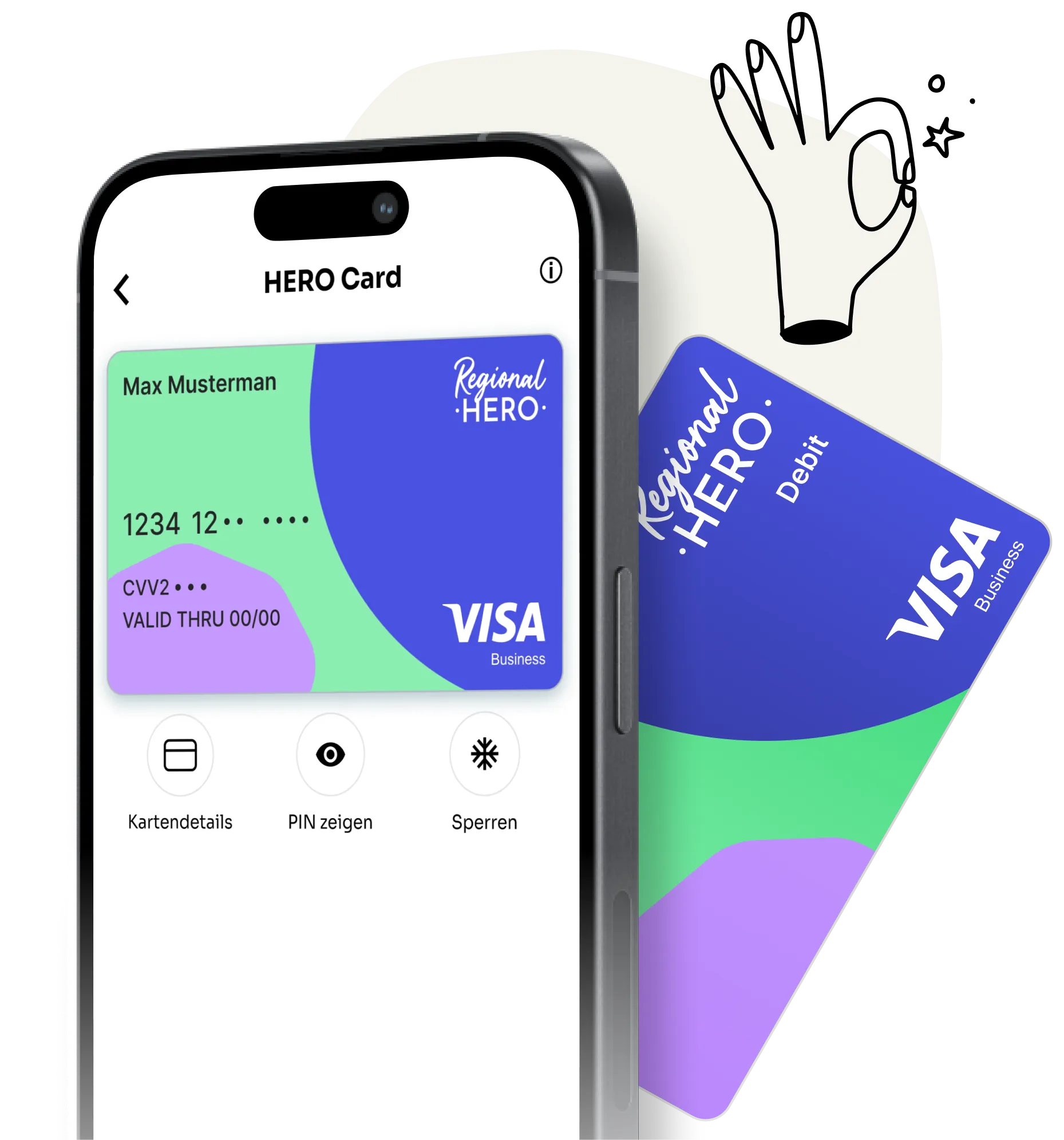
Mit HERO Base erhält dein Team 50 € steuerfrei pro Monat plus Zuschüsse für Mobilität, Gesundheit und Internet. Digital, regional und in 48 Stunden einsatzbereit.
HERO Base entdeckenCash shortage compensation is a financial benefit granted to employees in some business sectors. The term might sound a bit niche at first, but in practice, cash shortage compensation is an effective way to top up wages and salaries tax-free, thereby strengthening employee retention. In this guide, we will delve into the legal basis of cash shortage compensation, explain its advantages, show how it can contribute to employee retention, and how it is implemented in companies. We will also examine the tax implications that must be considered when granting cash shortage compensation. Finally, we will present some practical examples that illustrate the successful application of cash shortage compensation.
The introduction of cash shortage compensation, often referred to as a deficiency allowance, is an established tool to mitigate the financial risk for employees with cash or inventory responsibility. Since these employees are exposed to an increased liability risk for shortfalls, such compensation creates a fair balance. It serves as a flat-rate compensation for the assumed risk and strengthens trust between employers and employees. When a company pays cash shortage compensation, a so-called deficiency agreement is often made in return. This agreement regulates liability for cash discrepancies and typically limits it to the amount of compensation paid, which creates legal certainty for both parties.
The legal basis for employee liability is enshrined in the German Civil Code (BGB) and specified by the jurisprudence of the Federal Labour Court (BAG). Generally, employees are liable for damages they culpably cause to their employer. For minor cash shortfalls that can occur in daily work, liability is often excluded. However, a deficiency agreement shifts this principle towards no-fault liability, meaning that the employee must account for discrepancies even without demonstrable fault. Because this represents a significant disadvantage for the employee, the payment of appropriate cash shortage compensation is a mandatory prerequisite for the validity of such an agreement. [Industrie- und Handelskammer zu Leipzig]
The implementation of such an arrangement requires careful drafting of the employment contract or a separate agreement. It must be clearly defined who is responsible for which cash register and that the employee concerned has sole or at least primary access to the cash holdings. Without this exclusive access, a deficiency agreement is generally invalid, as it cannot be ruled out that third parties caused the shortfall. The economic significance of these regulations should not be underestimated against the backdrop of rising corporate insolvencies, as they help to clearly distribute internal financial risks and avoid disputes.
Cash shortage compensation is an additional, flat-rate payment from the employer to employees who, due to their activities, are exposed to a particular risk of cash or inventory shortfalls. It is not a performance bonus, but rather financial compensation for the assumed liability risk in managing cash or inventory.
This compensation is primarily relevant for professional groups who regularly handle cash transactions or valuable goods. This includes, in particular, cashiers in retail, hospitality staff, bank tellers, or petrol station staff. The payment of cash shortage compensation is always advisable when a company does not want to bear the risk of discrepancies alone and instead seeks a clear liability arrangement with the responsible employees. It serves as consideration for the employees' willingness to be accountable for potential shortfalls. [Gabler Wirtschaftslexikon]
The purpose of the payment is therefore not a reward for error-free work, but rather compensation for a potential risk to the employee's private assets. If-then scenario: If a company wants to introduce a deficiency agreement for no-fault liability, then it must pay appropriate cash shortage compensation as compensation. Without this payment, such a liability agreement would generally be considered immoral and thus invalid under German jurisprudence.
The admissibility of cash shortage compensation is inextricably linked with the regulations on employee liability and the so-called deficiency agreement. For such an agreement to be legally effective, several strict conditions must be met, which serve to protect employees and prevent undue disadvantage.
A central condition is that the employee has the sole and exclusive control over the entrusted cash or inventory holdings. If it cannot be clearly proven that no one else had access, the assumption of liability by the employee is invalid. Furthermore, the agreed cash shortage compensation must be appropriately high . It must give the employee a realistic opportunity to compensate for any shortfall that may occur from the sum of the payments. The amount of the employee's liability is thereby limited to the amount of compensation paid. [Industrie- und Handelskammer zu Leipzig]
Furthermore, the deficiency agreement must be formulated clearly and unambiguously, ideally as a written supplementary agreement to the employment contract. Blanket clauses that provide for general liability for all shortfalls are generally not enforceable. Since the introduction of a deficiency agreement represents a deviation from the statutory liability principles, where liability only arises in cases of fault, it is examined very restrictively by labor courts. The burden of proof that all prerequisites for a valid deficiency agreement are met rests entirely with the employer.
The tax treatment of cash shortage compensation is a crucial aspect for companies and employees. Under certain conditions, this payment can be tax-free and exempt from social security contributions. This offers a significant incentive to make such agreements, as the gross amount equals the net amount and thus fully reaches the employee.
According to the Wage Tax Guidelines (LStR), cash shortage compensation up to an amount of 16 Euros per month tax-free. [RA Prof. Dr. Christian Jahndorf] This tax exemption is, however, subject to the condition that it is a lump-sum payment made regardless of whether a deficit actually occurs. If the compensation is only paid when a shortfall arises, or if it is offset against actual deficits, the tax exemption is forfeited, and the payment becomes regular taxable income. [Smartsteuer / Haufe Gruppe]
Similar rules apply regarding social security: If the cash shortage compensation is tax-free according to tax regulations, it is generally also free from social security contributions. It is not counted as part of the remuneration subject to contributions. However, in case of illness, the cash shortage compensation is part of the continued remuneration, as it is considered a fixed component of the remuneration for assuming liability risk. [Deutsches Sozialrecht, Kommentar und Erläuterungen zur Entgeltfortzahlung] Companies must therefore carefully check during payroll processing whether all conditions for tax and contribution exemption are met to avoid additional demands during an audit.
Determining a fair and appropriate amount for cash shortage compensation is crucial for the legal validity of the deficit agreement and its acceptance by employees. The compensation must realistically reflect the assumed risk and must not be merely symbolic. It represents the upper limit of liability.
A key criterion for appropriateness is that the total amount of compensation paid is sufficient to fully cover average deficits. Because the employee is intended to build a financial buffer for liability cases with this payment, the amount must be in reasonable proportion to the potential risk. Past experience can serve as a guide: What were the average cash differences in the relevant department or for comparable activities? The transaction volume and the complexity of cash management are also relevant factors.
Case law requires that the compensation be calculated such that it "can fully cover a shortfall." [Industrie- und Handelskammer zu Leipzig] A lump sum set too low would invalidate the deficit agreement, as it would unduly disadvantage the employee. The following table illustrates the different liability scenarios:
Comparison of liability scenarios with and without a deficit agreement
Implementing cash shortage compensation offers clear advantages for both companies and employees that go beyond mere risk compensation. It is a tool that can contribute to improving the working atmosphere, providing legal security, and increasing employee motivation.
Introducing a cash shortage allowance as part of a shortfall agreement creates a win-win situation. The employer protects themselves against losses without having to prove fault in every instance. In return, the employee receives financial compensation and a clear limitation of their liability risk. This mutual balancing of interests fosters trust-based cooperation and can even increase diligence in handling entrusted assets, as responsibilities are clearly defined.
No, there is no legal obligation to pay a cash shortage allowance. It is a voluntary benefit provided by the employer. However, it becomes a mandatory prerequisite if a company wishes to enter into a so-called shortfall agreement, which stipulates liability for shortfalls on the part of the employee, regardless of fault.
The shortfall agreement is the contractual arrangement in which an employee undertakes to assume liability for shortfalls. The cash shortage allowance (also known as Mankogeld) is the financial compensation the employee receives from the employer for this. The payment is therefore a condition for the validity of the agreement.
With a valid shortfall agreement, the employee's liability is generally limited to the amount of the cash shortage allowance paid. [Industrie- und Handelskammer zu Leipzig] If the shortfall exceeds this amount, the employer must bear the additional loss themselves, unless intent or gross negligence can be proven.
Yes, the principle of the shortfall agreement and cash shortage allowance can also be applied to inventory shortfalls (stock discrepancies). The legal requirements, such as sole access to the goods and adequate compensation, are the same as for cash discrepancies. This is relevant, for example, in the logistics or retail sector.
Everything you want to know — simply explained.
Everything you want to know — simply explained.
What is the benefit card?
The HERO Card is a digital Mastercard debit card that allows companies to offer tax-free benefits easily and flexibly. Employees thus receive tax-free subsidies for benefits in kind, mobility, food and health. Everything bundled on one card, individually configurable and implemented in a legally secure manner.
Employees simply pay on a daily basis. Locally in your favorite café or nationwide in supermarkets, pharmacies or public transport.
How does that work for companies?
You control everything centrally in the HR portal.
Activate benefits in five minutes. The HERO Card automatically loads the monthly budget. Digital, secure and tax-compliant.
What are the concrete benefits of this for my team?
Up to 50 euros in kind per month
Meal allowance of up to 7.50 euros per working day
Mobility allowance of up to 58 euros per month
Up to 500 euros per year for health and wellbeing
All tax-free. It's all digital. It's all on one card.
How does HR keep track?
All benefits at a glance. No paperwork.
In the HR portal, you control budgets, see workload and manage everything centrally.
Sign in. Adjust. It's done.
This saves you up to 80 percent of administrative time.
Is that really tax-free?
Yes, all benefits are tax-free for employees and are completely legally compliant. Employers must tax some benefits as a lump sum.
The HERO Card uses legally enshrined allowances. Each category is correctly separated for tax purposes and can be managed automatically.
How much does the HERO Card cost?
As part of the employee license, the card costs 1 euro per employee per month plus charges for charging benefits.
For 50 employees with HERO Base, for example, this equates to around 140 euros per month — less than a joint team meal, but with a long-term effect.
How quickly is the HERO Card ready for use?
Ready to go in just a few days.
Setup, onboarding and go-live take a maximum of one week.
No technical hurdles. Without complexity.