Inhaltsverzeichnis


Implement Equal Pay ▶️ Close pay gaps ✓ Promote equality ✓ Boost employer attractiveness ✓ Pay fairly now!
STEUERFREIER SACHBEZUG – HERO BASE
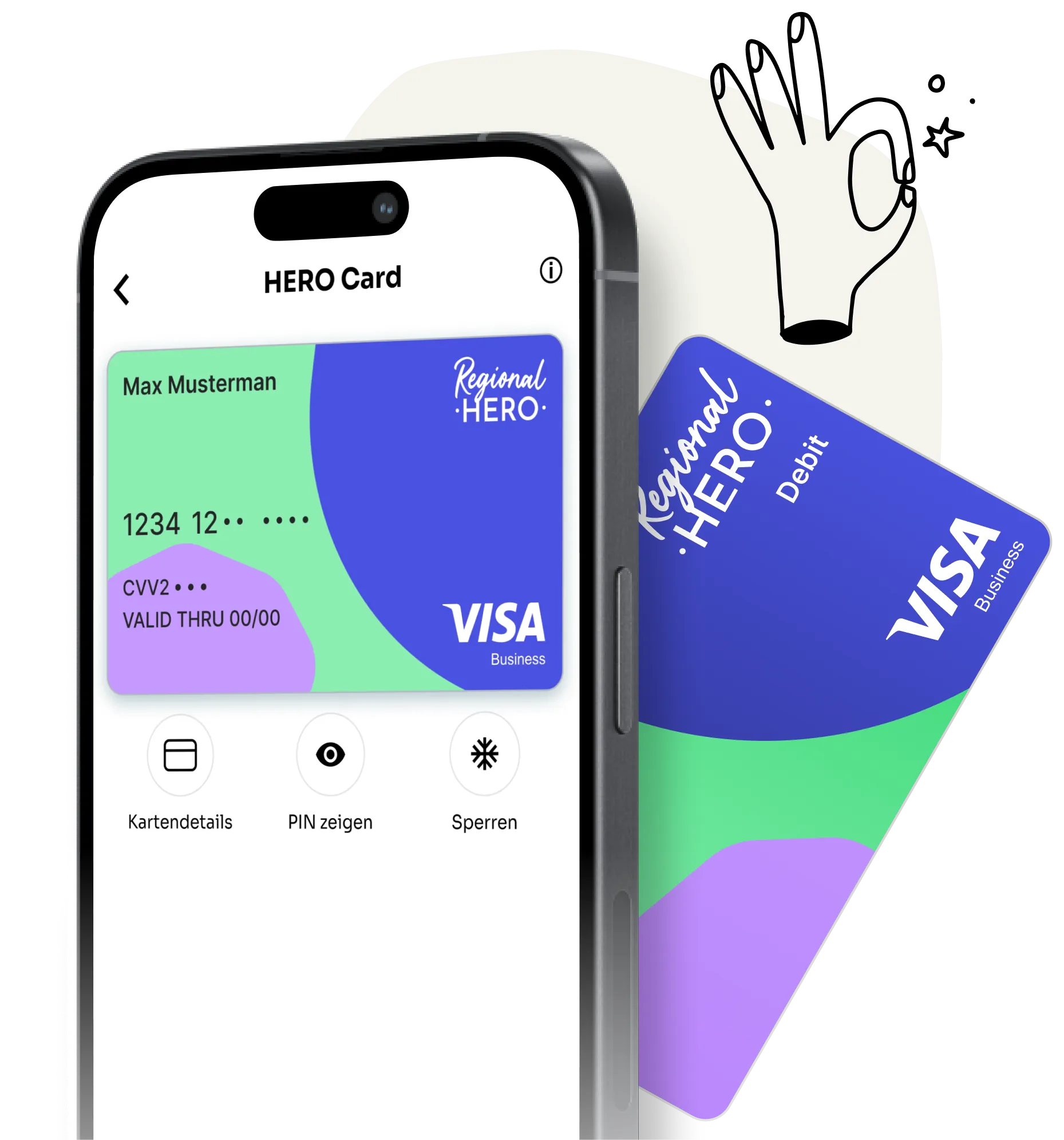
Mit HERO Base erhält dein Team 50 € steuerfrei pro Monat plus Zuschüsse für Mobilität, Gesundheit und Internet. Digital, regional und in 48 Stunden einsatzbereit.
HERO Base entdeckenEqual opportunity begins with equal pay, yet equal pay is still not a reality in many companies. Awareness of the importance of fairness and equality, both socially and economically, has grown significantly in recent years. But what does the concept of equal pay entail, why is it relevant, and how can it be implemented within a company? This guide addresses these questions, examining tax frameworks and incentives for equal pay. It also explores the role local economic support can play, along with the challenges and opportunities that arise during implementation. The constant focus is on one goal: strengthening the perception of one's company as a fair, equitable employer and thereby sustainably improving employee retention.
Successful implementation of Equal Pay requires a strategic approach, beginning with a detailed analysis of internal salary structures. Building on this, companies must establish transparent compensation systems with objective criteria, actively dismantle unconscious biases in promotion and hiring processes, and foster flexible work models that enable career development regardless of the working time model.
Equal Pay refers to the principle of equal remuneration for equal or equivalent work, regardless of gender. This principle is a central pillar of economic equality. Despite its legal anchoring, a significant wage gap, known as the Gender Pay Gap, persists in Germany. This gap measures the percentage difference in average gross hourly earnings between men and women and serves as an important indicator of existing inequalities in the labor market.
In Germany, the unadjusted Gender Pay Gap in 2024 was 16%. [Federal Statistical Office] This means women earned, on average, 16% less per hour than men. This places Germany above the EU average of around 12%, indicating profound structural challenges. [Federal Statistical Office] It is important to distinguish between the unadjusted and adjusted gap. The unadjusted figure compares the average earnings of all employees, while the adjusted gap only considers differences for comparable activity, qualification, and employment history. Although the adjusted gap is smaller, it shows that an unexplained wage gap remains even under comparable conditions.
The wage gap also varies significantly by region. Analyses by the Institute for Employment Research (IAB) show that the Gender Pay Gap in West Germany, at around 19%, is significantly more pronounced than in East Germany, where it stands at approximately 7%. [Schulte] These differences are attributable to various historical and socioeconomic developments, such as a higher female employment rate and a different industry structure in the new federal states. Equal Pay Day, which symbolically marks the day each year until which women work for free while men have been paid since January 1st, draws attention to this persistent discrepancy.
The wage gap between genders is attributable to a complex interplay of several factors. It is not a single issue, but rather an entanglement of societal norms, structural barriers in the labor market, and individual career choices, which are often influenced by external conditions.
A significant reason is the unequal distribution of women and men across different industries and professions. Women are disproportionately employed in sectors such as healthcare, social services, or retail, where wage levels tend to be lower. Men, however, dominate in higher-paying technical and industrial professions. A study by the Economic and Social Research Institute (WSI) confirms that this occupational segregation explains a significant portion of the wage differences. [Lott et al.] Closely related is the unequal distribution in leadership positions. Women remain significantly underrepresented in upper management levels, which limits their earning potential.
Another crucial factor is the distribution of paid and unpaid care work. Women still perform the larger share of childcare and care for relatives, which often leads to career interruptions or reduced working hours. The higher part-time employment rate among women is a direct consequence of this and negatively impacts hourly wages and career advancement opportunities. The Landesbank Baden-Württemberg emphasizes that without better work-life balance and a more equitable distribution of care work, the wage gap can hardly be closed. [Landesbank Baden-Württemberg] Finally, a lack of pay transparency plays a central role. When salary structures and negotiations are opaque, unconscious biases and unjustified differences can persist undetected and become entrenched. [Zamberlan]
Implementing equal pay is far more than just a matter of fairness or compliance; it represents a measurable strategic advantage for companies. Firms that practice fair and transparent compensation models position themselves as attractive employers and can significantly stand out in the competition for highly qualified professionals. This sustainably enhances employer attractiveness.
A fair salary system demonstrably leads to higher employee satisfaction, motivation, and loyalty. When employees feel they are treated fairly, their commitment increases, directly impacting the company's productivity and innovative capacity. Simultaneously, costs associated with high staff turnover decrease. Companies that actively promote Equal Pay thus directly invest in the stability and performance of their workforce. This positive effect also extends to the corporate culture, as fairness and transparency strengthen trust and teamwork.
At a macroeconomic level, closing the wage gap also has significant positive effects. A study by the European Institute for Gender Equality (EIGE) predicts that a complete elimination of the Gender Pay Gap in the EU could lead to a significant increase in GDP and create between 850,000 and 1.2 million new jobs . [European Institute for Gender Equality] For companies, this means not only contributing to societal development but also participating in a growing and more stable overall economy. The implementation of Equal Pay is thus an investment in one's own future viability and competitive position.
Companies can actively contribute to reducing the pay gap through targeted and systematic measures. The process begins with creating transparency through an internal analysis. Building on this, structural changes can be implemented that ensure fair compensation for all employees and embed it long-term.
The first and most important step is conducting an internal pay analysis. This involves comparing salaries by gender, position, qualifications, and other relevant factors to uncover unjustified pay disparities. Based on this data, companies can develop targeted countermeasures. A key lever is the establishment of transparent and comprehensible salary structures. This includes defining clear salary bands for each position and setting objective criteria for salary increases and bonuses, such as performance, experience, and responsibility. This prevents arbitrary decisions and reduces the influence of unconscious bias. Bielefeld University emphasizes that a lack of transparency is one of the main causes of the pay gap. [Research Group Gender and Labor Market]
Other effective measures include:
Comparison of Compensation Approaches
The EU Pay Transparency Directive, which must be transposed into German law by June 2026, will significantly tighten pay transparency requirements for companies. The directive aims to enforce the principle of "equal pay for equal work" through mandatory transparency measures and actively combat the gender pay gap.
The directive introduces far-reaching reporting obligations for companies. Companies with more than 100 employees will be required to regularly publish data on the pay gap between female and male employees. These reports must include detailed information on earnings differences across various employee categories. If these reports reveal a pay gap of more than 5% that cannot be justified by objective, gender-neutral factors, another obligation applies: the company must conduct a joint pay assessment in cooperation with employee representatives and take measures to close the gap. This regulation creates clear pressure to act. [Stahmann, Pfarr]
Furthermore, the directive strengthens the individual rights of employees. They gain an enforceable right to information about average pay levels for equal or equivalent work, broken down by gender. This makes it easier for individuals to identify potential pay discrimination and initiate legal action. For companies, this means: If they do not act proactively now and review their salary structures for fairness, they risk not only suffering reputational damage but also facing legal consequences. The directive transforms equal pay from a voluntary measure into an unavoidable corporate obligation.
The unadjusted Gender Pay Gap compares the average gross hourly earnings of all men and women. The adjusted gap, however, only considers pairs with comparable qualifications, roles, and career histories. It is therefore smaller but shows the remaining pay gap under equal conditions.
No, the date of Equal Pay Day is symbolic and is recalculated annually. It marks the day until which women statistically work for free, based on the current unadjusted Gender Pay Gap. An earlier date in the year signals a reduction in the pay gap.
Yes, the principle of equal pay for equal and equivalent work applies to all companies, regardless of their size. However, statutory reporting obligations, as stipulated by the EU Pay Transparency Directive, generally only apply from a certain number of employees, for example, from 100 employees.
The Pay Transparency Act grants employees in companies with more than 200 employees an individual right to information. They can find out the average salary of a comparable group of the opposite sex. If discrimination is found, legal action can be taken.
Everything you want to know — simply explained.
Everything you want to know — simply explained.
What is the benefit card?
The HERO Card is a digital Mastercard debit card that allows companies to offer tax-free benefits easily and flexibly. Employees thus receive tax-free subsidies for benefits in kind, mobility, food and health. Everything bundled on one card, individually configurable and implemented in a legally secure manner.
Employees simply pay on a daily basis. Locally in your favorite café or nationwide in supermarkets, pharmacies or public transport.
How does that work for companies?
You control everything centrally in the HR portal.
Activate benefits in five minutes. The HERO Card automatically loads the monthly budget. Digital, secure and tax-compliant.
What are the concrete benefits of this for my team?
Up to 50 euros in kind per month
Meal allowance of up to 7.50 euros per working day
Mobility allowance of up to 58 euros per month
Up to 500 euros per year for health and wellbeing
All tax-free. It's all digital. It's all on one card.
How does HR keep track?
All benefits at a glance. No paperwork.
In the HR portal, you control budgets, see workload and manage everything centrally.
Sign in. Adjust. It's done.
This saves you up to 80 percent of administrative time.
Is that really tax-free?
Yes, all benefits are tax-free for employees and are completely legally compliant. Employers must tax some benefits as a lump sum.
The HERO Card uses legally enshrined allowances. Each category is correctly separated for tax purposes and can be managed automatically.
How much does the HERO Card cost?
As part of the employee license, the card costs 1 euro per employee per month plus charges for charging benefits.
For 50 employees with HERO Base, for example, this equates to around 140 euros per month — less than a joint team meal, but with a long-term effect.
How quickly is the HERO Card ready for use?
Ready to go in just a few days.
Setup, onboarding and go-live take a maximum of one week.
No technical hurdles. Without complexity.