Inhaltsverzeichnis


Develop a Special Bonus System ▶️ Boost Employee Motivation ✓ Create Performance Incentives ✓ Achieve Company Goals ✓ Reward Success Here!
STEUERFREIER SACHBEZUG – HERO BASE
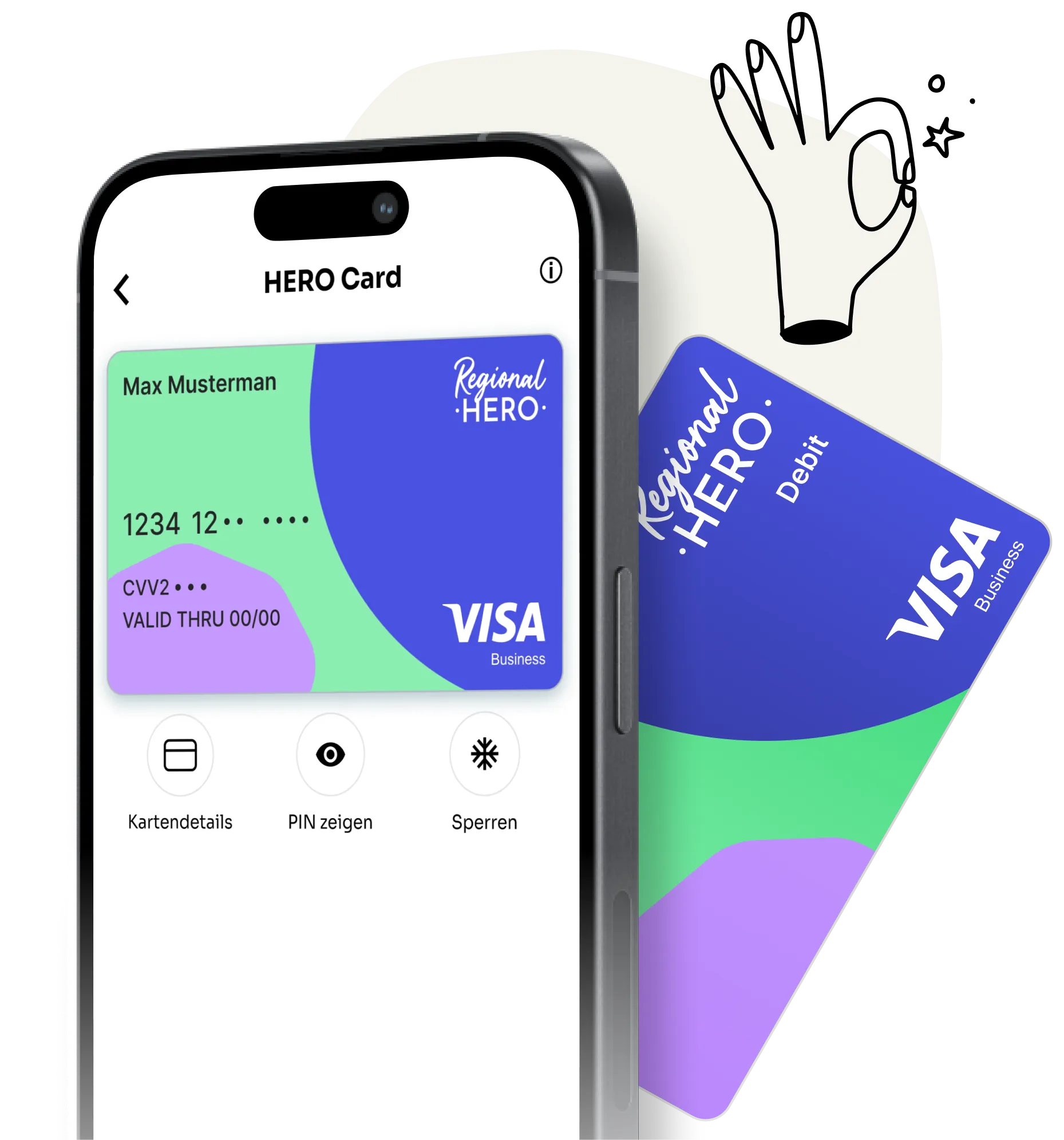
Mit HERO Base erhält dein Team 50 € steuerfrei pro Monat plus Zuschüsse für Mobilität, Gesundheit und Internet. Digital, regional und in 48 Stunden einsatzbereit.
HERO Base entdeckenSpecial bonuses for employees are more than just monetary rewards. They are a strategic tool for motivating, retaining, and developing employees, while also sending a strong signal of appreciation and recognition. When well-thought-out and properly implemented, special bonuses can not only improve the working atmosphere but also increase employee productivity, creativity, and loyalty. At the same time, the local economy benefits, as the bonuses are often spent within the region. In this context, tax-free employer contributions also play an essential role. They offer companies attractive opportunities for efficient employee compensation. In this guide, you will learn everything you need to know about special bonuses, from legal aspects and their applications to their impact on the local economy. This will provide you with a comprehensive overview and valuable suggestions for designing your own bonus systems.
The strategic implementation of special bonuses enables companies to create targeted performance incentives that directly contribute to company goals. A well-designed bonus system not only rewards outstanding achievements but also fosters a culture of appreciation and commitment. Since such systems are proven to increase employee motivation, they lead to higher productivity and stronger employee loyalty to the company. When the criteria for receiving a bonus are transparent, fair, and understandable to everyone, acceptance is maximized, and the positive effect on morale is sustainably strengthened. The design can range from monetary bonuses to tax-advantaged benefits tied to specific achievements.
Special bonuses are additional, irregular compensation components paid in addition to the regular monthly salary. They serve to recognize special achievements, participation in company success, or as compensation for particular burdens. According to the Federal Statistical Office (Destatis), these special payments include performance bonuses, annual bonuses, or profit-sharing. [Statistisches Bundesamt]
Since the purpose of a special bonus determines its form, various types exist, suitable depending on the company's objective. A performance bonus, for example, rewards achieving or exceeding individually agreed-upon goals. A project bonus, on the other hand, is paid for the successful completion of a specific project. If a company wants to involve its employees directly in its economic success, it can distribute profit-sharing or revenue-sharing. A well-known example of an occasion-based special payment was the inflation compensation bonus, which was intended to help mitigate inflation temporarily until the end of 2024. [Deutsche Bundesbank]
The high acceptance of such incentive systems among the population is evident in the widespread use of bonus programs. A GfK study shows that around 90 percent of Germans actively collect points, miles, or discounts, indicating a general openness to performance- and loyalty-based rewards. [GfK] This psychological predisposition can be applied to corporate bonus systems to foster motivation.
The introduction of special bonuses is not limited to the private sector. In the public sector too, for example at universities, performance bonuses have been used since 2006 to recognize exceptional employee commitment. Often, the symbolic nature of appreciation is as important as the financial amount itself. [DER SPIEGEL]
An effective bonus system requires clear, measurable, and achievable goals that are communicated transparently to all employees. Since fairness and comprehensibility are crucial, the criteria for bonus allocation should be objectively designed. This leads to a distribution perceived as fair and sustainably increases the system's acceptance and motivating effect.
The development of such a system follows a logical sequence of steps. First, the strategic goals to be achieved with the bonus must be clearly defined. These could include, for example, increasing return on sales, improving customer satisfaction, or the timely completion of an internal project. Once these goals are established, specific key performance indicators (KPIs) for measuring goal achievement can be derived in the next step. These metrics must be understandable and influenceable by employees.
A central aspect for effectiveness is transparency. Open communication about the rules of the bonus system is essential. Every employee should understand which performance leads to which bonus. Studies from the public sector underscore the importance of transparent compensation components to ensure fairness and acceptance. [Eidgenössisches Personalamt] Setting a clear budget for the bonus program and precisely defining the payment modalities (e.g., quarterly or annually) create additional clarity and planning security for both sides.
Special bonuses are generally considered as wages and are therefore subject to tax and social security contributions. However, there are legally defined exceptions that allow companies to pay certain bonuses with tax benefits or entirely tax-free. This represents an attractive incentive for employees, as the full value of the benefit reaches the employee.
An important regulation for the years 2025 and 2026 is the planned tax-free employee bonus. Employers can grant their employees during this period up to 1,000 Euros per year tax-free and exempt from social security contributions as a recognition. For the year 2025, government funds amounting to around 250 million Euros earmarked. [Bundesministerium der Finanzen] In addition, there is a permanent option to grant monthly non-cash benefits up to a tax-free limit of 50 Euros, which is also suitable for smaller, regular recognitions. [Factorial HR]
Legally, caution is advised when paying out special bonuses to avoid an unintended "established company practice". If a company repeatedly pays a bonus without reservation, a legal claim for employees for the future can arise from this. To prevent this, an explicit voluntary clause should be formulated in employment contracts or works agreements. This clarifies that it is a one-time, voluntary benefit from which no future claim can be derived.
Comparison: Taxable vs. tax-free special bonuses
The success of a bonus system can be measured through a combination of quantitative metrics and qualitative feedback. Since the main goals are motivation and performance improvement, the exact KPIs that served as the basis for the bonus payment should be analyzed. A positive development of these metrics after the system's introduction is a strong indicator of its effectiveness.
Quantitative metrics include, for example, the achievement of targets in sales teams, the reduction of production errors, or adherence to project budgets. If a bonus system is linked to such metrics, its direct impact on business goals can be tracked. In addition, qualitative feedback is essential. Regular employee surveys or feedback discussions provide information on whether the system is perceived as fair and motivating. Because motivation is a psychological state, it depends not only on the amount of the bonus but significantly on perceived fairness and appreciation.
The motivating effect of special payments is influenced by wage development in Germany. For example, the discontinuation of the inflation compensation bonus led to a weaker increase in nominal wages in the first quarter of 2025 by an average of 3.6% compared to the previous year. [Statistisches Bundesamt] This shows how significantly such bonuses influence the compensation structure and the perception of income. A sustainable increase in motivation is achieved when bonuses are understood as a genuine, additional thank you for outstanding work and not as compensation for a basic salary perceived as too low.
Beyond purely monetary rewards, there is a variety of non-monetary incentives that can often have an equally strong or even stronger motivating effect. Such alternatives are particularly useful when they better address the individual needs of employees or are intended to specifically promote certain aspects of company culture, such as work-life balance and personal development.
Among the most popular non-monetary alternatives are additional vacation days, which directly promote employee rest and well-being. Equally valuable are investments in professional development, such as funding high-quality training, certifications, or conference attendance. Flexible work models or the option for more work-from-home days are other highly valued benefits that strengthen employee autonomy and trust. If the goal is to strengthen team cohesion, then joint team events or a trip can be a more effective reward than an individual cash payment.
The usefulness of these alternatives heavily depends on the context. In creative industries, providing time for employees' own innovation projects can be more motivating than a pure cash bonus. In companies with a young workforce, subsidies for childcare or gym memberships can be highly valued. The principle of purpose-specific rewards can also be observed in a global context: In the Fairtrade system, in 2024 approximately 44 million Euros were paid in premiums, which were specifically used by producer communities for education and infrastructure projects. [Fairtrade Deutschland e.V.] This shows that the benefit of a premium can extend beyond its pure monetary value.
Generally, yes, special bonuses are considered taxable and social security-contributory employment income. However, there are legal exceptions, such as the tax-free employee bonus of up to 1,000 Euros in 2025 and 2026, or monthly non-cash benefits up to the tax-free limit of 50 Euros. [Bundesministerium der Finanzen, Factorial HR]
Yes, if the payment was made under a clear voluntary reservation clause that excludes any future obligation. Without such a reservation, repeated, unconditional payments can establish an "established company practice" (betriebliche Übung) and thus create a legal claim for employees in the future.
In German usage, the terms "Prämie" (premium) and "Bonus" are often used synonymously. A "Prämie" is frequently tied to a clearly defined, measurable performance or a specific event (e.g., performance premium), whereas a "Bonus" can also be a lump-sum, voluntary payment (e.g., Christmas bonus).
Special payments, especially substantial ones like the inflation compensation bonus, strongly influence statistical wage development. Their discontinuation, as expected in 2025, can lead to a weaker increase in nominal wages, even if base salaries rise in parallel. [Federal Statistical Office]
Everything you want to know — simply explained.
Everything you want to know — simply explained.
What is the benefit card?
The HERO Card is a digital Mastercard debit card that allows companies to offer tax-free benefits easily and flexibly. Employees thus receive tax-free subsidies for benefits in kind, mobility, food and health. Everything bundled on one card, individually configurable and implemented in a legally secure manner.
Employees simply pay on a daily basis. Locally in your favorite café or nationwide in supermarkets, pharmacies or public transport.
How does that work for companies?
You control everything centrally in the HR portal.
Activate benefits in five minutes. The HERO Card automatically loads the monthly budget. Digital, secure and tax-compliant.
What are the concrete benefits of this for my team?
Up to 50 euros in kind per month
Meal allowance of up to 7.50 euros per working day
Mobility allowance of up to 58 euros per month
Up to 500 euros per year for health and wellbeing
All tax-free. It's all digital. It's all on one card.
How does HR keep track?
All benefits at a glance. No paperwork.
In the HR portal, you control budgets, see workload and manage everything centrally.
Sign in. Adjust. It's done.
This saves you up to 80 percent of administrative time.
Is that really tax-free?
Yes, all benefits are tax-free for employees and are completely legally compliant. Employers must tax some benefits as a lump sum.
The HERO Card uses legally enshrined allowances. Each category is correctly separated for tax purposes and can be managed automatically.
How much does the HERO Card cost?
As part of the employee license, the card costs 1 euro per employee per month plus charges for charging benefits.
For 50 employees with HERO Base, for example, this equates to around 140 euros per month — less than a joint team meal, but with a long-term effect.
How quickly is the HERO Card ready for use?
Ready to go in just a few days.
Setup, onboarding and go-live take a maximum of one week.
No technical hurdles. Without complexity.