Inhaltsverzeichnis


Design bonus payments ▶️ Create performance incentives ✓ Achieve goals ✓ Boost employee motivation ✓ Reward here!
STEUERFREIER SACHBEZUG – HERO BASE
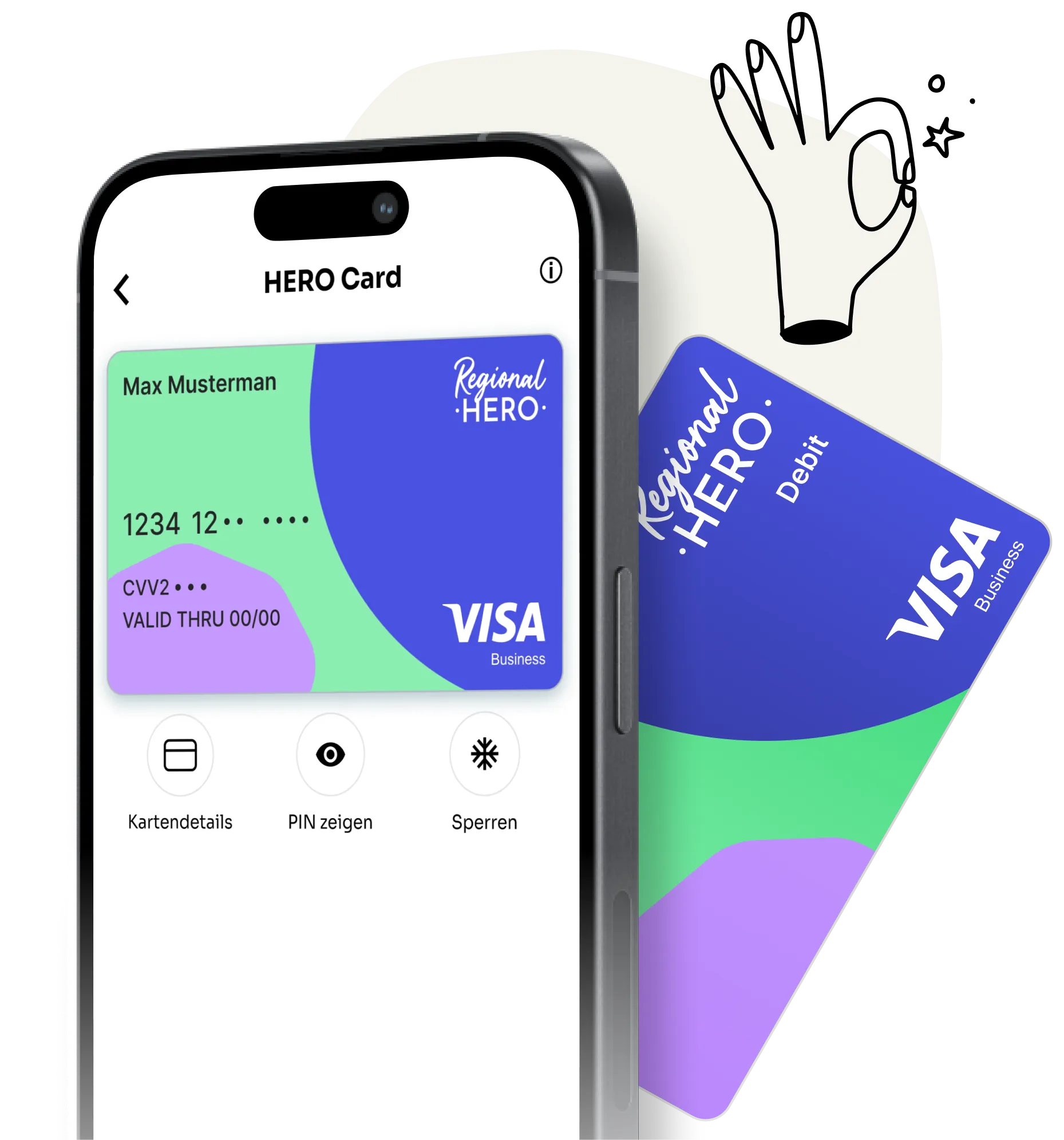
Mit HERO Base erhält dein Team 50 € steuerfrei pro Monat plus Zuschüsse für Mobilität, Gesundheit und Internet. Digital, regional und in 48 Stunden einsatzbereit.
HERO Base entdeckenDiscover how versatile and effective bonus payments can be. They go far beyond simply paying a few euros, serving as a form of recognition and appreciation for employees. Various types of bonuses offer flexible ways to address individual needs. Furthermore, they have the potential not only to boost employee motivation but also to support the local economy, sometimes even tax-free. Digitalization also opens up new, efficient avenues for designing and managing bonus programs.
A bonus payment is a variable, additional remuneration to the fixed salary that companies use to reward special achievements, create incentives, and retain employees by linking them to company success. When properly designed, it acts as an effective management tool that boosts motivation and contributes to achieving strategic business goals.
Various types of bonus payments exist, each setting different incentives and contributing to specific corporate objectives. The most common forms include performance-based bonuses for individuals or teams, profit-sharing schemes that reflect company success, and occasion-based premiums, such as for project completion or long-term employee retention.
Individual performance bonuses are the most common. Because companies aim to specifically recognize and promote outstanding individual achievements, they link payouts to the attainment of predefined personal goals. Studies by the Institute for Employment Research (IAB) show that personal performance is once again gaining importance as a criterion for bonus payments in German companies. [Philipp Grunau et al.] This approach allows for direct recognition of individual employees' contributions to overall success.
In contrast, there are team-oriented bonuses and company-wide profit-sharing schemes. When a bonus is tied to the performance of an entire team or the company's profit, it demonstrably promotes collaboration and collegial cohesion. Although this form is losing significance, it can improve the overall quality of work among the workforce, as shared success is prioritized. A prominent example of this is the annual profit-sharing for unionized employees at Volkswagen, which is based on the results of the respective brand group. [Comdirect / dpa-AFX]
In addition to these classic models, there are other special types of bonuses. These include, for example, signing bonuses to attract sought-after specialists, retention bonuses to keep key personnel during critical company phases, or project bonuses paid upon the successful completion of a specific undertaking. These targeted instruments enable companies to react flexibly to strategic necessities.
Comparison of various bonus payment models
The criteria for a bonus payment perceived as fair must be transparent, objectively measurable, achievable, and consistent for all applicable employees. Clear communication of goals and evaluation standards is crucial, as a lack of transparency can lead to demotivation and a sense of injustice, thereby nullifying the positive effect of the instrument.
A structured process for defining the criteria is essential. First, the overarching company goals must be defined. These are then broken down to the departmental, team, and finally individual levels. The goals should be designed according to the SMART formula: Specific, Measurable, Achievable, Realistic, and Time-bound. When employees understand how their personal contribution contributes to company goals, acceptance and incentive increase. The entire goal agreement should be documented in writing to avoid misunderstandings.
A particular challenge to fairness is unconscious bias in evaluations. Data analyses show significant differences in bonus amounts between various demographic groups. For instance, men in Germany receive significantly higher bonus payments on average than women, which may indicate structural differences in target setting or evaluation. [Roland Schubert] To counteract this, standardized evaluation procedures, calibrated managers, and regular reviews of bonus payment distribution within the company are necessary.
In 2025, bonus payments will once again be subject to regular tax and social security regulations, as the tax-free inflation compensation premium expired at the end of 2024. However, a new, limited option has been introduced: a tax-free employee bonus of up to 1,000 euros for the years 2025 and 2026.
The discontinuation of the inflation compensation premium of up to 3,000 euros represents a significant change. As this premium was a popular tool for tax-free employee recognition, companies must realign their compensation strategies. [Billyard.de] Standard bonus payments, paid as consideration for work performed, are considered wages and are therefore fully subject to income tax and social security contributions. This also has a dampening effect on the growth of nominal wages, as noted by the Federal Statistical Office. [Statistisches Bundesamt]
As compensation, the legislator has created the possibility of a new, tax-free employee bonus for the calendar years 2025 and 2026. Companies can grant their employees up to 1,000 euros per year tax and social security exempt. The following conditions must be met for this:
From a legal perspective, it is also important for employers to observe the so-called "voluntary nature clause" when granting bonuses. If a bonus payment is repeatedly made without such a clause, it can lead to a "customary company practice." This results in employees having a legal claim to the payment in future years. Therefore, employment contracts or bonus announcements should explicitly state that it is a voluntary benefit without a legal claim for the future.
Well-designed bonus systems can significantly increase employee motivation and retention by visibly recognizing performance and establishing a connection between individual success and that of the company. However, improper design, lack of transparency, or criteria perceived as unfair can have the opposite effect and lead to frustration.
Bonus payments are an effective tool for retaining employees, especially in times of a pronounced shortage of skilled workers. When employees feel that their above-average efforts are financially rewarded, this increases satisfaction and emotional attachment to the company. [Redaktionsteam Personalwirtschaft] Psychologically, this effect is based on expectancy theory: an employee is motivated if they believe that their own effort leads to better performance, this performance is recognized, and rewarded with a valued reward (the bonus).
However, focusing on bonuses also carries risks. In particular, a strong emphasis on individual performance bonuses can have negative consequences. Because such a system intensifies internal competition, it can be detrimental to collaboration and the working atmosphere. A study by the IAB suggests that an excessive focus on personal bonuses can even reduce job satisfaction and increase the number of sick days. [Philipp Grunau] This underscores the need to create a balanced system that considers both individual and collective achievements.
For a large majority of specialists and executives, the prospect of a bonus payment is a decisive factor when choosing a new employer. An attractive and transparent bonus system thus represents a clear competitive advantage in the fight for the best talent and should be actively communicated in the recruiting process.
The relevance of bonuses in job selection is clearly supported by data. According to the Robert Walters Salary Survey 2024, 66% of German employees bonus payments as a decisive criterion when choosing a potential employer. [Robert Walters] This high expectation among applicants makes a variable compensation system an important component of an attractive overall package (Total Rewards).
At the same time, a strategic opportunity arises for companies that proactively advertise with bonus systems. The same study shows that 44% of respondents do not expect a bonus for the current year. So, if a company offers a clear and fair bonus system, it can positively distinguish itself from the competition. Since applicants are increasingly looking for financial incentives that go beyond the basic salary, such an offer becomes a strong argument in the hiring process.
For maximum impact in recruiting, it is crucial not only to mention the bonus system but also to explain it transparently. Even in the job advertisement, a reference to performance-related, variable compensation can pique interest. In the job interview, it should then be explained in detail which criteria (e.g., personal goals, team success, company profit) the bonus payment is tied to. This openness builds trust from the outset and shows potential new employees a clear path to being rewarded for their future performance.
Although the terms are often used synonymously, a "bonus" typically refers to a variable payment linked to success (e.g., profit, target achievement). A "premium," on the other hand, is often granted for a specific, one-time occasion or a special achievement, such as an improvement idea or project completion.
No, a bonus does not necessarily have to be tied to individual or team performance. There are also bonuses for company loyalty (anniversary bonus), attendance bonuses, or bonuses distributed to all employees as a flat profit share, regardless of personal performance.
That depends on the wording. If the bonus was promised with a discretionary and revocation clause, withdrawal is possible under certain conditions. However, if repeated, unconditional payments establish a "company practice," a legal claim arises that the employer cannot unilaterally withdraw.
The amount varies significantly by industry, position, and gender. According to a study by Gehalt.de and Statista, male specialists and executives received an average bonus of around 8,800 Euros in 2020, while women received an average of 3,800 Euros, highlighting a significant gap. [Haufe]
Everything you want to know — simply explained.
Everything you want to know — simply explained.
What is the benefit card?
The HERO Card is a digital Mastercard debit card that allows companies to offer tax-free benefits easily and flexibly. Employees thus receive tax-free subsidies for benefits in kind, mobility, food and health. Everything bundled on one card, individually configurable and implemented in a legally secure manner.
Employees simply pay on a daily basis. Locally in your favorite café or nationwide in supermarkets, pharmacies or public transport.
How does that work for companies?
You control everything centrally in the HR portal.
Activate benefits in five minutes. The HERO Card automatically loads the monthly budget. Digital, secure and tax-compliant.
What are the concrete benefits of this for my team?
Up to 50 euros in kind per month
Meal allowance of up to 7.50 euros per working day
Mobility allowance of up to 58 euros per month
Up to 500 euros per year for health and wellbeing
All tax-free. It's all digital. It's all on one card.
How does HR keep track?
All benefits at a glance. No paperwork.
In the HR portal, you control budgets, see workload and manage everything centrally.
Sign in. Adjust. It's done.
This saves you up to 80 percent of administrative time.
Is that really tax-free?
Yes, all benefits are tax-free for employees and are completely legally compliant. Employers must tax some benefits as a lump sum.
The HERO Card uses legally enshrined allowances. Each category is correctly separated for tax purposes and can be managed automatically.
How much does the HERO Card cost?
As part of the employee license, the card costs 1 euro per employee per month plus charges for charging benefits.
For 50 employees with HERO Base, for example, this equates to around 140 euros per month — less than a joint team meal, but with a long-term effect.
How quickly is the HERO Card ready for use?
Ready to go in just a few days.
Setup, onboarding and go-live take a maximum of one week.
No technical hurdles. Without complexity.