Inhaltsverzeichnis


Implement § 18a TVöD VKA ▶️ Create performance incentives ✓ Boost employee motivation ✓ Optimize compensation system ✓ Compensate fairly now!
STEUERFREIER SACHBEZUG – HERO BASE
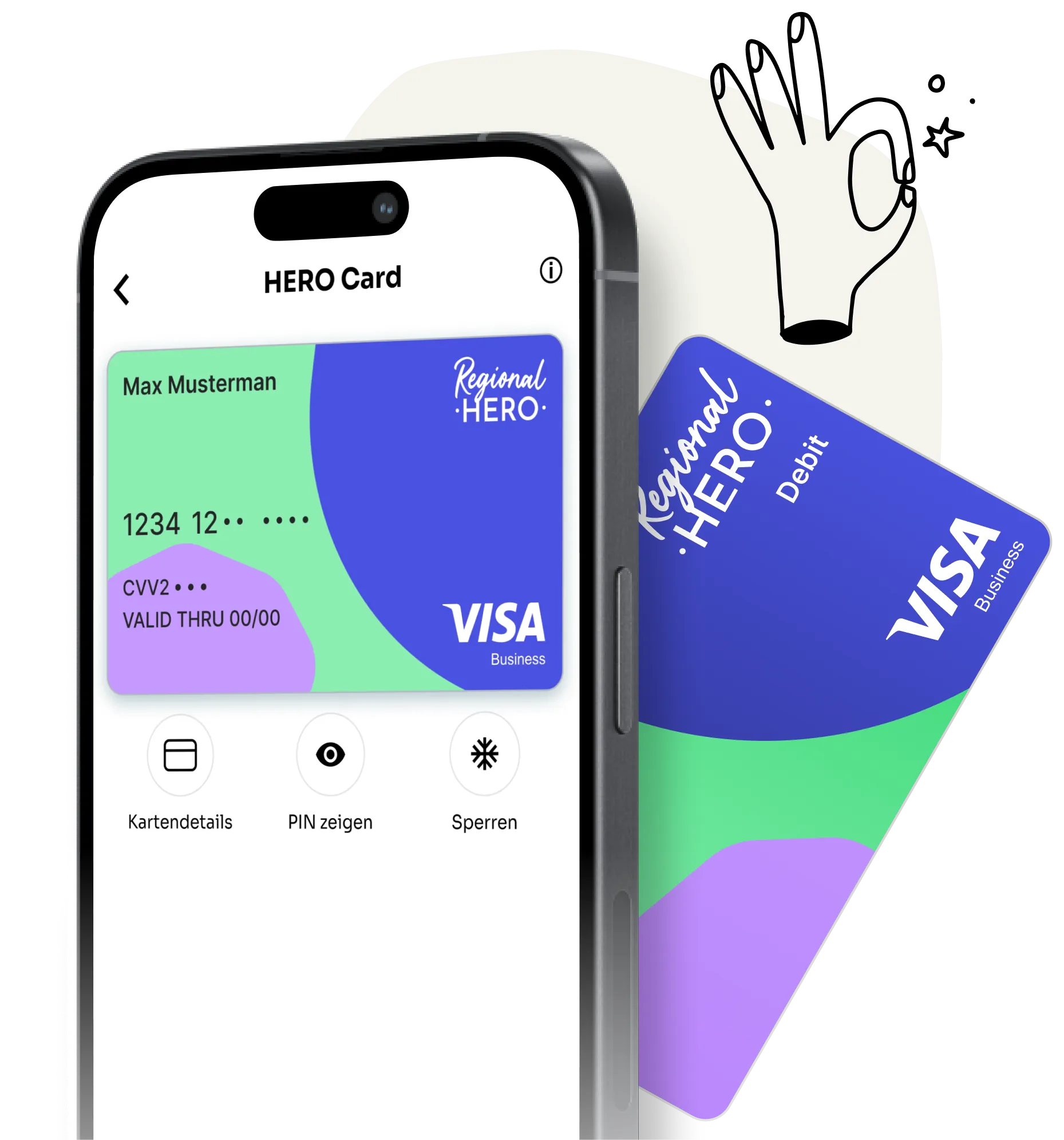
Mit HERO Base erhält dein Team 50 € steuerfrei pro Monat plus Zuschüsse für Mobilität, Gesundheit und Internet. Digital, regional und in 48 Stunden einsatzbereit.
HERO Base entdeckenThe public sector faces significant challenges: a shortage of skilled workers, demographic change, and increasing competition for qualified employees demand new strategies to enhance employer attractiveness. With the introduction of § 18a TVöD VKA, public sector employers now have an innovative tool at their disposal to design flexible and contemporary incentive systems.
This guide offers you, as a manager or HR professional, a comprehensive overview of the opportunities and challenges of § 18a TVöD VKA. You will learn how to effectively utilize the new performance-related pay system to increase employee satisfaction and motivation while simultaneously enhancing your organization's attractiveness as an employer. From its introduction and core elements to practical implementation scenarios and concrete tips, this guide will help you fully exploit the potential of § 18a TVöD VKA and develop future-proof incentive systems.
The introduction of § 18a in the Collective Agreement for the Public Sector (TVöD) for the municipal employers' associations (VKA) represents a strategic instrument for enhancing employer attractiveness. This regulation allows the budget traditionally allocated for individual performance bonuses to be flexibly used for collective incentive systems. Since municipal employers can thus offer modern and appreciative benefits such as health promotion or mobility allowances without requiring additional budget funds, employee retention is strengthened. If-Then Logic: If a public employer wants to compete for qualified skilled workers, then § 18a offers an effective way to position itself as a modern and caring employer.
Implementation requires close cooperation with the staff council, as its introduction must be formalized through a service or works agreement. This participatory approach ensures that the chosen measures meet the needs of the workforce and gain high acceptance. The regulation allows for the reallocation of the entire performance-related pay volume, which typically amounts to approximately 2% of the previous year's standing monthly salaries, or only parts thereof [AVR-Württemberg]. This flexibility enables the tailored design of incentive systems aligned with specific administrative goals, such as promoting employee health or supporting sustainable mobility. Thus, a rigid remuneration instrument transforms into a dynamic tool for human resources management.
§ 18a TVöD VKA regulates the alternative use of the budget for performance-related pay. Instead of individual, performance-dependent bonuses and allowances, employers can create collective incentives that are not tied to personal performance evaluations. This fosters team spirit and avoids the competition among colleagues often perceived as unfair.
Essentially, § 18a TVöD VKA was created as a supplement to § 18 TVöD VKA to break away from the rigid focus on individual performance bonuses. Because the traditional system often led to high administrative effort and dissatisfaction in practice, § 18a offers a more modern approach. Instead of measuring and rewarding the performance of individuals, funds are used for measures that benefit the entire workforce or clearly defined employee groups, such as health promotion or enhancing workplace attractiveness [Küttner Rechtsanwälte]. This paradigm shift aims to improve overall employee satisfaction and the working atmosphere, which in the long term positively impacts willingness to perform.
The fundamental differences between the two paragraphs are best illustrated by a direct comparison. While § 18 provides for direct financial rewards for special achievements, § 18a invests in the working conditions and well-being of employees.
Comparison: § 18 TVöD VKA vs. § 18a TVöD VKA
The reallocated budget from § 18a TVöD VKA opens up a wide range of possibilities for designing attractive employee benefits. These measures aim to create tangible added value in employees' daily lives and often receive tax benefits. Common examples include subsidies for sustainable mobility or health promotion.
The selection of measures should be strategic and reflect the needs of the workforce. Since available funds are limited, prioritization is crucial. Employers can, for example, focus on health promotion to reduce illness-related absences and enhance well-being. Alternatively, the focus can be on sustainable mobility to encourage environmentally conscious behavior and improve workplace accessibility. Experts view the implementation of such non-cash benefits as an effective way to boost motivation without being directly tied to performance appraisals [Haufe Verlag].
Concrete examples of implementable measures can be categorized as follows:
This flexibility allows municipal employers to address the specific wishes and life situations of their employees and to present themselves as socially responsible employers [ofelos.net].
The budget for measures under Section 18a TVöD VKA is derived directly from the pool of performance-related pay according to Section 18 TVöD. The basis for calculation is the sum of the permanent monthly salaries of all employees from the previous year. From this sum, a percentage, determined by collective agreement or locally, is formed as the total volume for the performance-related pay.
In practice, a total volume of usually approximately 2.00% of the permanent monthly salaries of all employees of an employer from the previous year is applied [AVR-Württemberg]. The process of budget determination and management follows a clear logic. First, the total budget according to Section 18 is determined. Subsequently, a service or works agreement specifies which portion of this budget – whether fully (100%) or only partially – is to be used for the alternative incentive systems under Section 18a. The remaining amount would then continue to be distributed as individual performance bonuses or allowances according to the criteria of Section 18.
The management of funds requires transparency and clear documentation. The service agreement must precisely define the distribution criteria to prevent arbitrary or unfair treatment. If-then scenario: For example, if the budget is used for a subsidy for the Deutschlandticket, then the distribution criteria must clearly regulate whether all employees receive the same amount or if a staggered approach is applied (e.g., based on part-time quota). Compliance with these formal requirements is crucial for legally sound implementation and is supported by collective bargaining documentation, such as that published by the German Civil Service Federation [Deutscher Beamtenbund e.V.].
The implementation of Section 18a TVöD VKA is tied to strict legal prerequisites, the most important of which is the conclusion of a service or works agreement. Without such an agreement, negotiated with the competent employee representation (staff council or works council), an alternative use of performance-related pay funds is not permissible.
The service agreement is the central steering instrument and must meet several minimum content requirements. According to the collective agreement, it must define the objectives of the alternative use, the specific measures, the material and personal scopes of application, and the distribution criteria. Because the measures are not tied to individual performance, the criteria for allocating benefits must be objective, transparent, and non-discriminatory. The involvement of the employee representation ensures that the interests of the workforce are protected and that the regulations are fair and comprehensible. This participatory process is a core element of the collective bargaining regulation [GEW].
Another crucial point is voluntariness. The collective agreement merely gives local operating parties (employer and employee representation) the option to apply Section 18a. There is no obligation to do so. If no agreement on a service agreement is reached, the regulation of Section 18 TVöD remains in effect, and the budget must mandatorily be paid out as individual performance-related pay. Legal experts emphasize that a careful legal review of the agreement is essential to avoid future legal disputes and to ensure conformity with higher-ranking law, such as the General Equal Treatment Act (AGG) [Küttner Rechtsanwälte].
Section 18a TVöD VKA is an effective strategic instrument because it enables the public sector to become more competitive in modern labor markets. It allows municipal employers to enrich their remuneration system with attractive, non-monetary additional benefits without requiring new budgetary funds to be released. This is a decisive advantage in times of tight public budgets.
The strategic importance arises from the changing expectations of employees. Younger generations, in particular, increasingly value a good work-life balance, health promotion, and a meaningful, socially responsible employer. Since Section 18a specifically targets these aspects – through benefits such as job tickets, fitness subsidies, or occupational health prevention – it significantly strengthens the employer brand (Employer Branding). It signals a modern and employee-oriented corporate culture, which can be a clear differentiating factor compared to other employers.
Furthermore, the reallocation of performance-related funds into collective benefits positively influences the working atmosphere. Instead of potentially conflict-ridden performance comparisons, the system promotes a sense of community and general satisfaction. These factors are crucial for the long-term retention of qualified skilled workers [ofelos.net]. Therefore, if an employer is looking for ways to reduce turnover and simultaneously become more attractive to new talent, Section 18a TVöD VKA represents an economically sensible and strategically wise solution that provides an appropriate answer to the current challenges of the labor market.
No, the decision regarding the application of Section 18a TVöD VKA and the specific measures is made collectively through a service or works agreement. An individual right of choice for individual employees between the classic performance bonus and alternative benefits is not provided for in the collective agreement.
Many of the non-cash benefits granted under Section 18a can be offered tax- and social security-free or with flat-rate taxation, provided legal limits are observed (e.g., Section 8 (2) EStG for non-cash benefits). This maximizes the net benefit for employees and is a key incentive of the model.
No, the collective bargaining parties have deliberately created flexibility. The service agreement can stipulate that the entire budget (100%) or only a portion of it is reallocated. The remaining amount can still be distributed as classic, individual performance-related pay according to Section 18 TVöD.
Without a valid service or works agreement, Section 18a TVöD VKA cannot be applied. In this case, the original regulation of Section 18 TVöD applies, and the employer is obliged to pay out the entire performance-related pay budget to employees according to a performance-based payment system.
Everything you want to know — simply explained.
Everything you want to know — simply explained.
What is the benefit card?
The HERO Card is a digital Mastercard debit card that allows companies to offer tax-free benefits easily and flexibly. Employees thus receive tax-free subsidies for benefits in kind, mobility, food and health. Everything bundled on one card, individually configurable and implemented in a legally secure manner.
Employees simply pay on a daily basis. Locally in your favorite café or nationwide in supermarkets, pharmacies or public transport.
How does that work for companies?
You control everything centrally in the HR portal.
Activate benefits in five minutes. The HERO Card automatically loads the monthly budget. Digital, secure and tax-compliant.
What are the concrete benefits of this for my team?
Up to 50 euros in kind per month
Meal allowance of up to 7.50 euros per working day
Mobility allowance of up to 58 euros per month
Up to 500 euros per year for health and wellbeing
All tax-free. It's all digital. It's all on one card.
How does HR keep track?
All benefits at a glance. No paperwork.
In the HR portal, you control budgets, see workload and manage everything centrally.
Sign in. Adjust. It's done.
This saves you up to 80 percent of administrative time.
Is that really tax-free?
Yes, all benefits are tax-free for employees and are completely legally compliant. Employers must tax some benefits as a lump sum.
The HERO Card uses legally enshrined allowances. Each category is correctly separated for tax purposes and can be managed automatically.
How much does the HERO Card cost?
As part of the employee license, the card costs 1 euro per employee per month plus charges for charging benefits.
For 50 employees with HERO Base, for example, this equates to around 140 euros per month — less than a joint team meal, but with a long-term effect.
How quickly is the HERO Card ready for use?
Ready to go in just a few days.
Setup, onboarding and go-live take a maximum of one week.
No technical hurdles. Without complexity.