Table of contents


Use tax-free benefits in kind ▶️ Optimize employee compensation ✓ Increase net salary ✓ Increase employer attractiveness ✓ Offer benefits here!
MultiBenefits - HERO CARD
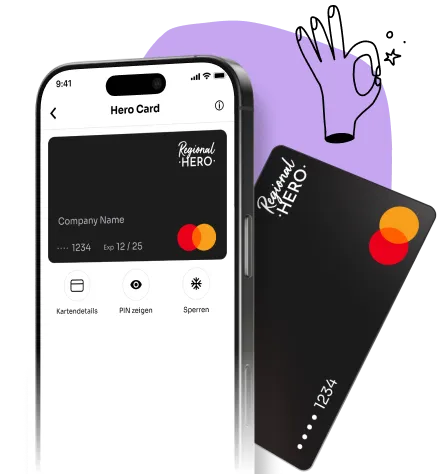
With the HERO Card, individual measures become a strong package, tax-free, digital and can be used anywhere.
HR keeps track of things, employees benefit directly.
Before we dive into the different types of benefits in kind, it's important to understand the legal framework. In Germany, they are tax bases for benefits in kind, enshrined in the Income Tax Act (EStG). Payment in kind It describes any form of Monetary advantage, which employers give their employees Not in cash, but in the form of goods, services or rights. [Smart tax] Such benefits are considered part of earnings, but can remain tax-free under certain conditions.
Basically are Benefits in kind up to a value of €50 per month and employee free of tax and social security. [Heap] This limit of €50 is defined as monthly allowance in kind designated (Section 8 (2) sentence 11 EStG). By the end of 2021, the limit was 44€ and was raised to 50€ as of January 1, 2022. It is important that this is a real Exemption limit acts — If even just one cent is exceeded, the entire amount is subject to tax and duties. Companies must therefore ensure that the total value of all benefits in kind granted per month and employee does not exceed €50. One Aggregate takes place within the same month, during unused amounts may not be carried over to subsequent months [Heap].
In order for a benefit in kind to truly remain tax-free, all legal requirements be complied with. The most important requirements are:
Benefits in kind can be paid in many different shapes be granted. Basically, almost every tangible asset that ar Staffin a personal advantage, use as a benefit — provided that the above requirements are met. Below we present the most common Types of tax-free benefits in kind which are successfully used in practice. These range from gift cards via Subsidies for travel expenses or health up to classic Gifts in kind. There are specific rules and optimal uses for each category.
Example: Gift cards from various providers — vouchers and credit cards are a popular tax-free payment in kind.
vouchers are among the most well-known forms of benefits in kind. In this case, the employee receives a voucher or a Payment card in kind with a specific value that can be redeemed at specific acceptance points. Classic examples are shopping vouchers for retailers, City-Cards for redemption in local stores, Fuel vouchers or reloadable credit cards for department stores and online shops. Employers can use such vouchers tax-free up to the €50 limit per month provide. [LOFINO] The The popularity of these benefits is high: According to a study, wish 33% of employees vouchers or bank cards as an additional service, and companies are increasingly using them to motivate. [Labor and Labor Law]
The big advantage of vouchers is their flexibility. Employees can use the voucher as they wish — whether for weekly shopping, refueling, electronics or fashion. At the same time, vouchers are not taken for granted like a pay rise, but as appreciative extra perceived. Studies show that Employee vouchers increase motivation and engagement, can increase productivity and even reduce turnover in the company. Employers also benefit from positive imageif they offer such modern benefits, and save significantly on taxes compared to bonus payments.
When implementing it, it should be noted that the voucher meets tax requirements (see “Accrual to cash benefit” requirement above). In practice, it is recommended that certified cash benefits cards to be used by providers who ensure that all legal requirements be complied with. One example is the Regional benefits card by Regional Hero, which is deliberately only used in local acceptance points is redeemable and therefore automatically the criteria met for tax-free vouchers. Such cards can often be used manage digitally and charge automatically on a monthly basis, which keeps administrative costs low for the company. Internally, vouchers should ideally issued monthly become — for example in the form of permanent employee benefits, which recharges every month. As a result, the advantage is regularly received by employees and motivates them anew every month.
You can find more information about employee vouchers in our guide article Introduce shopping voucher as a benefit. There you can find out how shopping vouchers Strengthen purchasing power and promote the regional economy, as well as practical tips for getting started.
Mobility benefits are particularly in demand: 40% of workers Name Travel allowances or public transport tickets as a desired benefit. [Labor and Labor Law] A tax-free Job ticket subsidy is therefore a very attractive benefit in kind. Employers can provide their employees with, for example, Germany ticket (49€) Pay in full or subsidize other public transport tickets (monthly pass, BahnCard 100, etc.) — all of this tax-free according to § 3 No. 15 EStG. [Financial tip] It is important that the ticket in addition to salary is granted (i.e. the employee, for example, receives the ticket free of charge or at a reduced price without sacrificing salary).
The effect: Employees not only save commuting costs, but receive this advantage completely net, as there is no income tax or social security contributions. Companies, in turn, are actively promoting environmentally friendly behavior — a plus for employer branding — and at the same time can relieve their parking space situation. Since the introduction of the nationwide Germany ticket in 2023, many employers have seized this opportunity. In the public sector of the federal states, the 2024 collective agreement even included a nationwide access to service bikes and public transport tickets agreed, which shows how popular such benefits are.
Note: A tax-free job ticket reduces the removal fee the employee's tax return — but this is usually tolerable in view of the saved costs. Alternatively, the employer can also buy the ticket Flat rate tax (25%), then the commuter allowance remains unaffected. [Financial tip] Either way: Bus and train tickets As a benefit in kind, a highly effective benefit, which reduces employees' mobility costs and gives them tangible financial breathing space.
Read more about tax-free mobility benefits in our article Commuter allowance: Relieve employees, which shows, among other things, how employers can increase their attractiveness as an employer through grants and tickets.
Employee health is a key asset — and here too, the state supports employers with tax breaks. Health promotion services (e.g. grants for gym memberships, back training, health courses) are up to 600€ per employee and year tax-free. This budget can be used, for example, to cover the costs of a fitness studio on a pro rata basis or to finance prevention courses for employees. Important: The measure must be quality-assured and certified (in accordance with §20 SGB V) in order for the tax exemption to apply.
For workers, such Health benefits are doubly valuable — financially and personally. They save money on sports and wellness and improve their health at the same time. Employers in turn benefit from fitter, healthier employees. Studies by the RKI and other institutes have shown that targeted workplace health promotion significantly reduces absenteeism Can. Fewer sick days mean more productivity and lower replacement costs. In addition, such commitment increases Attractiveness of the company as a caring employer.
In practice, health benefits in kind are often in the form of a monthly subsidy granted — e.g. 50€ per month for the gym (i.e. 600€ per year). If you combine this with the €50 exemption in kind, €50 could theoretically be used as a general voucher and 50€ for health run in parallel — but it is important that the health subsidy separately is granted and used in accordance with §3 No. 34 EStG. Some companies conclude framework agreements with fitness providers or use platforms on which employees can flexibly select health services. Auch Job bikes (service bikes) are popular — they usually work via salary conversion, which is tax-advantaged (0.25% rule for the monetary advantage of a service bike) and also contributes to health. Overall, the following applies: Investing in health The workforce pays off higher performance and motivation Off many times.
Learn more about Occupational health management and tax-free health benefits in our guide Health promotion: Workplace wellbeing. There, specific measures and study results (e.g. reduction of absenteeism) are explained in detail.
Another classic among tax-free benefits is the Meal allowance. Employers can provide their employees with cheap or free meals without paying payroll tax. Typically, this is done in two forms: about a Company canteen or via Meal vouchers/restaurant checks for external catering.
Does the company have a own canteen, so it can serve meals at a reduced price. Here, fixed annually apply Official benefits in kind (2025 e.g. 4.40€ for lunch). [Financial tip] If the employee pays at least this benefit in kind, the meal is completely tax-free for them. If he/she pays less, there is a taxable monetary advantage equal to the difference. However, employers have the option of taxing this benefit at a flat rate of 25%, so that there is virtually no deduction for employees. As a result, employees can eat very cheaply in the canteen without reducing their net salary.
Without canteen However, companies do not have to forego the meal allowance: They can Restaurant checks or digital food stamps spend. Employees receive vouchers that they can redeem for lunch in restaurants, snack bars or supermarkets, for example. Pro workday Is a subsidy of up to 6,50€ — 7€ (depending on annual adjustment) tax-free. This model works in such a way that part is paid by the employee himself (according to the benefit in kind of the meal) and the rest is covered by the voucher. In total, more than 100€ per month are covered by the employer in terms of meal costs, excluding taxes and duties.
Food subsidies not only promote well-being (no one likes to work hungry), but also employee retention — they are perceived as a nice gesture of appreciation. Small companies without a canteen in particular can score points with restaurant checks and thus give their employees a small bonus every day. Organizational management (distribution of vouchers or billing via app) and compliance with requirements (e.g. max. 15 meal subsidies per month for a 5-day week) are important.
More details about additional meals costs and how companies employees Facilitate meal costs tax-free Can, see our article Regional meal allowance — No canteen? No problem!.
In addition to the main categories mentioned above, there is also a A range of other services, which can be granted tax-free or tax-deferred. Some of them should be briefly mentioned here:
As you can see, the range of tax-free benefits in kind is very wide. It is always important to correctly classify the individual benefits and to consider them separatelyto ensure that the specific conditions are met in each case. Overall, an employer can certainly give its employees offer a significant extra in net benefitswhen he exhausts various tax allowances. For example, combinations possible — about a €50 shopping voucher and A 49€ job ticket in parallel, plus 600€ per year health budget, 60€ birthday present, etc. All these components complement the salary package and make it more attractive overall.
The benefits of tax-free benefits in kind are obvious: Both sides — employers and employees — benefit financially. But in addition to the monetary aspect, there are other plus points, from higher motivation to promoting the region. In the following, we examine the perspectives of the company and employees separately before we address a specific advantage for the local economy.
In summary, it can be said: Tax-free benefits in kind increase compensation efficiency — every euro invested by the employer provides employees with the maximum possible benefit. This creates identical costs for the employer, but a higher “net salary” for the employee. In addition to the monetary win-win situation, games also soft factors a role: motivation, commitment, appreciation and employer attractiveness. Last but not least, third parties, such as local companies, also benefit when benefits in kind are granted in the form of regional vouchers. It is worthwhile for both sides to actively use these benefits.
The introduction of tax-free benefits in kind in a company requires a number of considerations and organizational measures. Although the tax side is attractive, must the practical implementation Be well planned so that everything runs smoothly and in compliance with the law. In the following, we provide an introduction guide as well as tips on typical stumbling blocks and how to avoid them.
First, a company should consider Which benefits in kind fit your own context. Not every company can or wants to exploit all options. A good approach is that The needs of your own workforce to analyze: Young urban teams may be happy to receive public transport tickets and restaurant vouchers, while families are more likely to appreciate childcare and pension benefits. Studies have shown that benefits work best when they Perfect fit and flexible are. [Labor and Employment Law] An employee survey can help determine the most popular benefits. After that, you put in budget fixed: e.g. 50€ per person for vouchers, 30€ for food, etc. — depending on what the company wants and can grant.
For operational implementation, it is often worthwhile external providers or to use tools. There are now specialized platforms for benefit management: Card-in-kind card provider, Meal subsidy apps, Mobility budget tools etc. These relieve a lot of administrative work and ensure that tax requirements met become. For example, service providers offer All-in-kind payment cards to which a wide variety of benefits (credit, meal budget, travel expenses) can be loaded — with reports for payroll and limit monitoring. If you choose such a provider, you should compare criteria: costs (fees), Acceptance point network (Where can the credit be spent anywhere?) , usability, service and, if applicable, regional orientation. Alternatively, some benefits in kind can also managed in-house (e.g. issue your own vouchers, canteen billing, etc.), but this requires more effort and knowledge.
A common reason why benefits aren't being used is lack of awareness or understanding. According to a study, 9% of employees did not even know what offers their company had. [Labor and Labor Law] Therefore, a clear communications decisively. When new benefits in kind are introduced, all employees should be informed — preferably in person or via detailed information (intranet, e-mail, team meeting). Explain the Take advantage of every benefit (“What do I get out of it?”) and how to make use of it in practice (e.g. how does the gift card work, where can I retrieve the Germany ticket, etc.). An inspiring presentation (“We'll give you an extra 50 euros every month — completely net!”) increases acceptance. Maybe you also set up a contact person or FAQ if you have any questions. The more knowledgeable the workforce is, the The participation rate is getting higher Be on the offers.
In practice, benefits in kind must Payslip displayed correctly become. Payroll should be informed about the introduction and record the corresponding benefits in kind as tax-free. If an external tool is used, it usually provides monthly data sets (who received which voucher value, etc.). Important: documentation Don't forget — every employee must have a comprehensible record Which payment in kind in which amount in which month was granted. [DATEV] Modern HR software can automate this, otherwise manual lists should be kept. For benefits with Evidence (e.g. health course), it may be necessary to check whether the course is certified and that the amount remains within limits. Here it is recommended that clear policies draw up: which documents are required, by when to submit, etc.
Tax-free benefits are only fun as long as they are recognized during a tax audit. That's why you should incorporate certain checks internally: Compliance with the €50 limit (if necessary, add several benefits in kind to ensure that 50 is not exceeded), additionality (there must be no hidden salary conversion — documentation in the employment contract/payslip that the basic salary remains unchanged), Voucher criteria (use valid cards only). [IHK Munich] With bank cards Particular care must be taken: An alleged payment in kind could be regarded as cash pay if it does not meet the requirements. Therefore only use cards that e.g. demonstrably are limited to certain points of acceptance (such as Regional Hero Card, Spendit, Edenred City, etc.). Meal vouchers: Make sure that employees pay the required personal contribution (e.g. pay at least the official benefit in kind for the meal), otherwise there is a taxable advantage. Jobrad: If this is realized through salary conversion, it is not a tax-free payment in kind, but tax-privileged — here, the process should be clarified with a tax advisor in order to correctly apply the 0.25% rule.
A common mistake is that Exceeding exemptions out of ignorance. Example: Ae StaffHe receives a 50€ fuel voucher and in the same month a 20€ bouquet of flowers as a thank you — in total 70€, so nothing would be tax-free anymore (the entire 70€ would be taxable). It is important to prevent such cases by taking all benefits coordinated will (preferably run through payroll). Also dangerous: Want to disguise cash subsidies — For example, pay 50€ extra on salary and call it “benefit in kind”, this is carried out during the audit and results in back tax payment. Another stumbling block is the lack of additionality: If the employment contract states “50€ including a benefit card in kind”, this could be interpreted as part of the salary. It is better formulated as a voluntary additional benefit. Also unfavorable: Benefits that are not being used — For example, a voucher system that is complicated to redeem, which is idle in the end. The company then has costs, but no binding effect. Therefore, you should go to easy handling Pay attention (such as digital vouchers instead of paper, one card instead of dozens of individual vouchers).
Many companies start with a pilot project — For example, test 50€ gift cards for a year — and gain experience. Gather feedback from employees: Is it appreciated? Where were there problems? You can then expand the program (e.g. introduce an additional health day or food stamps). And last but not least: Check regularlywhether anything has changed in law (allowances are being adjusted, new decrees from the Ministry of Finance, etc.). Updates are not uncommon, especially in tax law — such as the redefinition of 2022 vouchers. A good connection to tax advisor or regular training helps to remain compliant. With the right planning and maintenance, tax-free benefits in kind can then result in a lasting tool for success become part of the HR strategy.
Is it more worthwhile to give a salary increase or to provide a benefit in kind? Many employers — and employees too — ask themselves this question. The financial difference between the two variants is significant. Here is a direct comparison using the example of an additional monthly amount of 50€:
The figures show: Only around half of a classic salary increase is often left, while the full amount is paid in kind. For the employer, the costs of a salary increase are also higher than the payout amount, while the benefit in kind is passed through 1:1.
A specific calculation example supports this: A company wants its employees 300€ more net send in a month. As a salary increase, this would require over 700€ gross to be spent, including ancillary wage costs. About tax-free benefits in kind (cleverly combined, e.g. 50€ voucher, 50€ travel allowance, 50€ meal allowance, bAV, etc.) the 300€ net can be realized with significantly lower costs — this would result in the 300€ directly with staff at. The savings for the company are enormous.
Usually whenever it comes to manageable amounts Goes that one targeted wants to use — whether to promote a specific purpose (e.g. health, mobility) or simply to small financial incentives to create. For Amounts up to 50€ per month benefits in kind are unbeatably efficient. Auch one-time bonuses (e.g. as a voucher for Christmas instead of as a gross special payment) can have much more effect tax-free. [IHK München] Employees are often more aware of benefits in kind and connect positive emotions So, while a few euros more salary often goes down.
Of course, you can't convert your entire salary into benefits. With larger compensation jumps (e.g. promotion, inflation adjustment above the €50 limit) there is no way around a classic salary increase — if only because benefits in kind are limited by law. Also for the Pension and social security Only gross earnings count: Anyone who relies exclusively on benefits in kind does not increase pension rights as a result. In this respect, the base salary should always be appropriate. Benefits in kind are ideal as a supplement, not as a substitute for fair pay. In addition, some employees simply prefer cashbecause it is completely freely available — you should also respect that.
Mixed model: In many cases, a combo optimal. Part of the staff budget increase goes into a moderate salary increase (which covers, for example, tariff increases and inflation), the rest into tailored benefits in kind, which Set specific incentives. In this way, the employee receives both more pension rights and significantly more net income.
In conclusion, it can be stated: From a company's point of view, benefits in kind with the same net effect are significantly cheaper and therefore to prefer wherever it is convenient. From an employee perspective, they offer maximum yield and often still fun (because it's specifically intended for specific purposes). However, the overall concept should be right — balanced compensation with both solid salary components and attractive extras is received most positively.
In recent years, many companies — from small businesses to large corporations — have tax-free benefits in kind successfully introduced and gained valuable experience from this. Here are some best practices and exemplary successes that can be used as inspiration:
Two years ago, a medium-sized trading company ran a 50€ gift card one for all employees. Each employee received a reloadable card every month, which can be redeemed in various regional stores. The result: The measure was enthusiastically accepted Motivation and connectedness increased significantly. According to management, the Significant employee turnoverbecause the workforce felt the additional benefit and had fewer plans to switch. This effect is also consistent with comprehensive observations: Gift vouchers in kind increase satisfaction, highly motivated employees have “no reason to change anymore”, which also Recruiting costs fall. The investment has therefore paid off for the company in several ways — saved costs and retained top performers.
In 2023, an IT company in Berlin decided to grant all employees the Germany ticket (49€) to donate. The aim was to alleviate the parking shortage and to offer sustainable benefits. After one year, it became apparent: About 80% of the workforce Now use public transport regularly, and many even left their cars parked. that Feedback from employees is extremely positive, as the ticket is not only for commuting to work, but also private on weekends etc. can be used — a real added value. It also paid off for the company: As a result of the tax exemption, the measure was cheaper than an equivalent salary increase, and it made a name for itself both internally and externally as an environmentally conscious employer. This example shows how a tax-free benefit operational and social goals can connect (employee retention and sustainability).
A major insurer has a Health budget of 300€ per employee per year introduced (tax-free according to §3 No. 34 EStG). This budget can be used flexibly for certified health courses, fitness centers or physiotherapy measures. In addition, internal health campaigns (pedometer competitions, fruit days) were offered. After just one year, they realized: The Absences due to illness fell by ~ 10%, back and stress-related failures in particular declined. Employees report that, thanks to the financial incentive, they have finally attended a back-fit course, for example. Management sees this as a win-win: fitter employees and lower downtime costs. Studies confirm Such a connection — investments in health can significantly reduce absenteeism. The company is therefore planning to further expand its healthcare budget. It was important for success here that employees budget Low-threshold retrieval were able to (simple application, wide selection of useful offers) — so the hurdle to use remained low.
An international consulting firm has a flexible benefit system (cafeteria model) established. Every employee receives a annual benefit budget of 1200€, which he/she can distribute individually to various tax-free options: e.g. 600€ bAV, 300€ health, 300€ in kind vouchers. Through an online portal, anyone canr select your preferences and also adjust them during the year. This model brought great success because it suitable for all generations will — the younger people are more likely to choose vouchers and mobility, older people may choose more pension benefits, families the daycare allowance. Die usage rate is almost 100% because everyr gets exactly what he/she needs. The HR department reports that although administration is a bit more complex, digitization makes it easy to manage. This individual freedom of choice is considered highly appreciated by employees and has brought the company up in employer rankings. It turns out: Each more personalized and flexible Benefits are, the higher their effect. [Labor and Labor Law]
The bottom line is that these examples show: Tax-free benefits in kind are tried and tested. As a result, companies from various industries were able to Inspire employees and benefit economically at the same time. It is important that you design the solutions to suit your own company and follow proven procedures. Then tax-free benefits are not just a savings model, but a real one Success factor in personnel strategy.
The world of work and the legal framework are constantly evolving — and so is the future of tax-free benefits in kind. Finally, we'll take a look at upcoming trends, potential legislative changes and the role of digital solutions in this area.
There have already been adjustments in recent years — such as the increase of the exemption limit from 44€ to 50€ and the new regulation of gift cards in 2022. quite conceivablethat the legislator will make further adjustments in the future, whether to Inflation exemption to couple or create new benefit categories. Discussions about a possible Raising the €50 limit (e.g. to 75€ or 100€) are repeatedly suggested by business associations to relieve workers in times of rising prices — but it is uncertain whether and when this will happen. Companies should keep an eye on such developments. Even the temporary Inflation compensation premium (up to 3,000€ tax-free), which could be granted until the end of 2024, showed that the state can create generous exemptions in special situations. [Stepstone] In the future, there could be similar one-off reliefs, or certain allowances could be permanently integrated into the system.
Another aspect: Changes in related areas of law. For example, the social security lawyer or employment lawyer could set new rules in the future relating to benefits (such as occupational health and safety obligations in the case of a home office subsidy). Currently (as of 2025) are e.g. Home office packages Regulated for tax purposes as advertising costs, but not as an employer benefit — there could be an employer subsidy here at some point. Occupational pension scheme is also a focus of politics — funding limits here may be further increased in order to close the pension gap.
Conclusion for companies: Stay flexible and always up to date be. What is optimal today may be outdated tomorrow. One tip is, annually with the tax advisor or in HR networks, the Changes at the turn of the year to go through (keyword annual tax law, BMF letter, etc. — for example, the Payment values in kind for food adjusted annually, 2025 lunch 4.40€, 2024 it was 4.00€, etc.). Just who the Knows legal leeway, can make optimal use of it.
The world of work is undergoing cultural change. Young generations (Y, Z) attach importance to Flexibility, self-determination and sense of purpose. This is also reflected in benefits. [Labor and Labor Law] Customizable benefit models (such as the so-called cafeteria system) will probably increase, so that everyr StaffIn out of a A kit of tax-free extras choose the ones that fit best. In the future, companies could rather budgets Pretend (“You have 1000€ benefit budget per year”) instead of fixed benefits for everyone in order to meet the diversity of the workforce.
Another trend is Holistic approach: Benefits are reinforced as part of a Employee experience concept seen. It's not just about saving money, but a Coherent overall package to combine, which ranges from corporate health culture to continuing education and retirement planning. Tax-free benefits in kind are a component that is used cleverly. So she could The line between classic salary extras and soft benefits (such as flexible working hours, sabbatical opportunities) are blurring. Employers score points when they offer both monetary and non-monetary benefits — the main thing is that they meet the needs of employees.
The future of managing benefits in kind is unquestionable digitally. There are already numerous apps and platforms, and this market continues to grow. HR software integrates benefit modules, payroll programs communicate with voucher platforms, etc. In the future, processes could be even more automated: Perhaps benefits in kind will be paid via blockchain technology Distributed forgery-proof, or AI-based tools recommend individually suitable benefits to each employee based on their profile.
For companies, this means: Obstacles to implementation are falling. What used to be complex (many individual documents, manual control) can now be monitored in real time using software. It is conceivable that there will be at some point standard APIs Exchanges data with the tax office via the employer benefit systems — for example, to securely report that exemptions have been met. Auch Employee apps will play a major role: There, the employee can see at a glance what credit he/she has this month (meal allowance, voucher, etc.), where it can be redeemed, and perhaps there are gamification elements (“still using 1 health course up to the full annual subsidy”). This increases the Transparency and ease of use.
An interesting aspect of the future is Linking benefits with sustainability and regionality. Concepts such as JobRad (bike leasing) or Eco bonus points on the rise. It is conceivable that government funding Will focus more on content in the future: For example, healthy canteen food or Public transport usage favored more than other benefits to support specific policy goals (health, climate protection). Companies could emphases and set up additional programs in addition to the standard benefits in kind, which may then also be tax-free or subsidized. For example: A company invests in E-mobility infrastructure (charging stations, e-car sharing for employees) — benefits from charging e-cars at an employer are already tax-free, a sign in this direction. [IHK Munich]
Where there are advantages, there are always a few black sheep. The legislator has already reacted (see voucher regulation 2022) and will probably do it again should it Design models There are those that, in his opinion, are inappropriate. Companies should therefore basic idea Keep an eye on benefits in kind: It is about granting genuine benefits in kind, not concealing wages. If future models try to make cash-like things possible again, this could quickly be prevented by law.
Die The future of tax-free benefits in kind Stay exciting. It is clear that: Tax-optimized benefits will continue to be an important part of modern compensation systems in the coming years. Companies that start early on flexible, digital and employee-oriented solutions bet, will have an advantage. Ultimately, those who are willing to adapt to new conditions and who Focus on the needs of your workforce to ask. Tax-free benefits in kind are not a rigid construct, but a dynamic tool that, with a little creativity and vision, will find many more innovative forms. By following trends and boldly breaking new ground, employers can ensure that their benefits continue to apply tomorrow State of the Art are — to the joy of employees and to the success of the company.
The tax-free payment in kind is a payroll structure tool that enables employers to provide employees with additional benefits without having to pay taxes or social security contributions. Used correctly, this leads to an effective increase in net income for employees while at the same time optimising non-wage costs for the company.
A tax-free benefit in kind is a donation from employers to their employees, which is not provided in the form of money, but in kind. According to Section 8 (2) p. 11 of the Income Tax Act (EStG), these benefits in kind remain up to a monthly allowance of 50 euros Tax and social security free. This amount amounts to up to 600 euros per year and employee.
Unlike a direct salary increase, which involves taxes and social security contributions, the value of benefits in kind is paid gross by net to employees. Since these benefits must supplement regular wages rather than replace them, they represent a form of monetary advantage. If the total value of the benefits in kind granted exceeds the exemption limit of 50 euros by even one cent within a calendar month, the entire amount of that month is subject to tax and duties. [Factorial HR] This principle underlines the need for precise planning and documentation.
Benefits in kind include a wide range of goods and services. The decisive factor is that it is not a cash payout or a benefit that can be used like cash. Since 2022, there have been stricter criteria for this, which are defined in the Payment Services Supervision Act (ZAG). Vouchers and bank cards must therefore be limited to the purchase of goods or services from a limited circle of acceptance points in order to be recognized as receiving goods in kind.
The tax exemption of payments in kind is subject to clear conditions, compliance with which is crucial for legally secure application. Failure to meet these requirements will result in full tax and social security obligations for the benefit granted. The central requirement is compliance with the monthly 50-euro exemption limit.
Another fundamentally important criterion is the so-called Additionality requirement. The benefit in kind must be paid in addition to the salary owed anyway. This means that a conversion of existing salary into a benefit in kind is explicitly excluded. [TeamHero] If, for example, a company reduces an employee's gross salary by 50 euros and instead provides a benefit in kind of the same amount, this requirement is not met. Such an arrangement is classified as a taxable cash wage by the tax authorities.
In addition, the exemption limit is monthly principle. The amount of 50 euros is strictly based on one calendar month and cannot be transferred to other months. If the exemption limit is not exhausted in one month, the remaining amount expires. Saving over several months to make a major purchase is therefore not possible. The payment in kind must also be valued at the usual final price at the place of delivery in order to correctly determine the actual monetary advantage.
Employers have a wide range of options available to make use of tax-free benefits in kind. The selection should be based on the needs of the workforce in order to achieve the greatest possible positive impact. It is important that the selected service meets the ZAG criteria and does not have a direct cash character.
The most popular forms of payment in kind include earmarked vouchers and rechargeable credit cards. These can apply to gas stations, supermarkets, local retailers or online shops, as long as they meet the legal requirements for a limited network. [NW IHK] If-then scenario: If a gift card can only be redeemed at a specific supermarket chain or a regional network of stores, then it meets ZAG's criteria. If, on the other hand, it can be used universally like a credit card, it is considered a cash reward.
Other practical examples of allowable benefits in kind include:
However, bank cards with their own IBAN, cards with a cash payout function or the option to use the card for transfers or to purchase foreign currency are not permitted.
The correct valuation and complete documentation are decisive for the tax recognition of the benefit in kind. Employers are responsible for proving the value of the allowance and ensuring compliance with the exemption limit. In the case of a tax audit by the tax office or social security institutions, all processes must be transparent and comprehensible.
The value of a payment in kind is generally based on usual final price at the drop off location at the time of delivery. This is the price that a foreign third party would have to pay for the goods or services, including sales tax. If a company provides its employees with products from its own range at a discounted rate, the discount allowance in accordance with Section 8 (3) EStG in the amount of 1,080 euros per year be used. Only the value that exceeds the discount allowance is credited to the 50-euro exemption limit.
take place. The following information must be included:
These records serve as proof that the monthly allowance has not been exceeded. Careful management of these documents is essential, as errors or gaps could result in additional taxation, which can negate the entire advantage. [GKK Tax Consulting GmbH]
The use of tax-free benefits in kind offers significant financial and strategic benefits for both companies and employees. For employees, the benefit in kind means a direct increase in their disposable income, as the benefit arrives without deductions from taxes and social security contributions.
For employers, the main advantage lies in the cost savings. Since there are no additional wage costs on benefits in kind up to the 50-euro limit, this form of remuneration is significantly cheaper than a comparable gross salary increase. An increase of 50 euros in cash would mean additional costs for the company for the employer's social security contribution of around 20% (approx. 10 euros). This saving makes payment in kind a highly efficient tool for salary planning. [Lexware]
In addition, the tax-free payment in kind strengthens employer attractiveness And the employee retention. In times of a shortage of skilled workers, such additional benefits can be a decisive factor in attracting qualified employees and keeping them with the company in the long term. Since the donations express the company's appreciation, this can have a positive influence on employee motivation and overall job satisfaction. The following table shows the difference between a salary increase and a payment in kind.
Criterium50 € gross salary increase50 € tax-free payment in kindGross value for employees50.00 €50.00 €Deductions (taxes, SV contributions) ca.- €22.000.00 €Net added value for employees*INCA. 28.00 €50.00 €Employer costs (including AG contribution SV)approx. 60.00€50.00 €Employee advantageLower net growthFull added value advantage employerHigher non-wage labour costsNo additional non-wage costs
One Exemption limit is a threshold. If this value is exceeded, the entire amount is taxable. When withdrawing 50 euros in kind, an excess of just one cent results in tax liability of the entire 50.01 euros. A Allowance On the other hand, it always remains tax-free; only the amount in excess is taxed.
No, that is not possible. The 50-euro exemption limit applies strictly per calendar month and per employee. Unused amounts expire at the end of the month and can neither be saved nor carried over to the following month in order to enable a larger donation. [Factorial HR]
It is not legally mandatory to include benefits in kind in the employment contract, but is highly recommended. A written agreement, for example as an addition to the employment contract, provides legal clarity for both parties and ensures that the condition of addition to pay is met.
During an interruption of employment due to which there is no claim to pay (e.g. parental leave or unpaid vacation), no tax-free benefit in kind may be granted. The right to benefit in kind is suspended during these periods, as it is linked to an active employment relationship.

author
Operations & Senior HR Consultant
Everything you want to know — simply explained.
Everything you want to know — simply explained.
What is the benefit card?
The HERO Card is a digital Mastercard debit card that allows companies to offer tax-free benefits easily and flexibly. Employees thus receive tax-free subsidies for benefits in kind, mobility, food and health. Everything bundled on one card, individually configurable and implemented in a legally secure manner.
Employees simply pay on a daily basis. Locally in your favorite café or nationwide in supermarkets, pharmacies or public transport.
How does that work for companies?
You control everything centrally in the HR portal.
Activate benefits in five minutes. The HERO Card automatically loads the monthly budget. Digital, secure and tax-compliant.
What are the concrete benefits of this for my team?
Up to 50 euros in kind per month
Meal allowance of up to 7.50 euros per working day
Mobility allowance of up to 58 euros per month
Up to 500 euros per year for health and wellbeing
All tax-free. It's all digital. It's all on one card.
How does HR keep track?
All benefits at a glance. No paperwork.
In the HR portal, you control budgets, see workload and manage everything centrally.
Sign in. Adjust. It's done.
This saves you up to 80 percent of administrative time.
Is that really tax-free?
Yes, all benefits are tax-free for employees and are completely legally compliant. Employers must tax some benefits as a lump sum.
The HERO Card uses legally enshrined allowances. Each category is correctly separated for tax purposes and can be managed automatically.
How much does the HERO Card cost?
As part of the employee license, the card costs 1 euro per employee per month plus charges for charging benefits.
For 50 employees with HERO Base, for example, this equates to around 140 euros per month — less than a joint team meal, but with a long-term effect.
How quickly is the HERO Card ready for use?
Ready to go in just a few days.
Setup, onboarding and go-live take a maximum of one week.
No technical hurdles. Without complexity.