Table of contents


Promote Local Purchasing Power Retention ▶️ Support Regional Economy ✓ Offer Employee Benefits ✓ Increase Location Attractiveness ✓ Act Locally Now!
MultiBenefits - HERO CARD
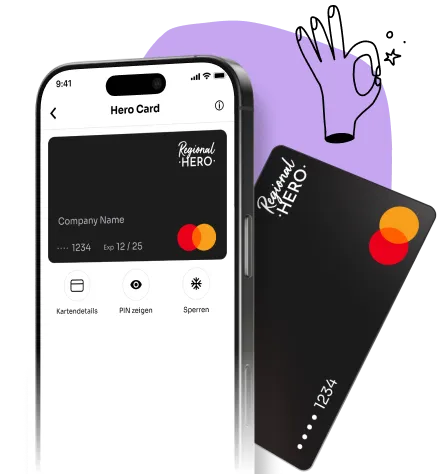
With the HERO Card, individual measures become a strong package, tax-free, digital and can be used anywhere.
HR keeps track of things, employees benefit directly.
The local economy is the backbone of any society. It creates jobs, fosters innovation, and contributes to community development. Recently, companies have recognized that supporting local businesses and retaining local purchasing power can be crucial for their success. Not only does a strong local economy lead to greater stability, but it also enables the creation of positive relationships between companies and their workforce. Tax-free employer benefits and region-specific non-cash benefit cards are tools that strengthen local purchasing power and thus support the regional economic cycle. At the same time, they ensure greater employee satisfaction and loyalty within the company. In this guide, we delve deep into the topic of local purchasing power retention, examining its significance, benefits, and impacts, and looking at future trends in this exciting area of corporate strategy.
The targeted promotion of local purchasing power retention is a strategic tool for the sustainable strengthening of the regional economy. By keeping the disposable income of private households within a geographical region, a positive cycle is created: Local businesses achieve higher revenues, which leads to the safeguarding and creation of jobs. This, in turn, increases municipal tax revenues, which can be reinvested in improving public infrastructure and quality of life. Measures such as tax-advantaged non-cash benefits for employees in the form of regional voucher cards channel purchasing power directly into local retail and gastronomy. Thus, local purchasing power retention becomes a crucial factor for the vitality and resilience of cities and municipalities.
Purchasing power refers to the disposable net income of the population, which, after deducting taxes and social security contributions, is available for consumption, covering living expenses such as rent, and for savings. It also includes government transfer payments such as pensions, unemployment benefits, or child benefits, and serves as a fundamental indicator of a region's consumption potential. [Michael Bauer Research GmbH] Companies use purchasing power indices to analyze regional sales markets and target marketing strategies. The level of purchasing power is therefore a direct measure of the economic strength of private households in a specific location.
A distinction must be made between nominal and real purchasing power. While nominal purchasing power quantifies pure disposable income, real purchasing power additionally considers regional living costs. Since the costs for rent, services, and daily necessities are considerably higher in metropolitan regions like Munich or the Starnberg district, real, or actually perceptible, purchasing power can be lower despite a high nominal income. This differentiation is crucial because it shows how much money people truly have left for discretionary spending after mandatory expenses. [Institut der deutschen Wirtschaft Köln]
Regional differences in Germany are considerable. For 2025, the average per capita purchasing power in Germany is projected to be 29,566 Euros projected. The Starnberg district leads with a projected purchasing power of 40,684 Euros per inhabitant. At the other end of the scale is the city of Gelsenkirchen with an estimated 23,425 Euros. These figures illustrate that consumption potential within Germany can vary by more than 70 percent and is highly dependent on the consumers' place of residence. [GfK]
The long-standing difference in purchasing power between the old and new federal states persists. In 2024, purchasing power in the East German federal states (excluding Berlin) stood at an index value of 91.6, while the overall German average is 100. Since living costs in the East tend to be lower, this difference is partially offset in terms of real purchasing power. Nevertheless, this value shows that economic convergence is an ongoing process, and promoting local purchasing power retention is particularly important in structurally weaker regions. [Nexiga GmbH]
Retaining purchasing power is crucial for a region because it triggers an economic multiplier effect. Every Euro spent with local retailers, service providers, or restaurateurs largely remains within the regional economic cycle. This money is used for local salaries, rents, municipal taxes, and purchases from regional suppliers, which stabilizes and increases overall local economic output. If, however, purchasing power flows away to large, supra-regional online platforms or chain stores, this cycle is interrupted and withdrawn from the region.
A strong local retail sector and a robust local service structure act as a resilience factor for the entire community. This has been particularly evident in times of crisis, where functioning local supply structures ensured the basic provision for the population and reduced dependence on global supply chains. As brick-and-mortar retail represents the lifeline of many city centers, its strengthening through local purchasing power directly contributes to the stability and crisis resilience of municipalities. [Ministerium für Wirtschaft, Innovation, Digitalisierung und Energie des Landes NRW]
The financial health of a municipality is directly linked to local purchasing power retention. Increasing revenues for local businesses lead to higher trade and sales tax revenues for the city or municipality. These additional funds can then be invested in public infrastructure, for example, in the renovation of schools, the expansion of public transport, or the maintenance of parks and green spaces. When citizens see the positive results of these investments, it, in turn, strengthens their identification with the place and their willingness to continue shopping locally. This creates a self-reinforcing positive development.
Beyond purely economic aspects, local purchasing power retention has an important social and cultural function. Vibrant city centers with a diverse range of owner-managed shops, cafés, and restaurants are central places for encounters and social exchange. They shape a city's identity and enhance the quality of life for its residents. Preserving these structures through conscious local consumption behavior prevents the desolation of city centers and fosters a strong sense of community. High purchasing power retention is therefore an investment in social cohesion and the attractiveness of one's own living environment.
Companies can specifically promote the retention of local purchasing power by using tax-advantaged employee benefits. An effective tool is the in-kind benefit, where employees receive a monthly amount that is exempt from tax and social security contributions. If this in-kind benefit is processed via a regional voucher card or a city card that can only be redeemed at participating local businesses, the money is channeled directly into the regional economy. This creates a win-win situation: employees receive more take-home pay, and local businesses benefit from additional revenue.
The operation of such regional in-kind benefit systems is simple and effective. A company loads a monthly amount, for example, up to the tax-free limit of 50 Euros, onto a prepaid card for each employee. The logic is simple: If employees then use this card at a local bakery, a neighborhood restaurant, or the bookstore around the corner, this amount flows directly into the tills of regional businesses. Unlike a regular salary increase, which could also be used for online shopping with global corporations, this system ensures that the financial benefit strengthens the local community.
In addition to in-kind benefit cards, there are other tools companies can use to support the local economy. These include digital meal vouchers redeemable at local restaurants and supermarkets, or subsidizing public transport passes, which increases footfall in city centers. The conscious decision to choose local suppliers, whether for catering at corporate events, office supplies, or tradespeople's services, is also an important contribution. These measures not only signal social responsibility but also strengthen the network and relationships within the local business community.
Tools for Corporate Promotion of Local Purchasing Power
Urban infrastructure has a direct and significant influence on the retention of local purchasing power. An attractive, safe, and easily accessible city center motivates people to spend their time and money there. This includes well-designed public spaces, clean streets, sufficient green areas, and a high quality of public spaces. When people feel comfortable in an urban area, their length of stay increases, which in turn significantly raises the likelihood of consumer spending in local shops and restaurants.
Traffic planning measures play a key role. Studies by the Federal Environment Agency show that repurposing traffic areas in favor of pedestrians and cyclists often positively influences the local economy. Contrary to the widespread assumption among retailers that customers arriving by car generate the highest sales, pedestrians and cyclists often generate more overall revenue. Because they move more slowly and tend to shop more frequently, but in smaller amounts, they visit more shops per visit and thus contribute more broadly to local value creation. [Umweltbundesamt]
A diverse mix of uses including retail, services, gastronomy, culture, living, and working is another decisive factor. A city center solely focused on retail becomes deserted after closing time. However, if residential spaces, offices, and leisure facilities are also integrated, continuous vibrancy is created. This mix ensures that distances remain short and daily needs can be met locally. This almost automatically ties the purchasing power of residents and people working there to the location.
Digitalization plays an ambivalent, yet potentially crucial, role in retaining local purchasing power. On the one hand, a significant portion of purchasing power flows out of regions when consumers shop on large, international e-commerce platforms. On the other hand, digitalization offers local businesses powerful tools to remain competitive and win back customers. Regional online marketplaces are a key instrument in this regard, combining the strengths of local retail with the convenience of online shopping.
A regional online marketplace consolidates the offerings of many local retailers and service providers on a single platform. Since such a marketplace provides much greater visibility and a broader assortment than any single store ever could, it creates a powerful digital alternative to global giants. Customers can comfortably browse and shop at their favorite local stores from home. The crucial difference: the revenue remains entirely within the region and supports the local economy.
Such platforms enable innovative hybrid models like "Click & Collect" or "Click & Deliver." With "Click & Collect," goods are ordered online and then picked up in person at the store, which increases foot traffic in city centers and creates opportunities for additional sales. With "Click & Deliver," delivery is often handled by local courier services, ensuring that this part of the value chain also remains within the region. If a municipality or a local business association takes the initiative for such a marketplace, digitalization can transform from a threat into an opportunity for retaining local purchasing power.
Beyond mere sales platforms, digitalization can also be used to strengthen customer loyalty and improve the service experience. Local businesses can utilize digital loyalty cards, personalized offers via newsletters, or communication through social media to build a closer relationship with their customers. By combining personal on-site service with digital touchpoints, they can create added value that online-only providers cannot offer. Strategic use of digital channels is therefore essential to successfully retain local purchasing power in the 21st century.
Income generally refers to gross income before taxes and social security contributions. Purchasing power, on the other hand, is the actual disposable net income remaining to a household after all deductions for consumption, rent, or savings. It is therefore the more precise indicator of consumption potential.
Employees benefit directly through tax-free benefits in kind, such as regional gift cards, as these increase their net income. Indirectly, they benefit from a strengthened local economy through more secure jobs, a higher quality of life, and a more attractive living environment with diverse shopping and leisure opportunities.
Generally, yes, but success depends on a coordinated strategy tailored to the specific circumstances of the municipality. Successful promotion requires collaboration between local administration, businesses, business associations, and civil society to develop effective and accepted measures.
Non-local online retail primarily leads to an outflow of purchasing power from regions, as revenues go to external corporations. However, regional online marketplaces and "Click & Collect" offers from local retailers are an effective counter-strategy to keep purchasing power within the region by combining digital convenience with local value creation.
author
Everything you want to know — simply explained.
Everything you want to know — simply explained.
What is the benefit card?
The HERO Card is a digital Mastercard debit card that allows companies to offer tax-free benefits easily and flexibly. Employees thus receive tax-free subsidies for benefits in kind, mobility, food and health. Everything bundled on one card, individually configurable and implemented in a legally secure manner.
Employees simply pay on a daily basis. Locally in your favorite café or nationwide in supermarkets, pharmacies or public transport.
How does that work for companies?
You control everything centrally in the HR portal.
Activate benefits in five minutes. The HERO Card automatically loads the monthly budget. Digital, secure and tax-compliant.
What are the concrete benefits of this for my team?
Up to 50 euros in kind per month
Meal allowance of up to 7.50 euros per working day
Mobility allowance of up to 58 euros per month
Up to 500 euros per year for health and wellbeing
All tax-free. It's all digital. It's all on one card.
How does HR keep track?
All benefits at a glance. No paperwork.
In the HR portal, you control budgets, see workload and manage everything centrally.
Sign in. Adjust. It's done.
This saves you up to 80 percent of administrative time.
Is that really tax-free?
Yes, all benefits are tax-free for employees and are completely legally compliant. Employers must tax some benefits as a lump sum.
The HERO Card uses legally enshrined allowances. Each category is correctly separated for tax purposes and can be managed automatically.
How much does the HERO Card cost?
As part of the employee license, the card costs 1 euro per employee per month plus charges for charging benefits.
For 50 employees with HERO Base, for example, this equates to around 140 euros per month — less than a joint team meal, but with a long-term effect.
How quickly is the HERO Card ready for use?
Ready to go in just a few days.
Setup, onboarding and go-live take a maximum of one week.
No technical hurdles. Without complexity.