Table of contents


Introduce shopping voucher as a benefit ▶️ Strengthen purchasing power ✓ Optimize taxes ✓ Increase employee satisfaction ✓ Offer benefits here!
MultiBenefits - HERO CARD
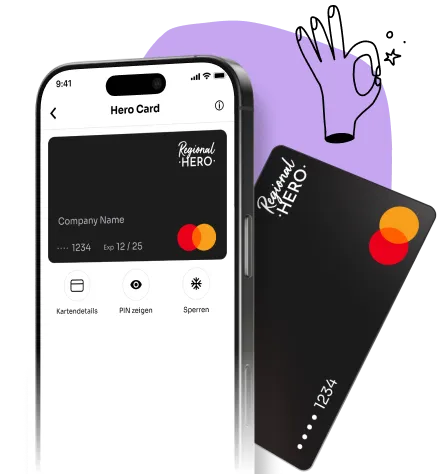
With the HERO Card, individual measures become a strong package, tax-free, digital and can be used anywhere.
HR keeps track of things, employees benefit directly.
In today's working world, shopping vouchers are becoming increasingly important as an innovative employee benefit. Companies that use this tool skillfully can achieve several benefits for themselves and their employees. On the one hand, shopping vouchers offer a flexible way to financially support employees without increasing non-wage costs. On the other hand, they strengthen the purchasing power of employees and thus contribute to employee satisfaction.
The tax framework makes shopping vouchers particularly attractive. According to the Federal Ministry of Finance, employers can provide their employees with monthly benefits in kind up to a value of 50 euros tax-free [Federal Ministry of Finance]. This regulation gives companies the opportunity to effectively reward their employees without increasing the tax burden. At the same time, employees benefit from real added value that is not reduced by taxes.
The flexibility of shopping vouchers is reflected in their wide range of uses. They can be used as a regular additional benefit, as a reward for special achievements or as a seasonal gift, for example at Christmas or a birthday. This variability enables companies to express their appreciation of employees in a creative and individual way.
Another advantage lies in strengthening the local economy. Many city vouchers, such as the “Heidelberger Dankeschein”, can be redeemed at a variety of local retailers [City of Heidelberg]. This not only strengthens the purchasing power of employees, but also supports the regional economy. Companies are thus positioning themselves as responsible players in their local environment.
Benefits for employersBenefits for workerBenefits for the local economyTax optimizationAdditional income Strengthening local tradersIncreased employee loyaltyFlexibility in redeeming regional circuitsPositive employer imageTax-free benefitRevitalization of inner cities
The introduction of shopping vouchers as an employee benefit requires careful planning and implementation. Companies should comply with the legal framework and develop a clear communication strategy. Transparent information to employees about the benefits and ways to use vouchers is crucial for the success of the program.
By implementing a shopping voucher system, companies can not only increase their attractiveness as an employer, but also contribute to reducing the financial burden on their employees. In times of rising living costs and increasing competition for qualified specialists, this can be a decisive factor for long-term employee retention and satisfaction.
When implementing shopping vouchers as an employee benefit, compliance with the legal framework is of central importance. Employment law and tax law form the main pillars that must be taken into account. Careful planning and implementation taking these aspects into account can save companies from costly mistakes and increase acceptance among employees.
The initial focus is on the tax treatment of shopping vouchers. The Income Tax Act provides that benefits in kind up to a monthly value of 50 euros per employee can remain tax-free. This regulation gives companies the opportunity to offer their employees real added value without increasing the tax burden. However, it should be noted that this exemption limit must be strictly observed, as if exceeded, the entire amount becomes taxable [Federal Ministry of Finance].
From an employment law perspective, the introduction of shopping vouchers is to be regarded as a voluntary benefit provided by the employer. This means that employees have no legal right to this benefit. In order to avoid misunderstandings and to create a legally secure basis, it is advisable to clearly define the modalities of issuing vouchers and to set them down in writing.
Another important aspect is the principle of equal treatment. Companies must ensure that there is no unjustified discrimination against individual employees or groups when awarding shopping vouchers. This could otherwise be regarded as a violation of the General Equal Treatment Act (AGG) and have legal consequences.
Legal aspectTo be observedPossible consequences of failure to comply with tax exemptionMaximum 50€ per month and employeeFull tax liability in case of excess Voluntary benefitClear definition of award modalitiesWanted claims of employees equal treatment principleFair distribution to all justified lawsuits for discrimination
When designing the voucher system, companies should also take into account the co-determination rights of the works council. The introduction of such a benefit can be interpreted as a change in company regulations and is therefore subject to participation. Involving the works council at an early stage can not only create legal certainty, but also increase acceptance of the program among the workforce.
One aspect that is often overlooked concerns the data protection implications of managing shopping vouchers. The collection and processing of personal data as part of the voucher system must comply with the requirements of the General Data Protection Regulation (GDPR). This includes, among other things, obtaining necessary consents, ensuring data security and compliance with deletion deadlines.
Finally, it should be noted that the legal framework may be subject to constant change. Regular reviews and adjustments to the voucher system are therefore essential to permanently ensure its legal compliance. Close cooperation with legal and human resources departments and, where appropriate, external experts can help companies make their shopping voucher program legally secure and effective.
The tax aspects of shopping vouchers offer significant benefits for both employers and employees. These benefits go beyond the previously mentioned monthly allowance of 50 euros and open up interesting design options as part of the compensation structure.
For employers, a significant advantage is the saving of non-wage labor costs. In contrast to salary increases, there are no additional social security contributions when shopping vouchers are issued. This enables companies to financially reward their employees without disproportionately increasing personnel costs. Especially in times of tight economic conditions, this can be a decisive factor for competitiveness.
A strategic distribution of vouchers over the year can lead to optimal use of tax benefits. For example, companies can link the issuance of vouchers to specific performance goals or company successes, which creates additional incentives for the workforce. However, it is always important to ensure that the monthly exemption limit is not exceeded so as not to jeopardize the tax benefits.
Shopping vouchers give workers the opportunity to effectively increase their net income. Since vouchers are not subject to income tax or social security contributions up to the exemption limit, employees benefit from a higher disposable income. This can mean significant financial relief, particularly for employees in lower income groups.
Aspect advantage for employers Benefit for employee non-wage costsSavings of social security contributions Higher net income flexibilityPerformance-based allocation possibleAdditional purchasing power tax treatmentNo payroll tax up to exemption tax-free additional income
An often overlooked aspect is the ability to combine shopping vouchers with other tax-free benefits in kind. In addition to vouchers, employers can also offer job tickets or health benefits, for example, without these being counted towards the 50-euro exemption limit. This opens up scope for a comprehensive and attractive compensation package [Institute for Employment Law and Industrial Relations in the European Union].
When considering shopping vouchers for tax purposes, the question of sales tax is also relevant. Under certain conditions, companies can claim the sales tax paid when purchasing the vouchers as input tax. This requires that the vouchers were purchased as part of entrepreneurial activity and are not intended for private purposes.
Finally, it should be noted that the tax benefits of shopping vouchers require careful documentation. Employers are required to precisely record the issue of vouchers and their value and to prove them as part of payroll accounting. Transparent and comprehensible handling is not only necessary from a tax perspective, but also promotes employee trust in the voucher system.
The successful introduction of a shopping voucher system requires careful planning and structured implementation. The first step is to carry out a detailed needs analysis to determine the specific requirements and preferences of the workforce. This can be done through employee surveys or workshops, in which the expectations and wishes of employees are recorded.
A decisive factor for the acceptance of the voucher system is the selection of redemption options. A wide range of options is recommended to meet the different needs of the workforce. In many cities, local voucher systems have been established, which include a variety of shops and service providers. In Heidelberg, for example, city vouchers can be redeemed at over 85 participating retailers, service providers and restaurateurs [City of Unterschleissheim].
When it comes to technical implementation, companies are faced with the choice between physical vouchers and digital solutions. While physical vouchers offer the advantage of accessibility, digital systems enable more efficient administration and distribution. Regardless of the form chosen, it is essential to establish a robust tracking system that reliably records and documents the issuance and redemption of vouchers.
The integration of the voucher system into existing HR processes is another core aspect of the implementation. Clear guidelines for the allocation of vouchers should be defined, which take into account both tax requirements and internal fairness principles. A connection to the payroll system can minimize administrative costs and ensure seamless integration into the compensation structure.
Implementation phase core tasksAspect planningRequirements analysis, budgetingEmployee involvement, cost frameTechnical implementation system selection, integrationData protection, ease of useProcess designProcurement guidelines, documentationCompliance, transparency
Internal communication is an often underestimated aspect of introducing shopping vouchers. Transparent and comprehensive information to employees about the benefits and uses of the voucher system is crucial for its acceptance and success. Various communication channels such as an intranet, employee meetings or newsletters can be used to reach all employees and clarify potential questions at an early stage.
Involving the works council in the implementation process can not only create legal certainty, but also increase acceptance of the program among the workforce. Criteria for awarding vouchers can be developed together, which are perceived as fair and transparent by all parties involved. This promotes trust in the new system and minimizes potential conflicts.
Another success factor is the continuous evaluation and adjustment of the voucher system. Regular feedback rounds with employees and the analysis of usage data make it possible to constantly optimize the offer and adapt it to changing needs. In this context, it has proven effective in practice to set up a central point of contact for questions and suggestions about the voucher system, which acts as an interface between employees, HR department and management.
Finally, it should be noted that the successful implementation of a shopping voucher system requires time and patience. A step-by-step introduction, starting with a pilot phase in selected departments, can help to gain experience and optimize the system before the company-wide rollout. This iterative approach makes it possible to identify and eliminate potential stumbling blocks at an early stage, which ultimately leads to higher satisfaction of all parties involved.
The evaluation of a shopping voucher program requires a multidimensional approach that takes into account both quantitative and qualitative aspects. A well-founded analysis enables companies to assess the effectiveness of their measures and, if necessary, make adjustments. Various key figures play a central role here, which in their entirety paint a comprehensive picture of the program's success.
A basic key figure is the usage rate of the vouchers issued. This provides information on how well the offer is accepted by employees. Successful programs achieve high redemption rates, such as in the city of Haren, where over 60 percent of the vouchers issued were redeemed within a few months [City of Haren (Ems)].
From a financial perspective, the cost efficiency of the voucher program is of particular interest. Here, the total cost of implementing and managing the system on an ongoing basis is compared with the savings achieved in non-wage costs and potential tax benefits. A positive cost-benefit ratio is a strong indicator of the program's economic success.
In the area of human resources management, effects on employee satisfaction and retention can be measured. Regular employee surveys can provide information about how the voucher program is being perceived and what influence it has on overall satisfaction. Observing the turnover rate is just as informative, as an attractive benefit program can contribute to employee retention.
Key figure descriptionTarget valueUtilization rateShare of vouchers redeemed > 80% cost efficiency ratio effort to savings> 1:1.2 Employee satisfaction rating in surveysIncreased by 10%
An often neglected aspect of measuring success is the impact of the voucher program on the local economy. In cooperation with participating retailers and service providers, data on sales generated by vouchers can be collected. This information not only provides information about the economic impact of the program, but can also serve as an argument for attracting further partner companies.
The analysis of the distribution of redeemed vouchers across various industries and businesses provides valuable insights into the preferences of employees. This data can be used to continuously optimize the offering and to establish new partnerships in a targeted manner. At the same time, conclusions can be drawn about the needs and interests of the workforce, which can be important for designing further benefit programs.
One innovative approach to measuring success is to look at the so-called “Social Return on Investment” (SROI). In addition to the financial aspects, this indicator also takes into account the social and ecological effects of the voucher program. For example, positive effects on the work-life balance of employees or the promotion of sustainable consumption patterns can be included in the evaluation.
Finally, the importance of a long-term view should be pointed out. The full effect of a shopping voucher program often only develops over a longer period of time. It is therefore advisable to monitor trends over several years in addition to short-term indicators. This makes it possible to compensate for seasonal fluctuations and identify sustainable effects.
The continuous collection and analysis of these key figures forms the basis for evidence-based development of the voucher program. The combination of different measurement methods and times creates a holistic picture that enables companies to precisely tailor their offerings to the needs of their employees and corporate goals. This is the only way to ensure that the shopping voucher program creates real added value for everyone involved in the long term.
Companies can use shopping vouchers as a strategic employee benefit to specifically increase the net purchasing power of employees and at the same time optimize non-wage costs. By using the tax exemption in kind, this advantage becomes an effective tool for employee retention, motivation and positioning as an attractive employer.
Shopping vouchers allow companies to provide their employees with up to 50 euros tax and social security free to be sent as a payment in kind. This amount reaches the workforce gross for net, while employers also save the non-wage costs for this amount, which creates a win-win situation.
The legal basis for this is Section 8 (2) sentence 11 of the Income Tax Act (EStG). As long as the total monthly value of all benefits granted in kind does not exceed the exemption limit of 50 euros, no duties are charged. Weil If this is an exemption limit and not an allowance, if exceeded, even by just one cent, the entire amount would be subject to tax and social security contributions. This regulation makes precise and system-based administration essential to ensure legal compliance.
In addition to this monthly allowance, employers can grant their employees tax-free gifts worth up to 60 euros on special personal occasions such as birthdays, weddings or anniversaries. These can also be issued in the form of a shopping voucher. If a company consistently uses these options, it can significantly increase the annual net compensation per employee without having to adjust the gross salary. The savings in social security contributions for the employer represent a direct financial advantage.
Shopping vouchers increase employee motivation because they are perceived as a tangible and directly usable form of appreciation that goes beyond the regular salary. This positive reinforcement increases emotional ties to the company and strengthens the feeling of being recognized for the work done, which demonstrably promotes loyalty.
The psychological effect of a voucher is fundamentally different from a pure salary increase. Da If a voucher is perceived as a special “gift”, it is remembered more strongly and is linked to a positive experience when redeemed. A salary increase of the same amount would be lost in the monthly budget and reduced through taxes and duties. Particularly in times of high inflation and falling real purchasing power, as shown by the GfK Consumer Climate Index, a direct strengthening of the available budget is considered extremely valuable.
The “Shopping & Loyalty Study Germany 2023” shows that reward systems, including vouchers, are a central tool for customer and employee loyalty. [Comarch AG and Würzburg-Schweinfurt University of Applied Sciences] Transferring this principle to internal personnel policy, it becomes clear that when employees regularly receive tangible benefits that make their everyday lives easier, satisfaction increases. This results in lower turnover and improves the employer image, which in turn is decisive in the competition for skilled workers. The European market for gift cards is growing strongly every year, which underlines the high acceptance and popularity of this instrument. [Research & Markets]
The selection of the appropriate voucher system depends on four central criteria: a broad network of acceptance partners relevant to the workforce, guaranteed compliance with tax requirements (in particular the ZAG criteria), simple and automated administration for the HR department and a transparent cost structure for the company.
Legal compliance is a decisive factor for success. The voucher system must meet the criteria of the Payment Services Supervision Act (ZAG) for benefits in kind. This means that the vouchers may only be used at a limited number of acceptance points (§ 2 para. 1 no. 10a ZAG) or for a very limited range of goods or services (§ 2 para. 1 no. 10b ZAG). Providers that do not meet these criteria expose companies to a high risk of back tax payments. A careful review of provider certification is therefore essential.
Usability for employees and the HR department is also key. A modern system offers digital solutions that can be managed via app, which is in line with the trend towards virtual vouchers. [Ingenico Marketing Solutions] For the HR department, the process from recharging funds to distribution to employees should be largely automated in order to minimize administrative costs.
The following table summarizes the most important decision criteria:
CriteriumdescriptionImportance for the decisionLegal Compliance (ZAG)The provider must guarantee that his system meets the criteria for a tax-free payment in kind.Very high acceptance point networkThe selection of partners (supermarkets, gas stations, online shops) should match the realities of life of employees.Very high administrative effortThe platform should enable intuitive and automated management of assets and users.Highly digital vs. physical solutionThe system should offer flexible options, such as an app, digital codes, or physical cards.Mean cost structureThe fees (per user, per transaction, institution) must be transparent and predictable.Hoch
Successful implementation requires a structured plan and a proactive communication strategy. It is crucial not only to present the new benefit to employees, but also to clearly communicate its value and ease of use in order to ensure a high level of acceptance and appreciation right from the start.
The implementation process can be divided into the following steps:
Communication plays a key role here. As the 2022 CMC print mailing study shows, well-communicated voucher offers significantly increase the positive response. [Collaborative Marketing Club] By presenting the benefits in a clear and understandable way, companies ensure that the benefit is not only introduced but also appreciated as such.
In addition to the universal shopping voucher, there are other tax-advantaged benefits in kind, such as fuel vouchers, food subsidies or mobility budgets. These are often more earmarked and are suitable for specific groups of employees, while the shopping voucher is more widely accepted due to its high level of flexibility.
Each benefit has specific advantages and disadvantages, which depend on the structure of the workforce and the company's goals. A mobility budget, for example, is very attractive in urban centers with a good public transport network, but is less appealing to employees in rural areas. As analyses by the Institute of German Economics show, targeted funding through earmarked vouchers can steer socio-politically meaningful behaviours such as the use of public transport or a healthy diet. [D. Enste]
The following table compares the most common alternatives and helps you make a strategic decision:
Benefit typeFlexibility for employees*inadministrative effortTypical target groupTax frameworkUniversal shopping voucherVery high (wide partner network) Low (with system solution) All employees €50 allowance in kindFuel voucherLow (only for fuel) Low (with system solution) Commuters, field services50 € allowance in kindDigital meal allowanceFunds (for food & restaurants) Funds (document verification required) All employees up to €7.23 per day (2024)Job ticket/mobility budgetMedium to high (depending on design) High (individual budgets) Urban commuter allowance or individual taxation possibleInternet packageNot available (subsidy for costs) Low (lump sum) employees working from home office is taxable at a flat rate of 50€ per month (25%)
If the total value of the benefits in kind granted exceeds the exemption limit of 50 euros in one month, the entire amount is subject to tax and social security contributions, not just the excess portion. Precise compliance with the limit by the employer is therefore crucial in order to avoid back payments.
No, saving or transferring unused assets from the 50-euro benefit allowance to the following month is not permitted under tax law. The exemption limit is valid per calendar month and expires if it is not exhausted. This is an essential principle for differentiating taxable cash wages.
Yes, the form of the voucher — whether digitally via app, as a code via e-mail or as a physical plastic card — is irrelevant for tax treatment. The only decisive factor is that the voucher meets the legal criteria for payment in kind under the Payment Services Supervision Act (ZAG).
No, when using a compliant voucher system, no individual proof from employees is required. The employer documents the granting of benefits in kind in the payroll account. This significantly simplifies the process and ensures that all tax requirements are met without burdening employees.

author
Marketing expert for employee benefits
Everything you want to know — simply explained.
Everything you want to know — simply explained.
What is the benefit card?
The HERO Card is a digital Mastercard debit card that allows companies to offer tax-free benefits easily and flexibly. Employees thus receive tax-free subsidies for benefits in kind, mobility, food and health. Everything bundled on one card, individually configurable and implemented in a legally secure manner.
Employees simply pay on a daily basis. Locally in your favorite café or nationwide in supermarkets, pharmacies or public transport.
How does that work for companies?
You control everything centrally in the HR portal.
Activate benefits in five minutes. The HERO Card automatically loads the monthly budget. Digital, secure and tax-compliant.
What are the concrete benefits of this for my team?
Up to 50 euros in kind per month
Meal allowance of up to 7.50 euros per working day
Mobility allowance of up to 58 euros per month
Up to 500 euros per year for health and wellbeing
All tax-free. It's all digital. It's all on one card.
How does HR keep track?
All benefits at a glance. No paperwork.
In the HR portal, you control budgets, see workload and manage everything centrally.
Sign in. Adjust. It's done.
This saves you up to 80 percent of administrative time.
Is that really tax-free?
Yes, all benefits are tax-free for employees and are completely legally compliant. Employers must tax some benefits as a lump sum.
The HERO Card uses legally enshrined allowances. Each category is correctly separated for tax purposes and can be managed automatically.
How much does the HERO Card cost?
As part of the employee license, the card costs 1 euro per employee per month plus charges for charging benefits.
For 50 employees with HERO Base, for example, this equates to around 140 euros per month — less than a joint team meal, but with a long-term effect.
How quickly is the HERO Card ready for use?
Ready to go in just a few days.
Setup, onboarding and go-live take a maximum of one week.
No technical hurdles. Without complexity.