Inhaltsverzeichnis


Tax-Free Employee Gifts ▶️ Show Appreciation ✓ Boost Motivation ✓ Save on Taxes ✓ Give Recognition Now!
STADTGUTSCHEINE – REGIONAL HERO
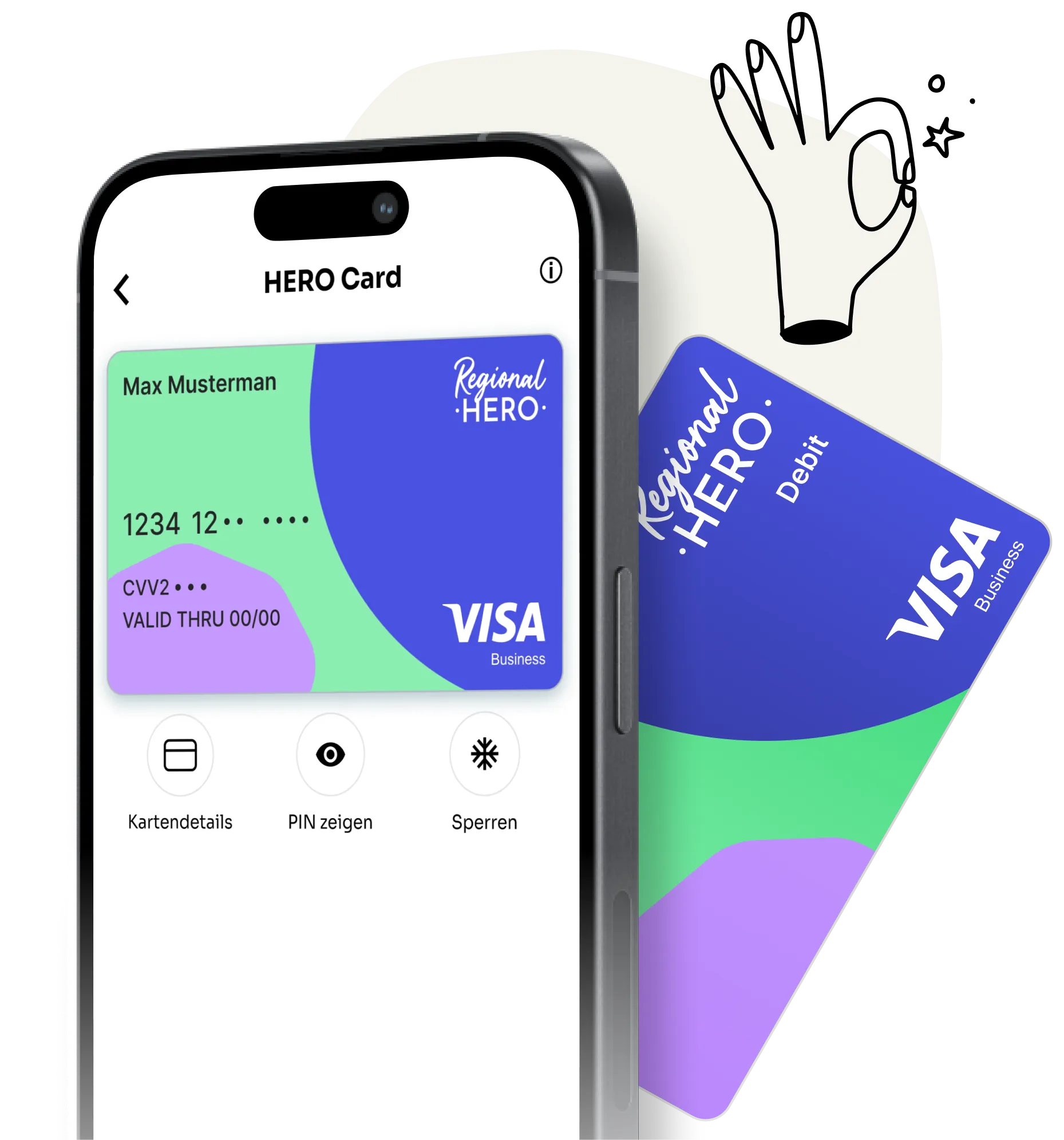
Mit den Stadtgutscheinen verschenkst du bis zu 250 Euro – einlösbar bei lokalen Händlern in der Region. Deine Mitarbeitenden freuen sich, die lokale Wirtschaft profitiert.
Infos zu StadtgutscheinenA company's landscape can be reshaped to the benefit of all stakeholders through the introduction of tax-free employer benefits. By providing such benefits, which can be declared as tax-free gifts, doors open to improving employee motivation and performance. Both employers and employees can equally benefit from the tax advantages. However, since the provision of such benefits is legally regulated, a precise understanding of the legal provisions is required to utilize them optimally. This is therefore not only an effective tool for employee retention but also for optimizing company finances. Furthermore, these benefits offer an excellent opportunity to strengthen the regional economy and promote sustainability. In this guide, we will delve deeper into these topics and shed light on what it means to implement tax-free gifts in a business context.
Companies can provide tax-free gifts by utilizing specific exemption limits and regulations. For employees, two main instruments exist: the monthly non-cash benefit up to 50 Euros and occasion-based gifts up to 60 Euros. For business partners, an increased limit of 50 Euros net per year has applied since 2024.
The correct application of these regulations allows for expressing appreciation while optimizing the tax burden for both the company and the recipient. A key prerequisite is that these are non-cash benefits and are granted in addition to the salary already owed. [eco-world Redaktion] Because legal requirements are precise, strict adherence to value limits and occasions leads to complete tax and social security exemption. Careful documentation of all benefits is essential for tax recognition.
For employee gifts, there are two essential, independent exemption limits. Firstly, employers can provide monthly tax and social security-free non-cash benefits up to a value of 50 Euros . Secondly, gifts for a special personal occasion up to 60 Euros gross are tax-free.
The 50-Euro non-cash benefit exemption limit is regulated in § 8 Abs. 2 S. 11 EStG and can be utilized every month without a specific occasion. [Guud GmbH] If this amount is exceeded by even one cent, the entire benefit for that month becomes subject to tax and social security contributions. This regulation applies to gift cards, fuel vouchers, or other non-cash benefits that cannot be exchanged for cash. The provision must always be in addition to the regular salary.
In addition to the monthly 50-Euro limit, companies can delight their employees on special personal occasions. For events such as birthdays, weddings, the birth of a child, or a work anniversary, an exemption limit of 60 Euros gross per event. [Finanztip Redaktion] Here too, it is an exemption limit, not an allowance. Recognition as a personal gift requires a direct connection to the employee's private life event.
The combination of both tax-free allowances is possible. For example, if an employee has a birthday in May, the employer can give a gift worth up to 60 Euros and additionally grant the monthly non-cash benefit of 50 Euros. In this month, benefits totaling up to 110 Euros would thus be tax-free. [Finom Blog] This separate application creates significant scope for employee motivation.
The key difference lies in the occasion and frequency of the benefit. Non-cash benefits up to 50 Euros are not tied to a specific occasion and can be granted monthly, whereas occasional gifts up to 60 Euros are linked to a specific personal event in the employee's life and only then remain tax-free.
Non-cash benefits serve as a regular, tax-optimized salary component. They require no special reason and can be issued, for example, in the form of reloadable gift cards for supermarkets, petrol stations, or online shops. It is important that these vouchers meet the criteria of the Payment Services Supervision Act (ZAG) and enable the purchase of goods or services, but do not have a cash-out function. Their regularity makes them a predictable tool for employee retention.
Occasional gifts, on the other hand, have an irregular and personal nature. The tax office only recognizes certain events as "personal occasions." These include birthdays, marriage, the birth of a child, or a company anniversary. General holidays such as Christmas or Easter are explicitly not considered personal occasions in the tax sense. [Haufe Online Redaktion] A Christmas gift, therefore, cannot be covered by the 60-Euro rule, but must, if it is to be tax-free, fall within the 50-Euro non-cash benefit tax-free limit.
The following table compares the most important distinguishing features and serves as a decision-making aid for the correct tax classification of employee benefits.
Comparison: Non-cash benefit vs. Occasional gift
Gifts to business partners, customers, or suppliers are deductible as operating expenses if their value per person per year does not exceed the tax-free limit of 50 Euros net. This new limit has been in effect since January 1, 2024, and replaced the previous 35-Euro limit, as stipulated in the Growth Opportunities Act. [Handwerksblatt]
For a gift to be tax-deductible, it must be purely business-related. This means it serves to maintain business relationships, and no specific consideration is expected. The 50-Euro limit refers to the net value of the goods without VAT, provided the gifting company is entitled to deduct input tax. [ValueApp Blog] Shipping or packaging costs are generally not included in the value limit, as long as they are itemized separately. [Handwerksblatt]
An exception to this rule is so-called promotional items. These are low-value promotional articles such as pens, calendars, or keychains, whose acquisition costs per item 10 Euros net do not exceed. Such items can be claimed as operating expenses without limit and without special record-keeping requirements, as their advertising effect is paramount. [Guud GmbH]
Exceeding a tax-free limit results in the entire amount of the benefit becoming subject to tax and social security contributions, not just the excess amount. For example, if a gift to an employee for their birthday costs 60.50 Euros, the full 60.50 Euros must be taxed as a non-cash benefit.
Since this is disadvantageous for both the company and the recipient, the legislator offers an alternative solution: flat-rate taxation according to § 37b EStG. This regulation allows the gifting company to pay the income tax incurred for the recipient at a flat rate of 30 % plus solidarity surcharge and, if applicable, church tax. [Lexware Redaktion] This makes the benefit tax-free for the recipient.
Flat-rate taxation can be applied to gifts for both employees and business partners that exceed the respective tax-free limits. If a company opts for this, it must apply it uniformly to all benefits of this type provided during the financial year. Selective application for individual gifts is not permitted. The upper limit for flat-rate taxation is 10,000 Euros per recipient per year. [Gokonfetti Magazin]
Complete and verifiable documentation is the crucial prerequisite for gifts to be tax-recognized. During an audit, the tax office must be able to clearly see that all legal requirements have been met. Without proper documentation, tax exemption or deductibility will usually be denied.
For correct documentation, companies must record the recipient's name, the exact occasion (especially for courtesies), the date of the benefit, and the value of the gift (including receipt). [eco-world Redaktion] These records should be kept separately for each employee and business partner to be able to prove compliance with the monthly or annual limits at any time.
If-Then Scenario: For example, if accounting records a gift worth 55 Euros for an employee, it must be clearly evident whether it is a courtesy for a birthday (then tax-free) or a non-cash benefit without a specific occasion (in which case the 50-Euro limit would be exceeded and the amount taxable). If the documented occasion is missing, the tax office will assume the option less favorable to the company. Therefore, proactive and precise documentation is a key component in avoiding additional tax payments.
A Christmas gift is not tax-free under the 60-Euro tax-free limit for personal occasions, as Christmas is a general holiday. However, it can be granted within the monthly 50-Euro non-cash benefit tax-free limit, provided this limit has not yet been exhausted by other benefits in the respective month.
Yes, vouchers are a popular form of tax-free non-cash benefit. However, they must meet the condition that they exclusively entitle the holder to goods or services and that cash payment is excluded. Vouchers that meet these criteria can be used for both the 50-Euro non-cash benefit and the 60-Euro courtesy.
The 60-Euro tax-free limit is occasion-specific and can be used for any recognized personal event (e.g., birthday, wedding, birth of a child) during the year. There is no legal limit to the number of occasions per year, although some sources mention a rule of thumb of up to three occasions. [Guud GmbH]
No, if the gifts comply with the respective tax-free limits of 50 Euros (non-cash benefit) or 60 Euros (courtesy) and all conditions are met, they are tax- and social security-free for the employee. In that case, a declaration in the income tax return is not required.
The tax-free employee bonus is a separate instrument and not a gift in the traditional sense. Employers can grant this bonus up to an amount of 1,000 Euros in 2025, provided it is paid as a voluntary additional benefit to the regular salary and certain conditions are met. [Bundesministerium der Finanzen]
Everything you want to know — simply explained.
Everything you want to know — simply explained.
What is the benefit card?
The HERO Card is a digital Mastercard debit card that allows companies to offer tax-free benefits easily and flexibly. Employees thus receive tax-free subsidies for benefits in kind, mobility, food and health. Everything bundled on one card, individually configurable and implemented in a legally secure manner.
Employees simply pay on a daily basis. Locally in your favorite café or nationwide in supermarkets, pharmacies or public transport.
How does that work for companies?
You control everything centrally in the HR portal.
Activate benefits in five minutes. The HERO Card automatically loads the monthly budget. Digital, secure and tax-compliant.
What are the concrete benefits of this for my team?
Up to 50 euros in kind per month
Meal allowance of up to 7.50 euros per working day
Mobility allowance of up to 58 euros per month
Up to 500 euros per year for health and wellbeing
All tax-free. It's all digital. It's all on one card.
How does HR keep track?
All benefits at a glance. No paperwork.
In the HR portal, you control budgets, see workload and manage everything centrally.
Sign in. Adjust. It's done.
This saves you up to 80 percent of administrative time.
Is that really tax-free?
Yes, all benefits are tax-free for employees and are completely legally compliant. Employers must tax some benefits as a lump sum.
The HERO Card uses legally enshrined allowances. Each category is correctly separated for tax purposes and can be managed automatically.
How much does the HERO Card cost?
As part of the employee license, the card costs 1 euro per employee per month plus charges for charging benefits.
For 50 employees with HERO Base, for example, this equates to around 140 euros per month — less than a joint team meal, but with a long-term effect.
How quickly is the HERO Card ready for use?
Ready to go in just a few days.
Setup, onboarding and go-live take a maximum of one week.
No technical hurdles. Without complexity.