Inhaltsverzeichnis


Introduce city vouchers as a benefit ▶️ Support local businesses ✓ Boost employee satisfaction ✓ Keep spending local ✓ Strengthen your region now!
STADTGUTSCHEINE – REGIONAL HERO
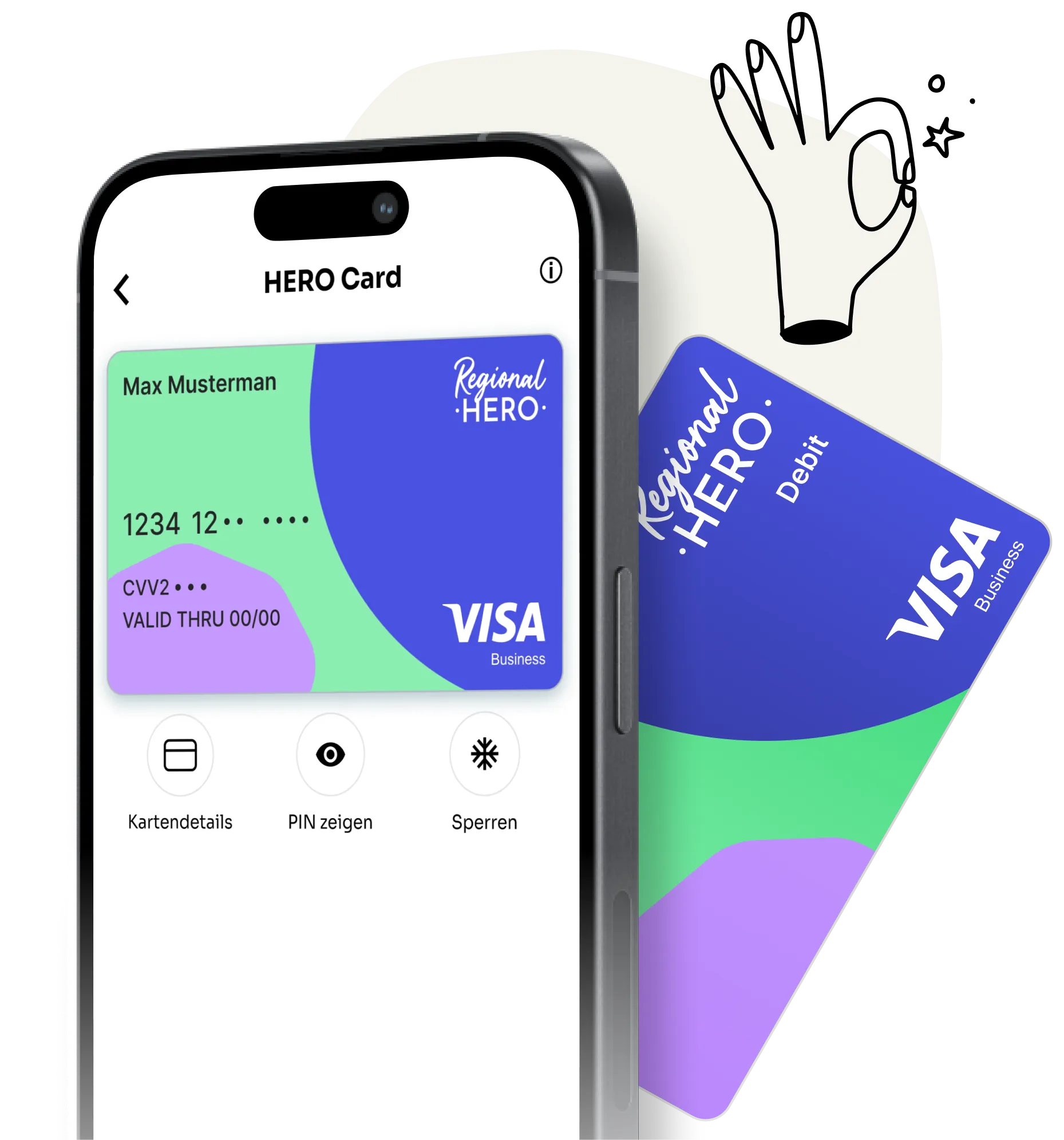
Mit den Stadtgutscheinen verschenkst du bis zu 250 Euro – einlösbar bei lokalen Händlern in der Region. Deine Mitarbeitenden freuen sich, die lokale Wirtschaft profitiert.
Infos zu StadtgutscheinenCity vouchers are an innovative way to both support the local economy and offer employees attractive and tax-free additional benefits. Given the current challenges faced by local businesses, city vouchers can be an effective solution to strengthen local shops and services while promoting employee motivation and retention. Furthermore, they offer tax advantages for both employers and employees. This guide will thoroughly examine the economic benefits of city vouchers for businesses, their tax implications, and their potential for employee retention. Success stories and case studies will illustrate how city vouchers can be implemented in practice and what positive effects they can have.
City vouchers, when used by companies as an employee benefit, represent an effective tool for strengthening the regional economy. They tie purchasing power directly to local retail, gastronomy, and service providers. This ensures that the capital provided as a benefit flows directly into the economic cycle of the local city or region, instead of migrating to supra-regional or purely digital providers.
A city voucher is a prepaid credit that can be redeemed at a network of participating acceptance points within a defined region. It functions as a cross-retailer payment method and specifically promotes consumption at local businesses. This system sustainably strengthens the regional economic cycle.
Its functionality is based on bundling local providers under a common voucher system. Consumers or businesses purchase the voucher from a central issuing point, such as city marketing offices or online. The credit can then be flexibly redeemed at all affiliated partners – from bookstores to restaurants to hairdressers. Since purchasing power is thus specifically retained in the region, small and medium-sized enterprises directly benefit from the revenues. This local retention of purchasing power prevents money from flowing to large online corporations and thus secures local jobs and tax revenues. [CIMA Beratung + Management GmbH]
A city voucher is also more than just a payment method; it is an active marketing tool. It creates visibility for participating businesses and motivates citizens to consciously discover and utilize local offerings. Successful models show that significant sums can be retained in the region through city vouchers. For example, the city of Ahaus issued approximately 25,000 vouchers with a total value of approximately 780,000 Euros in 2023, which directly benefited local retail and gastronomy. [Urban Digital] Such initiatives not only promote economic stability but also strengthen citizens' identification with their city.
City vouchers can be granted as a tax- and social security-free non-cash benefit, provided they meet legal requirements. This offers significant financial advantages for both employers and employees, as the credit, up to a tax-free limit of 50 Euros per month reaches employees tax-free.
The legal basis for this is Section 8 (2) Sentence 11 of the Income Tax Act (EStG). For a city voucher to be recognized as a non-cash benefit, it must meet the criteria of the Payment Services Supervision Act (ZAG). Specifically, this means the voucher must exclusively entitle the holder to purchase goods or services from a limited circle of acceptance points within Germany. City vouchers valid only in a specific city or with a defined community of retailers generally meet this requirement. Because this benefit is tax-exempt, it represents a cost-efficient alternative to traditional salary increases for companies. The administrative effort for payroll accounting is low, while the financial added value for the workforce is maximized.
For employees, receiving a city voucher means a direct and tangible financial advantage. A monthly voucher worth 50 Euros adds up to 600 Euros of additional, tax-free income per year. Unlike a salary increase, which is reduced by taxes and social security contributions, this amount is received in full. This increases employees' net purchasing power. When this voucher is then redeemed at local providers, the employee simultaneously supports their own region, which further enhances the positive effect of the benefit. The stable employment situation in Germany, with approximately 45.8 million employed persons in May 2025, creates a broad basis for the successful implementation of such benefit systems. [Statistisches Bundesamt]
The digitalization of city vouchers significantly optimizes their administration, use, and reach. Digital systems, such as voucher cards or apps, simplify processes for issuing bodies, businesses, and end-users, which increases the acceptance and success of the entire model and aligns with current user habits.
For companies offering city vouchers as an employee benefit, a digital system minimizes administrative effort. Instead of distributing physical vouchers, credits can be loaded onto employee accounts or cards with a click of a mouse. This simplifies accounting and allows for automated, regular top-ups. For local acceptance points, digital processing means faster and more secure transactions compared to handling paper vouchers. Billing is often automated, which minimizes sources of error and accelerates cash flow. [CIMA Beratung + Management GmbH] The increasing digitalization of shopping behavior, with German consumers expected to spend an average of €90 per month on online purchases by 2025, underscores the necessity of digital solutions to remain competitive. [Statista GmbH]
For users, the digital version increases convenience and flexibility. Balances can be viewed at any time via an app, partial amounts easily redeemed, and remaining balances managed without hassle. A digital platform can also offer additional features such as an interactive map with all acceptance points or exclusive offers, further increasing the incentive to use it. If redemption works smoothly, satisfaction increases. Redemption problems are a significant impediment to voucher acceptance, which is why a seamless digital experience is crucial for success. [Forschung & Wissen] Digital city vouchers thus become a modern and attractive tool that meets the expectations of a digitally savvy target group and effectively promotes the local economy.
Comparison: Digital vs. Physical City Voucher
City vouchers increase employee satisfaction because they represent an appreciative, flexible, and regionally rooted additional benefit. They signal the employer's commitment to the region and offer employees genuine added value that goes beyond mere salary and improves the quality of life locally.
The psychological effect of such a benefit should not be underestimated. Instead of a salary increase that might get lost in the monthly budget, the voucher is a tangible, recurring perk. This regularity and tangibility reinforce the feeling of appreciation. Since employees have the freedom to choose which participating local partner they redeem the voucher with, the benefit is perceived as particularly flexible and needs-oriented. According to surveys, vouchers for shopping and restaurants are particularly popular, which explains the high acceptance of such flexible models. [Statista GmbH] This freedom of choice is a crucial factor for positive perception.
Additionally, an emotional connection is created between the company, employees, and the local community. When an employer actively supports the local economy where its workforce lives, this is perceived as responsible and sustainable action. This commitment contributes to employer branding and makes the company more attractive to potential applicants. High life satisfaction in cities correlates with stronger local ties. [Albert-Ludwigs-Universität Freiburg] By contributing to the attractiveness of the location through city vouchers, a company not only promotes external perception but also internal identification and loyalty among employees.
When introducing a city voucher system as an employee benefit, a structured approach is crucial. Companies should first evaluate local providers and systems, check the tax implications, and clearly communicate the implementation to the workforce to ensure high acceptance and smooth usage.
Implementation can be carried out in several steps to consider all relevant aspects:
A city voucher is not automatically a tax-free non-cash benefit, but it can be structured as one. It must meet the criteria of § 8 EStG, particularly the restriction to a limited circle of acceptance points, to utilize the monthly tax-free limit of 50 Euros.
Whether remaining balances expire depends on the terms and conditions of the respective provider. With digital systems, the remaining balance usually remains valid and can be used for the next purchase. Physical vouchers often have a statutory validity period of three years, after which the balance may expire.
A city voucher is ideal for industries with direct local customer contact. This primarily includes brick-and-mortar retail, gastronomy, local service providers such as hairdressers or beauty salons, and cultural and leisure facilities. The variety of acceptance points increases the voucher's appeal.
The acceptance points are usually published on the voucher provider's website, in an app, or in a printed brochure. Many systems offer an interactive map where all participating shops and restaurants can be easily found. Often, stickers in the entrance area of stores also indicate participation.
Everything you want to know — simply explained.
Everything you want to know — simply explained.
What is the benefit card?
The HERO Card is a digital Mastercard debit card that allows companies to offer tax-free benefits easily and flexibly. Employees thus receive tax-free subsidies for benefits in kind, mobility, food and health. Everything bundled on one card, individually configurable and implemented in a legally secure manner.
Employees simply pay on a daily basis. Locally in your favorite café or nationwide in supermarkets, pharmacies or public transport.
How does that work for companies?
You control everything centrally in the HR portal.
Activate benefits in five minutes. The HERO Card automatically loads the monthly budget. Digital, secure and tax-compliant.
What are the concrete benefits of this for my team?
Up to 50 euros in kind per month
Meal allowance of up to 7.50 euros per working day
Mobility allowance of up to 58 euros per month
Up to 500 euros per year for health and wellbeing
All tax-free. It's all digital. It's all on one card.
How does HR keep track?
All benefits at a glance. No paperwork.
In the HR portal, you control budgets, see workload and manage everything centrally.
Sign in. Adjust. It's done.
This saves you up to 80 percent of administrative time.
Is that really tax-free?
Yes, all benefits are tax-free for employees and are completely legally compliant. Employers must tax some benefits as a lump sum.
The HERO Card uses legally enshrined allowances. Each category is correctly separated for tax purposes and can be managed automatically.
How much does the HERO Card cost?
As part of the employee license, the card costs 1 euro per employee per month plus charges for charging benefits.
For 50 employees with HERO Base, for example, this equates to around 140 euros per month — less than a joint team meal, but with a long-term effect.
How quickly is the HERO Card ready for use?
Ready to go in just a few days.
Setup, onboarding and go-live take a maximum of one week.
No technical hurdles. Without complexity.