Table of contents


Sustainable Business Procurement ▶️ Conserve resources ✓ Reduce CO2 footprint ✓ Enhance brand image ✓ Go green with your procurement now!
MultiBenefits - HERO CARD
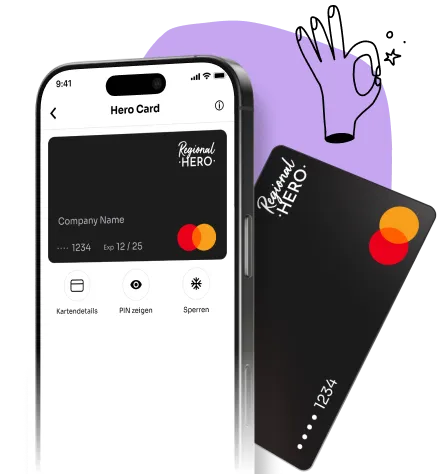
With the HERO Card, individual measures become a strong package, tax-free, digital and can be used anywhere.
HR keeps track of things, employees benefit directly.
Sustainability is no longer a trend; it's a necessity – and increasingly a shared responsibility for companies and their employees. By focusing on sustainable purchasing, businesses can not only reduce their ecological footprint but also foster a stronger sense of community and actively support the local economy. Implementing sustainable purchasing practices plays a crucial role in this. But how exactly can a company motivate its employees to choose sustainable consumption? What role do tax-free employer subsidies play, and how do they encourage employees to act sustainably? This guide will shed light on how sustainable purchasing can ultimately benefit not only the environment but also the workplace atmosphere and the local economy.
Companies make their purchasing sustainable by developing a holistic procurement strategy that systematically integrates ecological, social, and economic criteria. This includes selecting suppliers based on transparent sustainability standards, prioritizing durable and resource-efficient products, and continuously measuring and optimizing their own supply chains.
Sustainable procurement is of strategic importance for companies as it significantly contributes to supply chain risk minimization, strengthening brand image, and meeting regulatory requirements. It is a key lever for reducing one's ecological footprint and ensuring long-term competitiveness.
A focus on sustainability significantly strengthens a company's image and customer loyalty. As consumers increasingly value environmental and social responsibility, transparent, sustainable procurement can become a decisive selling point. Studies show that over 60% of consumers prefer companies that visibly take responsibility for the environment and society, which underscores its relevance for brand positioning. [YouGov Deutschland GmbH] This builds trust and a positive market perception.
Furthermore, sustainable procurement is an effective risk management tool. When companies thoroughly analyze their supply chains and adhere to robust sustainability standards, they reduce their vulnerability to disruptions. These include risks from climate change, resource scarcity, or new legal requirements such as the Supply Chain Due Diligence Act. A diversified and ethically vetted supplier base leads to more stable and resilient business operations.
Last but not least, sustainability is a crucial factor in the competition for skilled professionals. Younger generations, in particular, place great importance on corporate values and a credible commitment to the environment and society when choosing an employer. A company that demonstrably operates sustainably thus increases its attractiveness as an employer and can better attract and retain talented employees long-term. This is becoming an increasingly important strategic advantage.
Sustainable purchasing is defined by a balanced consideration of ecological, social, and economic criteria throughout the entire product lifecycle. This includes minimizing resource consumption, adhering to fair working conditions, and ensuring long-term economic viability beyond the mere purchase price.
On an ecological level, the focus is on reducing greenhouse gas emissions, protecting biodiversity, and conserving natural resources. This is achieved by prioritizing products made from recycled materials, with low energy consumption, or of regional origin. As the food retail sector plays a central role in influencing environmental impacts, companies can significantly manage their environmental effects through conscious decisions. [Umweltbundesamt]
Social criteria include ensuring human rights and fair working conditions throughout the entire supply chain. This involves the strict rejection of child and forced labor, the payment of fair wages, and the assurance of occupational safety and health protection. Companies are responsible for verifying compliance with these standards among their direct and indirect suppliers, for example, through audits or by requiring recognized social certifications.
Economic sustainability means looking beyond the short-term purchase price and evaluating the total cost of a product over its lifespan (Total Cost of Ownership). Durable, repairable, and energy-efficient goods are often more cost-effective in the long run. This perspective promotes investments in quality and efficiency, which not only lowers operating costs but also reduces waste volumes and increases resource efficiency.
Comparison Table: Criteria for Sustainable Supplier Evaluation
A sustainable procurement strategy is implemented through a systematic process that begins with a status quo analysis, defines clear and measurable goals, firmly integrates these criteria into purchasing processes, and verifies success through regular monitoring and reporting to ensure continuous improvements.
The first step is a detailed analysis of existing procurement processes and supply chains. This involves identifying so-called "hotspots" – areas with the greatest negative impacts on the environment and society, such as high CO2 emissions, high water consumption, or risks related to working conditions. This analysis provides the necessary data foundation for setting priorities for further strategy development.
Based on the analysis, concrete, measurable, and realistic goals are formulated. Instead of vague declarations of intent, quantitative targets should be defined. Examples include: "Reducing CO2 emissions in logistics by 20% by 2030" or "increasing the share of products with a recognized eco-label to 50% within three years." Such goals make progress measurable and manageable.
The defined sustainability criteria must be firmly embedded in operational procurement processes. This means they become an integral part of tenders, supplier evaluations, and framework agreements. Procurement acts as a "gatekeeper" here and, through its market power, has a significant influence on establishing and promoting environmental and social standards in the market. [Umweltbundesamt] If-then scenarios are helpful here: If a supplier can present certain certificates, they receive bonus points in the evaluation.
Finally, internal communication and training for procurement staff are essential. They must understand the strategy, know the relevance of the criteria, and be empowered to apply them in negotiations and decisions. Transparent reporting on achieved goals – both internally and externally – builds credibility and motivates all stakeholders to consistently pursue the chosen path.
Sustainable products and suppliers can be identified by recognized, independent quality seals and certifications, high transparency regarding the supply chain and production conditions, and company-specific sustainability reports that contain verifiable data and clear goals. Local or regional origin can also be an important indicator.
Recognized quality seals offer reliable guidance. In the environmental sector, for example, the Blue Angel, the EU Ecolabel or the FSC label for wood and paper products are established standards. For social fairness, labels like Fairtrade. Since there is a multitude of labels, it is important for companies to focus on those based on independent controls and transparent criteria. They serve as proof that a product or service meets certain predefined standards.
Another key characteristic is supplier transparency. Reputable partners are willing to provide information about their production processes, the origin of their raw materials, and their own sustainability measures. This can be verified through supplier questionnaires, self-assessments, or on-site audits. Proactive and open communication from the supplier is often a sign of serious commitment.
Prioritizing local and regional suppliers can also contribute to sustainability. Shorter transport routes directly lead to a reduction in CO2 emissions. A study on online retail shows that purchases are particularly climate-friendly when long car journeys to physical stores are avoided, which underscores the importance of logistics. [Bundesministerium für Umwelt, Naturschutz, nukleare Sicherheit und Verbraucherschutz] Strengthening the regional economy is also a positive socio-economic side effect.
Sustainable purchasing may initially involve higher acquisition costs, but in the long run, it often leads to significant savings and increases profitability. This is achieved through lower operating costs, greater resource efficiency, the avoidance of reputational risks, and the tapping into new market potential.
The assumption that sustainability is inherently more expensive is too simplistic. While consumers are highly price-sensitive, there is also a general willingness to pay more for sustainable products. A survey revealed that consumers would be willing to accept an average surcharge of around 9 % to accept. [PwC Deutschland] For companies, this means that investing in sustainability can be offset by increased customer appreciation.
A crucial factor for profitability is considering the total cost of ownership (TCO). An energy-efficient IT device might be more expensive to purchase, but over its lifespan, it saves significant operating costs due to lower power consumption. Similarly, durable and repair-friendly products lead to less frequent replacements and reduce waste disposal fees. This long-term perspective often reverses the initial cost-benefit calculation.
Furthermore, sustainable practices minimize financial risks. Companies that do not reduce their CO2 emissions may face rising costs in the future due to CO2 taxes or emissions trading. Reputational damage from supply chain scandals can also lead to massive drops in sales. Proactive sustainable management is therefore a form of future-oriented risk prevention that secures the company's financial stability.
The gap between the intention to consume sustainably and actual purchasing behavior is a known challenge. [EY-Parthenon] Companies that manage to offer sustainable products attractively, accessibly, and competitively priced can secure a decisive market advantage. They not only meet a growing demand but also position themselves as innovative and future-proof players in the market.
No, sustainable procurement is relevant for companies of all sizes. Small and medium-sized enterprises (SMEs), in particular, can excel through flexibility, local ties, and credible communication. They can often respond more agilely to sustainable innovations and attract new customer groups through targeted positioning.
Success can be measured using defined key performance indicators (KPIs). Examples include the percentage of certified products in the total purchasing volume, CO2 reduction in logistics, waste reduction, or the number of audited suppliers. These KPIs should be regularly collected and reported.
A good first step for a small or medium-sized enterprise is to analyze the largest spending categories in purchasing. Often, in areas like office supplies or energy, a quick and visible initial success can be achieved by switching to sustainable alternatives (e.g., recycled paper, green electricity).
Instead of immediately excluding suppliers, it's better to first engage in dialogue. It is often more effective to jointly develop a development plan with clear goals and deadlines. This partnership-based approach promotes transformation in the supply chain more effectively than a mere exclusion, which only shifts the problem.
author
Everything you want to know — simply explained.
Everything you want to know — simply explained.
What is the benefit card?
The HERO Card is a digital Mastercard debit card that allows companies to offer tax-free benefits easily and flexibly. Employees thus receive tax-free subsidies for benefits in kind, mobility, food and health. Everything bundled on one card, individually configurable and implemented in a legally secure manner.
Employees simply pay on a daily basis. Locally in your favorite café or nationwide in supermarkets, pharmacies or public transport.
How does that work for companies?
You control everything centrally in the HR portal.
Activate benefits in five minutes. The HERO Card automatically loads the monthly budget. Digital, secure and tax-compliant.
What are the concrete benefits of this for my team?
Up to 50 euros in kind per month
Meal allowance of up to 7.50 euros per working day
Mobility allowance of up to 58 euros per month
Up to 500 euros per year for health and wellbeing
All tax-free. It's all digital. It's all on one card.
How does HR keep track?
All benefits at a glance. No paperwork.
In the HR portal, you control budgets, see workload and manage everything centrally.
Sign in. Adjust. It's done.
This saves you up to 80 percent of administrative time.
Is that really tax-free?
Yes, all benefits are tax-free for employees and are completely legally compliant. Employers must tax some benefits as a lump sum.
The HERO Card uses legally enshrined allowances. Each category is correctly separated for tax purposes and can be managed automatically.
How much does the HERO Card cost?
As part of the employee license, the card costs 1 euro per employee per month plus charges for charging benefits.
For 50 employees with HERO Base, for example, this equates to around 140 euros per month — less than a joint team meal, but with a long-term effect.
How quickly is the HERO Card ready for use?
Ready to go in just a few days.
Setup, onboarding and go-live take a maximum of one week.
No technical hurdles. Without complexity.